
About Kyiv
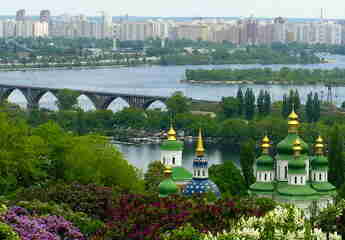
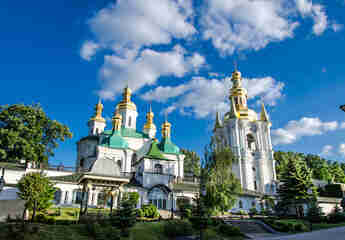
Ancient and modern, cozy and energetic, green and bustling, Kyiv is one of those cities you simply must see. “Mother of Rus’ cities” and “the northern Rome” do not, of course, exhaust the list of epithets applied to the capital of Ukraine, but they do convey its character and historical significance. Magnificent landscapes, historic landmarks, modern entertainment, and incredibly delicious cuisine – all this and much more awaits travelers in welcoming Kyiv.
A Bit of History
The first settlements in this area appeared 15–20 thousand years ago, and by the 6th–7th centuries AD they had developed into urban communities. According to the chronicles, the city on the Dnipro was founded by the princely brothers Kyi, Shchek, and Khoryv, and their sister Lybid. At the end of the 9th century, Kyiv, conquered by Prince Oleg of Novgorod, became the capital of Kyivan Rus. People came here from many regions, the population grew quickly, and homes and fortifications were built actively. By the early 11th century, Kyiv was considered a “rival to Constantinople”.
Internecine wars among the principalities in the 12th century seriously weakened the city, and in 1240 it was devastated by Batu Khan’s forces and lost its former power. After the collapse of Mongol rule, Kyiv passed under the authority of the Grand Duchy of Lithuania and then the Polish-Lithuanian Commonwealth, where it remained until 1654, when a national assembly decided to swear allegiance to Tsar Alexei Mikhailovich.
During the industrial revolution of the 19th century, the city became a major trade and transport hub specializing in grain and sugar exports. By 1900 Kyiv had become a large industrial center with a population of 250,000. One side effect of this rapid growth was a housing shortage, which was successfully addressed by building cooperative housing.
After the revolution of 1917, the Ukrainian People’s Republic was proclaimed, and at the beginning of 1918 – the sovereign Ukrainian State. By 1920 power over the city had changed hands more than a dozen times, and in the end it became part of the USSR. In 1934 it became the capital of Soviet Ukraine.
On June 22, 1941, Kyiv was bombed by Nazi forces, and on September 19, after a long siege, the city was captured. Tragedies followed one after another: the fire on Khreshchatyk, the mass shooting at Babyn Yar, the destruction of churches, and deportations for forced labor in Germany. Finally, in early November 1943, the badly damaged capital was liberated. For its heroism, Kyiv was awarded the title of Hero City.
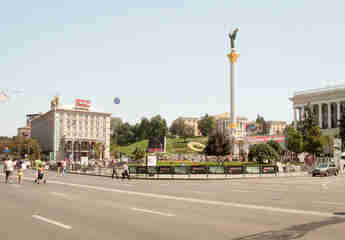
Intensive postwar rebuilding and the development of industry and science quickly made the capital of the Ukrainian SSR the third-largest city in the Soviet Union. In 1960 the population exceeded 1 million, and by 1980 it had doubled. Huge residential districts appeared on the previously sparsely populated left bank of the Dnipro. In 1991 Ukraine declared independence, and the capital’s central square received its new name – Maidan Nezalezhnosti. In 2004 it became the stage of the Orange Revolution, and in 2013–2014 – Euromaidan.
Good to know:
– January 1–2 – New Year
– January 7 – Christmas
– January 22 – Unity Day of Ukraine
– March 8 – International Women’s Day
– Easter
– May 1 – International Workers’ Day
– May 9 – Victory Day in the Great Patriotic War
– The last Saturday of May – City Day
– The 50th day after Easter – Trinity
– July 15 – Ukrainian Peacekeepers’ Day
– June 28 – Constitution Day of Ukraine
– August 24 – Independence Day of Ukraine
Independent Trip to Kyiv
How to Get from Kyiv’s Airports to the City
Kyiv Boryspil International Airport, the largest in Ukraine, is 35 km from Kyiv. The easiest way to reach the city is by Sky Bus, which runs to the South Railway Station every day around the clock. The trip takes 45–60 minutes, and a ticket costs 40 UAH. Stops are located outside the passenger terminals.
Kyiv Zhuliany International Airport handles fewer flights, but it is only 8 km from the city center. You can leave the airport by trolleybus No. 22 (ticket price 8 UAH) or by minibus (ticket price 8 UAH).
Public Transport in Kyiv
Kyiv Metro is the most reliable and fastest way to get around. Its three lines include 50 stations, among them Arsenalna – the deepest station in Europe. A token for one ride costs 8 hryvnias, and a rechargeable plastic card costs 50 hryvnias. The metro operates from 05:30 to 00:00.
Kyiv also has an extensive network of tram, trolleybus, and bus routes. Kyiv’s electric tram began operating in 1892 and became the first in the Russian Empire. The funicular is also part of the municipal transport system, carrying passengers from Podil up to Mykhailivska Square since 1905. Surface transport runs from 6:30 to 22:00, and tickets costing 8 UAH can be bought onboard or at kiosks at the stops.
A city train runs along the ring railway around Kyiv. In 1.5 hours it passes 15 stations, each with possible transfers to buses. One trip costs 8 UAH.
Mobile Service and Internet in Kyiv
Besides Wi-Fi in Kyiv’s bars, cafés, and restaurants, there is also a municipal network of free hotspots, concentrated mainly along Khreshchatyk. The main mobile operators – Kyivstar, Vodafone, Lifecell, PEOPLEnet – offer a variety of plans for calls and mobile internet.
Shopping in Kyiv
For a successful shopping trip, stroll along Khreshchatyk or head to one of the many malls. The most popular are Globus beneath Maidan Nezalezhnosti, Dream Town, and Karavan at Minska metro station.
Andriyivskyy Descent, a pedestrian street with wonderfully preserved historic buildings, is the best place to buy souvenirs. You will find everything here, from inexpensive handicrafts to genuine works of art.
Shops usually open from 10:00 to 19:00–21:00, and seasonal sales take place every season.
Local Cuisine
Ukrainian cuisine is considered the richest and most varied of all Slavic cuisines. The king of Ukrainian food, famous all over the world, is of course borsch with pampushky, which comes in countless variations.
The basis of the meat table is pork and salo, which is eaten fresh, salted, smoked, fried, boiled, stewed, and more. Fish is also popular, especially dried and cured – perfect with beer.
Be sure to try thin-dough varenyky with delicious fillings: potato, farmer’s cheese, sauerkraut, cherry, or other berries, topped with melted butter or sour cream. For dessert, try the legendary Kyiv cake with nuts.