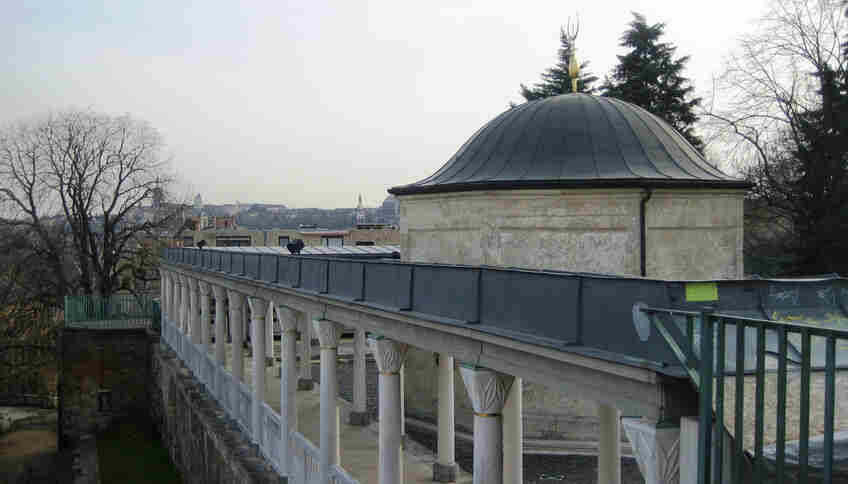
As is well known, for about a century and a half, from 1541 to 1686, the Turks ruled in Hungary. Today, that period is recalled by the Turkish baths, Muslim burial sites, and the Gül Baba Mausoleum on Rose Hill located in Buda — the resting place of a Turkish dervish who arrived in Hungary in 1541.
According to legend, Gül Baba, whose real name was Zeki, received his nickname “father of roses” for his love of these flowers. It is said that he traveled through all the lands of the Ottoman Empire! During his wanderings, Gül Baba slept in the open air, admired nature, washed with spring water, and described his pilgrimages in verse.
The monk died two weeks after arriving in Buda — right during the service dedicated to the Turks' victory over the Hungarians, which took place in St. Matthias Church, rebuilt as a mosque.
He was buried on a high hill with a wonderful view, and a couple of years later a mausoleum was built over Gül Baba's grave, around which roses were later planted. It is said that after the city was liberated, the residents wanted to destroy the tomb, but could not do so under the terms of the Treaty of Karlowitz.