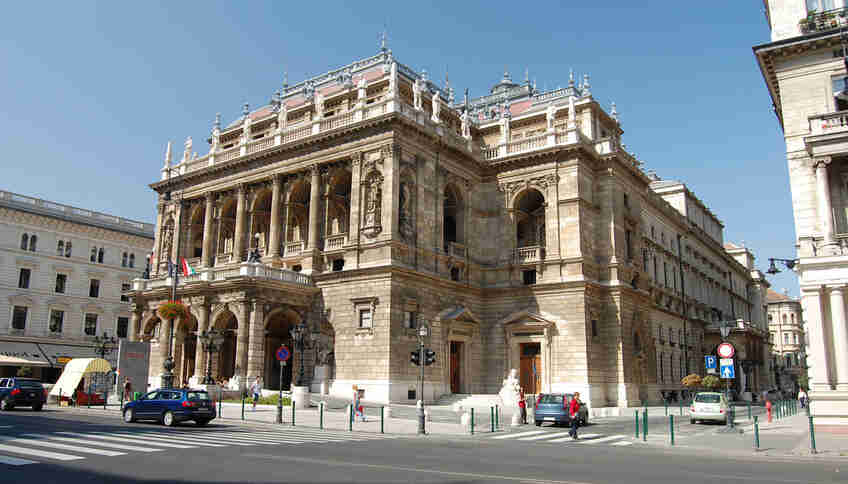
In earlier times it held the title of the Royal Theatre, as it was built back in 1884 during the reign of Austro-Hungarian King Franz Joseph. Back then, the local nobility gathered here, and opera performances were held under the direction of such outstanding composers as Giacomo Puccini.
Today, the building of the Hungarian Opera is ranked among the top three theaters in the world for acoustics, right after Milan's La Scala and the Paris Grand Opera. Its hall has the shape of a horseshoe, so the sound can be heard perfectly from any of the 1260 seats. The chairs are upholstered in crimson velvet, mirrors in gilded frames hang in the boxes, and above the audience rises a magnificent dome painted by talented 19th-century artists.
Before entering the hall, guests walk up a шикарной marble staircase, past numerous statues, busts, and paintings. In such a luxurious place, you can't help but imagine yourself an aristocrat, but for some reason most local residents visiting here do not consider it necessary to dress in evening gowns and suits. Many come in everyday clothes, so Russian tourists in furs and diamonds immediately stand out against their background.
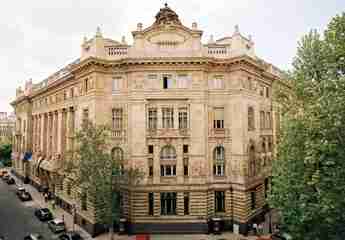
The facade of the building is designed in the Neo-Renaissance style and richly decorated with Baroque elements. In front of the entrance, guests are greeted by sculptures of famous Hungarian composers – Ferenc Liszt and Ferenc Erkel. Erkel, by the way, was the first director of this theater. During his lifetime, he wrote many choral songs, piano pieces, as well as the Hungarian national anthem.