
Flickr, josemazcona
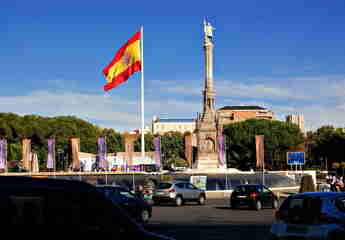
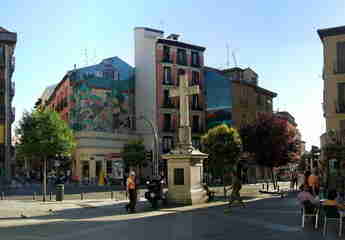
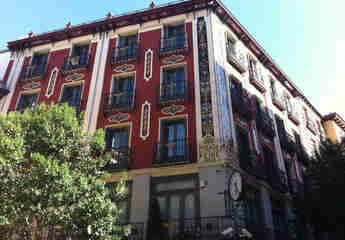
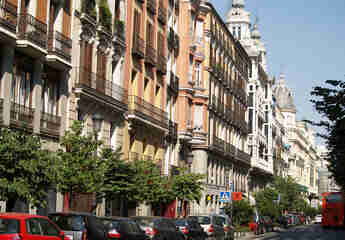
Plaza de Callao is one of the noisiest, yet at the same time one of the most unusual squares in Madrid. Built in the 1920s as a model of the “city of the future” and named after the 1866 battle between Peru and Italy, Plaza de Callao became a blend of a modern, noisy, and rapidly developing shopping district with classic Art Deco architecture.
The first major commercial establishment on this square was the shop of confectioner Antonio Rodilla. Later, the small business grew into an entire business district, including hotels, cinemas, upscale restaurants, and shops.
One of the tallest buildings in Madrid is located on Plaza de Callao — the Carrion Building — a combination of futurism and 1933-style aesthetics. For many years, it has been adorned with an advertisement for the soft drink Schweppes, which, because it appears so often on postcards with views of the city, is often perceived as one of the symbols of the Spanish capital.
The complete opposite of the Carrion Building is the cubic Press Palace building, located to the right of the building with the famous advertisement.
With the arrival of cinema, in 1927 Plaza de Callao was adorned with the cream-pink Callao Cinema Bulding, designed in the Art Deco style. Even today, this cinema hosts not only film screenings, but also gala receptions on the occasion of movie premieres.
Since 2005, Plaza de Callao has been pedestrianized. Its proximity to the Callao metro station makes the square the most accessible and popular for walking around Madrid.
Learn more about this and many other city attractions by downloading the audio guide to Madrid in the Ever.Travel mobile app!

Flickr, Armando G Alonso
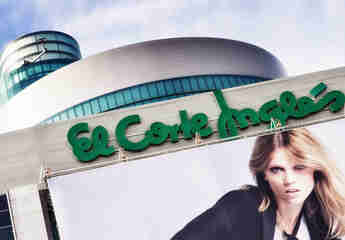
There is one unwritten rule for a traveler arriving in Madrid — they begin their acquaintance with the capital at the Royal Palace and end it at El Corte Ingles. This is the largest department store chain in Spain, whose shopping centers can be found in all the country’s major cities.
The El Corte Ingles retail chain traces its history to Barcelona, where there used to be a small atelier for sewing children’s clothes, which Ramon Areces Rodriguez bought in 1934. Gradually, he turned it into one of the city’s most fashionable places, where the best craftsmen and salespeople were gathered. Soon, a ready-to-wear store was opened under the El Corte Ingles brand. Thus began the history of Spain’s largest department store chain.
In the El Corte Ingles shopping center located on Plaza de Callao, there are several hundred different stores where you can find literally everything — from a piano to a needle. On different floors of the department store, you will find clothes, shoes, and accessories from famous European and global brands. You can also buy appliances, electronics, toys, and household goods here. This place is especially valued because the department store issues a tourist card that gives travelers additional discounts. In addition, for most goods, you can arrange a tax free refund at the airport before departure.
Gran Via

Flickr, Turismo Madrid
Gran Via (Spanish: Gran Via — “great road”) is a street in Madrid unofficially considered the main street of the Spanish capital. The avenue was laid out on April 5, 1910 by King Alfonso XIII, who during the ceremonial event chipped out the first stone from the priest’s house at the Church of San Jose with a pickaxe. This act marked the beginning of the demolition of more than 300 buildings necessary for laying out the street. On April 5, 2010, Alfonso XIII’s grandson, the current King of Spain Juan Carlos I, took part in a special ceremony on Gran Via in honor of its centennial anniversary. On the eve of that day, a special bronze model of the street was unveiled on Gran Via to mark its 100th anniversary.
Buen Retiro Park

Flickr, elbelbelb2000
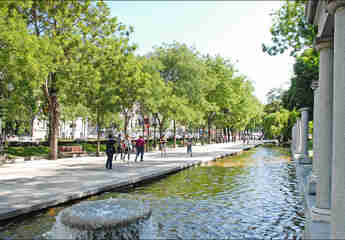
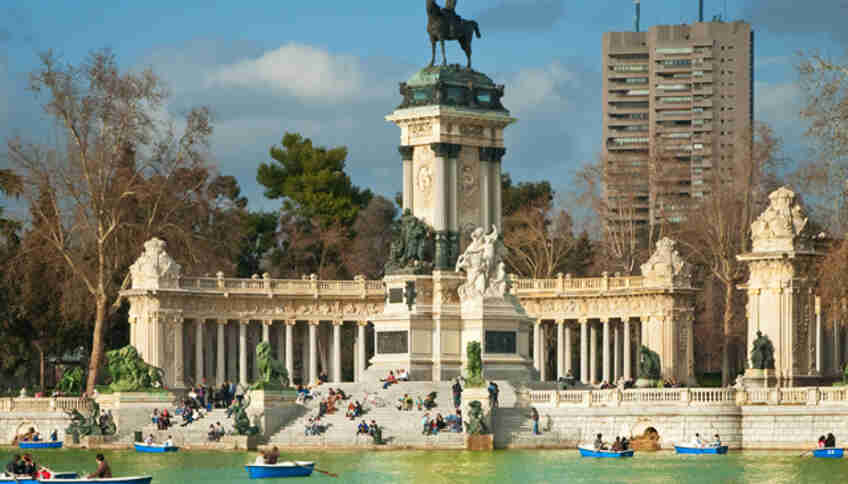
Buen Retiro Park (Spanish: Parque del Buen Retiro) is an urban park in the center of Madrid, a popular place for Sunday recreation among Madrid residents and one of the city’s attractions. One of the largest parks in the Spanish capital covers an area of 120 hectares. Originally, it adjoined the palace of the same name of Philip IV and served as a place for court entertainments, festive balls, and theatrical performances. After the death of Philip IV, the park fell into neglect and later suffered greatly during the war with Napoleon. The Buen Retiro Palace itself was demolished, and only the buildings of a branch of the Prado Museum and the Army Museum have been preserved in the park. The park, restored under Ferdinand VII, is adorned by a small lake with a monument to King Alfonso XII. In 1887, two palaces — the brick one and the crystal one — were erected on the park grounds for international exhibitions.