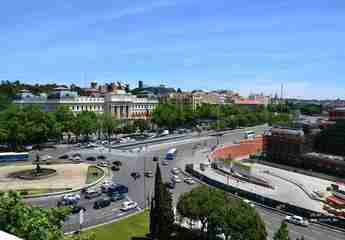
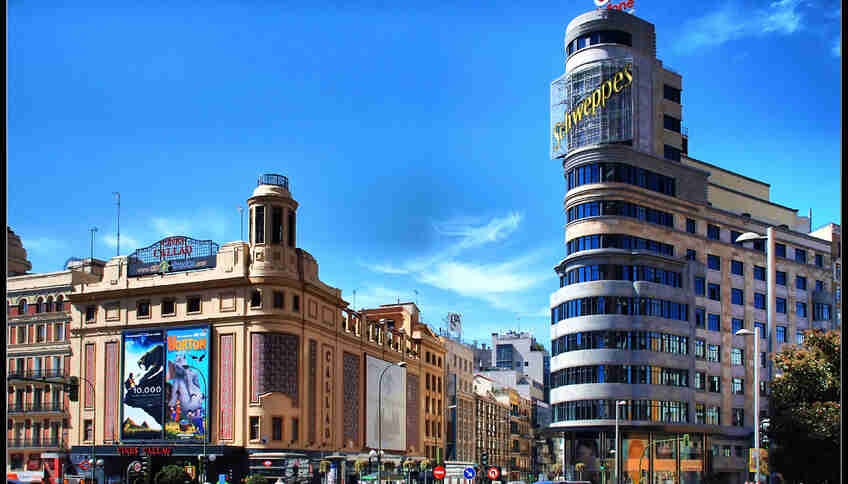
Plaza de Callao is one of the noisiest yet, at the same time, most unusual squares in Madrid. Built in the 1920s as a model of the «city of the future» and named after the 1866 battle between Peru and Italy, Callao Square became a blend of a modern, noisy, and rapidly developing shopping district with classic Art Deco architecture.
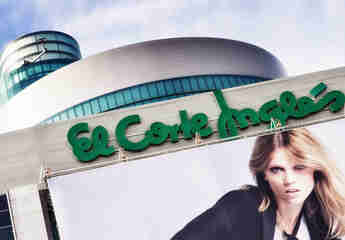
The first major commercial establishment on this square was the shop of pastry chef Antonio Rodilla. Later, the small business grew into an entire business district, including hotels, cinemas, upscale restaurants, and shops.
On Callao Square stands one of Madrid's tallest buildings - Carrion Building - a combination of futurism and 1933 aesthetics. For many years, it has been adorned with an advertisement for the soft drink Schweppes, which, because of its frequent appearance on postcards with city views, is often perceived as one of the symbols of the Spanish capital.
The complete opposite of Carrion Building is the cubic structure of Press Palace, located to the right of the building with the famous advertisement.
With the rise of cinema, in 1927 Callao Square was adorned with the cream-pink Callao Cinema Bulding, built in the Art Deco style. In this cinema, not only film screenings but also ceremonial receptions for movie premieres are still held today.
Since 2005, Plaza de Callao has been pedestrianized. Its proximity to the Callao metro station makes the square especially accessible and popular for walks around Madrid.