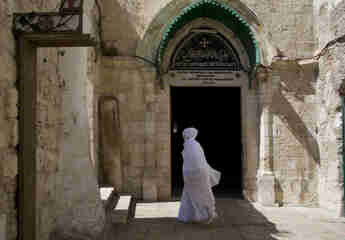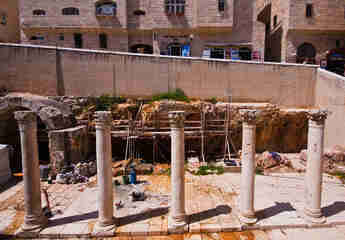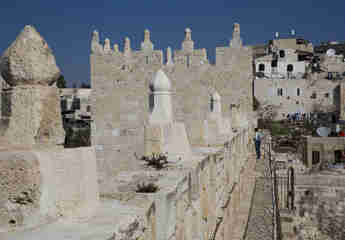
According to Jewish tradition, a dead body is considered unclean, and therefore it must be committed to the earth as soon as possible. As is known, criminals were crucified on Friday, and there was absolutely no possibility of preparing the funeral on the eve of the Sabbath.
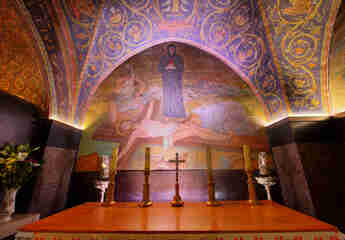
Try to imagine the time of the execution: evening is falling, the body of the bloodied Jesus is taken down from the cross and placed on the nearest stone. He is hastily washed, wrapped in a shroud, and buried in a nearby cave, which, incidentally, belonged to Joseph of Arimathea, who generously gave it for the burial of Jesus. Having hastily completed the rite, the Mother of God, Mary Magdalene, Nicodemus, and Joseph of Arimathea return to the city to meet the Sabbath, hoping to come back and perform the full burial rite with the first day of the new week, on Sunday. But when they come to the cave on Sunday, they find an angel near it, sitting on the stone rolled away from the entrance. But that is another story. About the Aedicule and the Chapel of the Angel.
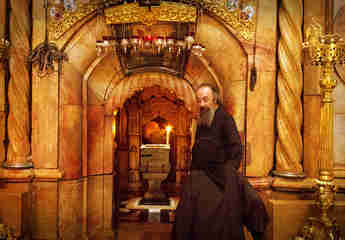
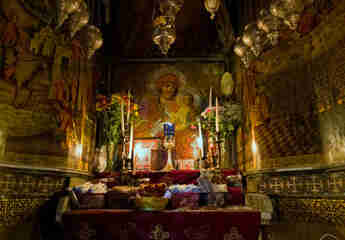
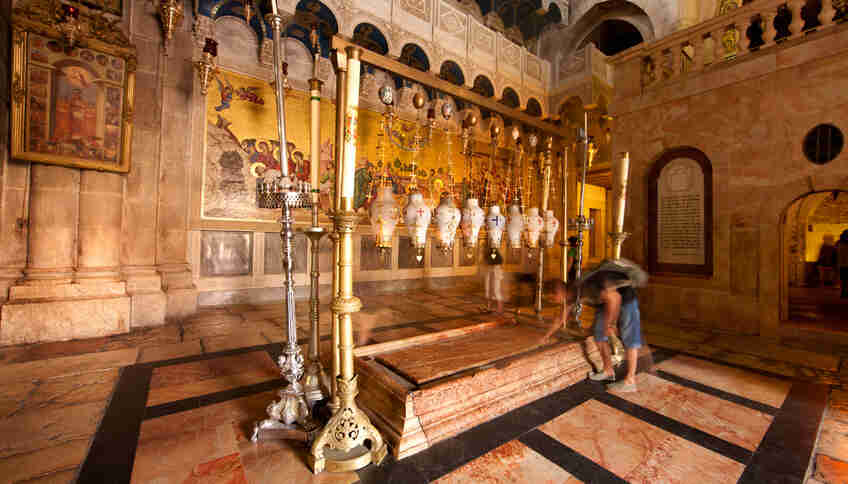
Of course, today pilgrims do not touch the very same stone on which Christ was washed. This is only a covering, necessary in order to protect the shrine from fanatical pilgrims. It appeared here only in 1810. Eight ever-burning lamps hang above the stone, exactly matching the number of Christian confessions: the Orthodox Greeks, whose tradition was inherited by the Slavs, Catholics, Armenians, Copts, Maronites, Syrians, Ethiopians, and Georgians.
Millions of believers come to Jerusalem every year to touch the stone of anointing and bless their crosses, candles, or icons on it.