
This unusual but very beautiful house is over 100 years old. However, it has come to be seen as an architectural masterpiece only relatively recently.
Contemporaries were far from immediately understanding and appreciating the gift they received from the incomparable Antonio Gaudi. And that it really is a gift, not a scar on the face of the city, can be seen by looking at the number of tourists who come here in droves for tours. And in general, how many buildings have been built since then that inspire such admiration and are thought out so far in advance?

When Casa Mila was completed, it was nicknamed “La Pedrera,” which means “The Quarry” in translation. It was precisely the building's flowing forms that gave rise to these associations. And senor Gaudi himself more than once noted that he was inspired by the sea.

The construction of Casa Mila lasted 6 years, and the architect called it the most difficult project of his life. Although, it would seem, after this work he spent the rest of his life working on the Sagrada Familia, ultimately never finishing it. But it was Casa Mila that came hardest to him because of constant bureaucratic delays. In addition, the client, senor Mila, kept rushing the architect and tried to force him into the framework of urban planning standards (because he was threatened with large fines because of this). First, the house turned out slightly taller than the other buildings, and the client demanded that it be reduced to the permitted height. Second, one of the columns extended onto the sidewalk, which was also considered unacceptable. And third, Pedro Mila did not manage to complete all the property documents on time, so regulatory authorities were constantly coming to Gaudi.

Fortunately, all these difficulties were overcome, and now the building is a local landmark. And in 1984 it was included in the UNESCO World Heritage List. Casa Mila, by the way, became the first 20th-century structure to make this honorary list.
By the way, literally around the corner from this famous building stands another no less famous work by Gaudi – Casa Batllo or, as it is also called, the House of Bones. These and many other masterpieces by what is perhaps the best Catalan architect are collected in the special guide “Attractions of Antonio Gaudi in Barcelona”.
Alas, Gaudi did not manage to fully bring to life all the ideas for the Casa Mila project. Back at the very beginning of the 20th century, when there were only a few cars in the city (owned by the wealthiest gentlemen), the architect realized that within a few decades everyone would have one, and he built an underground parking garage. Nothing like that existed in any other building of those years. But besides that, Gaudi also planned to create a spiral ramp so that apartment owners could drive up in their cars to their landings. Even now this idea seems fantastic! And back then it seemed like the author's unnecessary “whim,” and it was decided to abandon it.

And yet Casa Mila became innovative in many respects. Ventilation, for example. The author thought through the system of natural ventilation of the rooms in such a way that air conditioners are still not required here. In addition, daylight penetrates all the rooms, including utility rooms (even bathrooms and toilets). The balconies are decorated with intricate grilles forged from iron, yet they seem light, like lace. They were created especially for this house by Josep-Maria Jujol, whom Gaudi often invited to collaborate.

But the building's main feature is that it has no load-bearing walls, and if they wish, apartment owners can change the layout however they like without risking the collapse of the whole house. Instead of supporting walls, Gaudi used arches and columns. As a result, every floor of the building is truly unique.

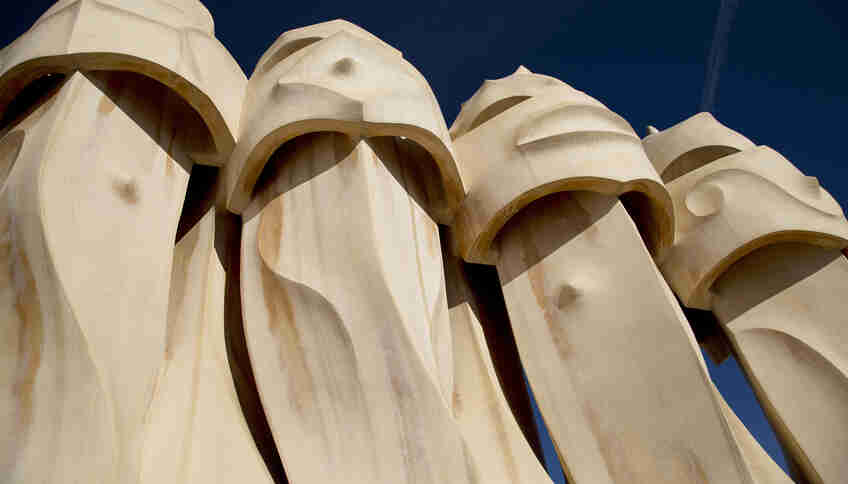
“And the roof?! You could give tours on it!” - most likely, that is exactly what the city authorities thought when they decided to open the doors of Gaudi's “magical dream” to tourists. As soon as you step out onto the terrace, you immediately notice the bizarre figures that actually skillfully conceal ventilation pipes and elevator shafts (Gaudi also provided for them in the project, but the elevators themselves were installed much later). Many of these unusual sculptures are decorated with broken glass, pebbles, and mosaics. And the view that opens up from this building is truly impressive - the whole center lies before you like the palm of your hand!


During the tour, visitors are not taken to the roof right away; first they are given the chance to appreciate the beauty of the inner courtyards and look at one of the apartments. It is done in the style of the 1920s, and every item in its interior is there for a reason. But most importantly, here you can appreciate the beauty of this house from the inside and even briefly feel like a respectable resident. By the way, this building now belongs to the savings bank “Caixa de Catalunya”, and it is precisely their apartment that is open to tourists. However, there are also many other offices here, as well as private apartments of Catalan families.


You will not be able to stay and live in Casa Mila, but nothing prevents you from finding a hotel near the “Block of Discord”. That way, every day as you leave your hotel, you will enjoy the works of Barcelona's most famous architects.
Find a hotel near Casa Mila
And finally, we want to tell you that you can find another dozen interesting sights of Barcelona on the interactive city map. Choose what you like, add it to favorites, spread it across several days of your trip, and sync it with the free Ever.Travel mobile app. This way you will get a personal city guide that will always be at hand and will be available even in offline mode!
Photo Alina Kovalevich