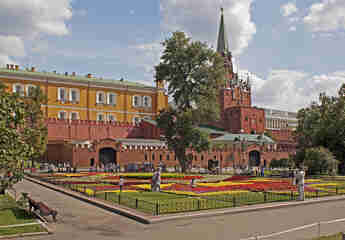
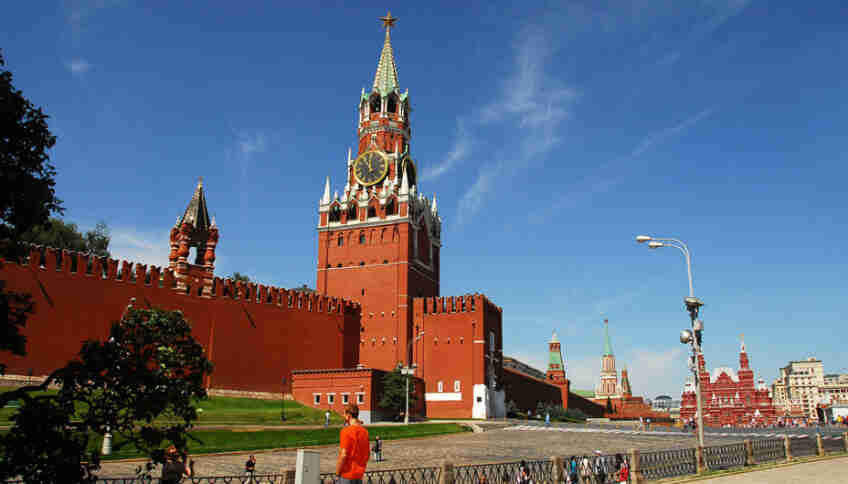
The main of all 20 towers of the Moscow Kremlin – Spasskaya Tower – is one of the most recognizable symbols of Moscow and all of Russia.
For most people across the former USSR, Spasskaya Tower also symbolizes the New Year: for several decades, on the festive night everyone awaited the striking of its chimes.
The tower appeared in 1491 and was originally half as tall as it is now. In 1514, in honor of the capture of Smolensk, a gate icon of the Savior was installed above the gate, and it became renowned as miraculous.
From then on, the gates of Spasskaya Tower were revered as sacred; one could pass through them only on foot, men had to uncover their heads, and when passing by the icon, it was obligatory to bow. Even the grand princes, the tsars of Rus', foreigners, and people of other faiths observed this custom, and anyone who violated it had to make 50 full prostrations before the icon as punishment.
The tower acquired its present majestic appearance in 1625, when the English architect Galoway designed a multi-tiered tent roof in the Gothic style. A clock was installed in the stone tent, which was later replaced several times.
The chimes that mark Moscow time today were installed in 1852. Incidentally, the melodies played by the clock were changed even more often, mostly to suit the tastes of the rulers.
Above the chimes, on a slender spire, a scarlet star has been glowing for 77 years, replacing the gilded double-headed eagle that decorated the tower from the 17th century until 1935.