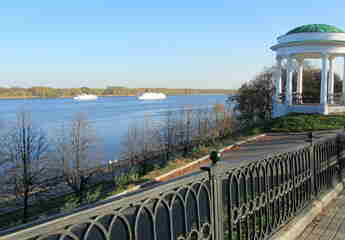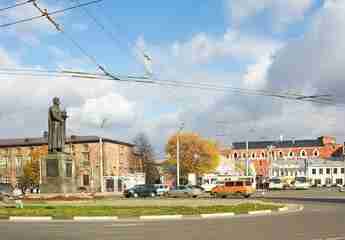
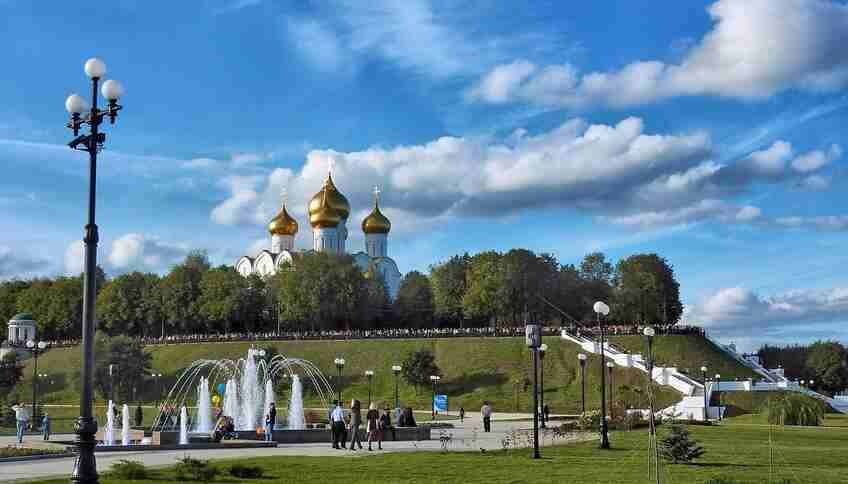
This is perhaps the most interesting place – the spot where Yaroslavl was born. From a geographical point of view, the territory for founding the fortress was chosen perfectly: in shape it resembles a triangle, the “tip” of which is surrounded by natural water barriers, while the “base” is a deep ravine that also probably had water in it.
Thus, there was a kind of island here, not so easy to approach – which is why Yaroslav the Wise chose it for his future city. If the legends are to be believed, there used to be a pagan sanctuary here.
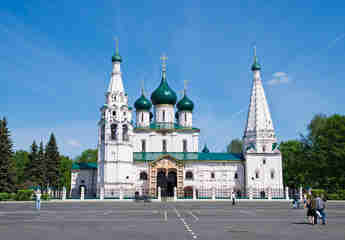
To put an end forever to the “heathen shrine,” the Grand Prince built six Orthodox churches on his island at once. The main one was Uspensky Cathedral, which was recently rebuilt. The others, with the exception of the Church of Nikola Rubleny, were destroyed over time.
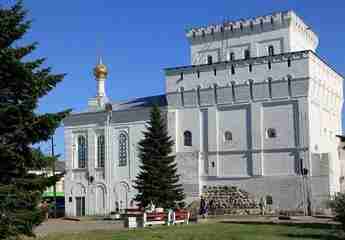
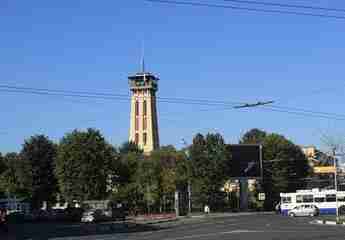
In the middle of the 17th century, Rubleny Gorod was surrounded by a wooden fortification that included two gate towers and 10 solid towers. Incidentally, the Volzhskaya Tower, which served as the entrance from the river side, has survived to this day.
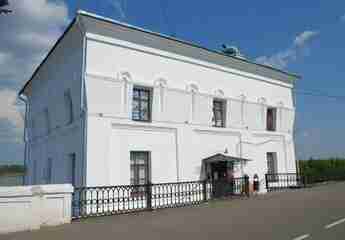
On the territory of the ancient city, in addition to the churches, there stood the Voivode's House (the princely chambers), huts for the retinue and for ordinary townspeople. All the buildings, including the churches, towers, and fortress walls, were hewn from wood, hence the name – Rubleny Gorod. Beyond its limits began Zemlyanoy Posad, where people also lived.
After the “great fire” in 1658, all the wooden structures burned down. Some of them were restored, but the walls themselves were not rebuilt. There was no longer any need for that, because by that time cannons had appeared that could fire cannonballs and break through any fortifications.