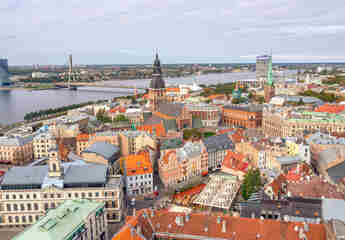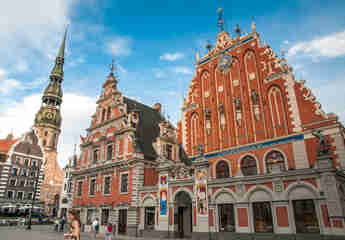
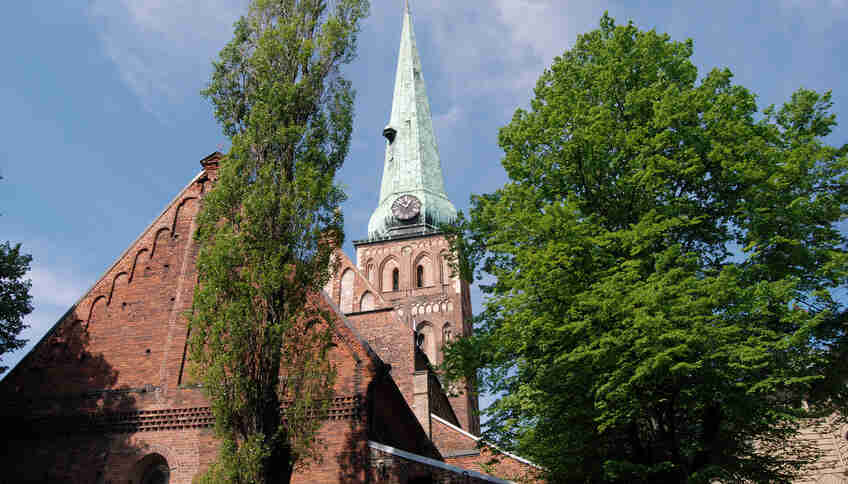
St. James's Cathedral is the main Catholic church in Latvia. It appeared in Riga in the 13th century, at the same time as the Dome Cathedral and St. Peter's Church. However, its architecture is noticeably simpler than that of its contemporaries, since it was intended not for the city, but for a rural parish. Nevertheless, the Gothic pyramidal spire of this church has been preserved better than the others.
The main construction of St. James's Cathedral was completed by the beginning of the 14th century. Initially, it was given an Early Gothic style. Later, the church was rebuilt many times, which is not surprising – after all, it is already more than seven centuries old. It survived wars, changes of government, and conflicts between denominations.
In the 16th century, the cathedral became the first Latvian Lutheran church, but not for long: in 1582 it passed back to the Catholics, later still to the Jesuits, and during Swedish rule in the 17th century, back again to the Lutherans. During the Napoleonic Wars, there was even a food warehouse here. The cathedral was finally returned to the Catholics in 1923.
The church interior is eclectic. Elements characteristic of different eras were constantly added here. The pulpit, created from a rare kind of mahogany, was installed in 1810. A new organ appeared in 1913. The stained-glass windows, executed in the Art Nouveau style and dating from 1902, are particularly interesting.
The 80-meter tower of St. James's Cathedral is adorned with a golden rooster, traditional for Riga churches.