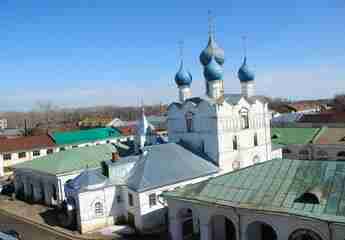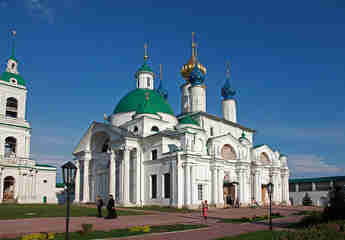
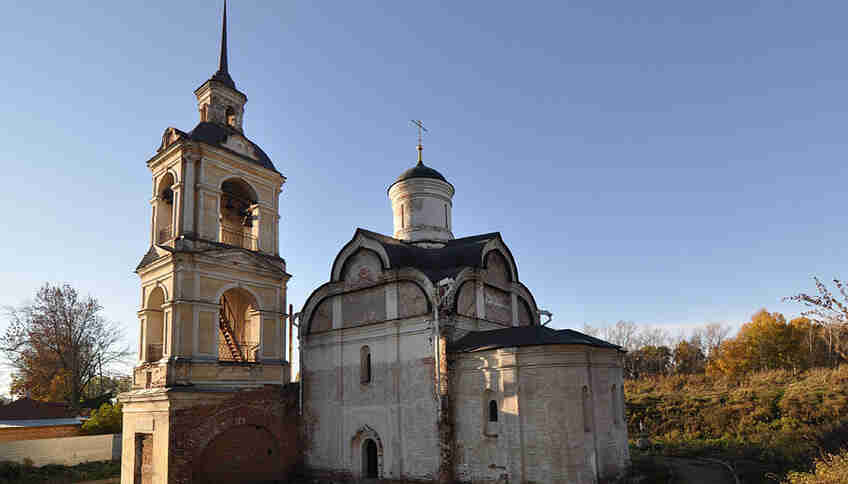
The Church of the Ascension of the Lord also has a second name - Isidore on the Ramparts. In the 15th century, the holy fool Isidore the Blessed lived in Rostov Veliky, who was later canonized.
He lived in a hut by the city's defensive rampart and performed various miracles, such as walking on water and filling vessels with water, but Isidore was especially known for prophecies that came true. After the blessed one's death, a chapel was erected on the site of his hut in the marshes by the earthen rampart, and he himself was buried beneath the church. Today, the relics of Isidore help everyone who has been unfairly wronged and those who have problems with their superiors.
The first church on this site was wooden, and the exact date of its construction is unknown. In 1566, construction of the stone church began by order of Tsar Ivan the Terrible, and its architect was the tsar's court builder Andrei Maloy, who built many Moscow churches.
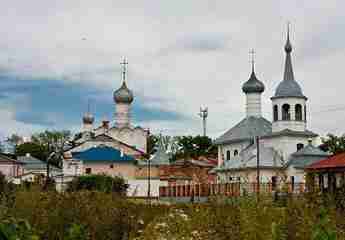
The architecture of the church continues the traditions of Russian church building - a cross vault, rounded zakomaras of varying heights on the facade, and the absence of pillars inside the prayer hall. The interior walls are decorated with frescoes from 1720, many of which have been preserved quite well.
In the 18th-19th centuries, the church was repeatedly rebuilt and expanded: a refectory was added, then a tall tent-roof bell tower, and the shape of the main dome was changed from helmet-shaped to onion-shaped. From 1930 to 2002, the church building belonged to the Rostov Museum, but services have now been restored here.