The siege of the Trinity-Sergius Monastery by Polish-Lithuanian troops in 1608-10 was one of the heroic chapters in the monastery's history. During the battles, many fortifications were destroyed and later rebuilt.
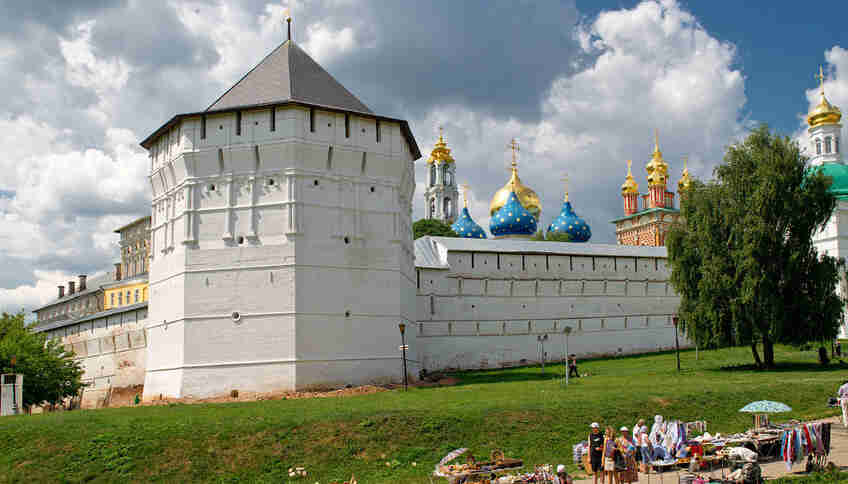
Among them is the tower located at the southeastern corner of the monastery wall. It was destroyed by explosions, and a new one was erected in its place in 1640, named Pyatnitskaya after the Pyatnitsky Monastery, which at that time stood nearby and was closed in 1660.
Originally, the tower was topped with a high tented roof ending in a watchtower, but the fire of 1923 destroyed it. After that, a new roof was installed, lower and more "peaceful."
The octagonal Pyatnitskaya Tower was one of the most powerful in the wall in terms of its military characteristics: 22 meters to the cornice, 21 meters in diameter, 77 loopholes.
One strange legend is associated with it, according to which the stone pillar-pylon inside was hollow, and beneath it there was a pit into which the condemned were thrown. All this was linked to the name of Ivan the Terrible, who executed monks who had fallen out of favor, though... the tsar lived a century before the tower was built. Although some believe that such cases could theoretically have taken place in the previous fortification, destroyed at the beginning of the 17th century.
In any case, the Pyatnitskaya Tower, even without any mystical stories, holds an honorable place among the sights of the Trinity-Sergius Lavra.