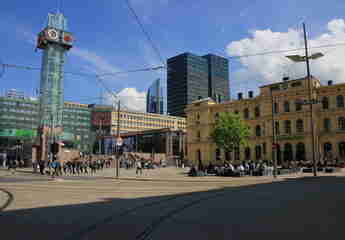
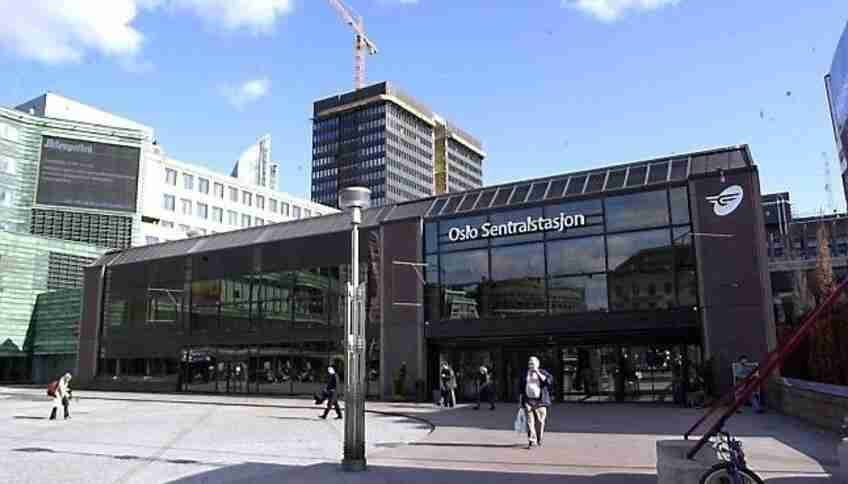
When Oslo's authorities decided to completely reform the entire railway system in the city, they built a new, spacious, and modern station building. At the same time, they did not demolish the old Oslo Ø station, but incorporated it into the project and made it an active part of the station.
The Oslo Ø building was built in 1882, and from here trains departed along seven tracks in eastern directions. Previously, the capital had 2 railway stations: the Eastern one - Oslo Ø and the Western one - Oslo V, in whose building the Nobel Peace Center is now located.
The size of the old stations stopped meeting the needs of the capital as early as the beginning of the 20th century. Oslo's population was growing rapidly, and urbanization increased passenger traffic several times compared with the 19th century. The first plans for the reform and merger of the two stations appeared even before World War II, but they were destined to be brought to life only in 1980.
During the reconstruction, a tunnel was created under the city center, connecting both railway stations of Oslo. A total of 19 lines lead to the capital, 12 of which go underground.
Oslo Central Station was personally opened by King Olav V in 1987. The spacious halls of the new station are equipped with excellent digital boards and ticket vending machines. An escalator will take you to the boarding platforms underground, and detailed signs will not let you get lost.
The historic building of the Eastern Station became a station shopping complex; in its spacious main hall there are dozens of cafes where travelers can grab a quick and inexpensive bite before boarding the train.