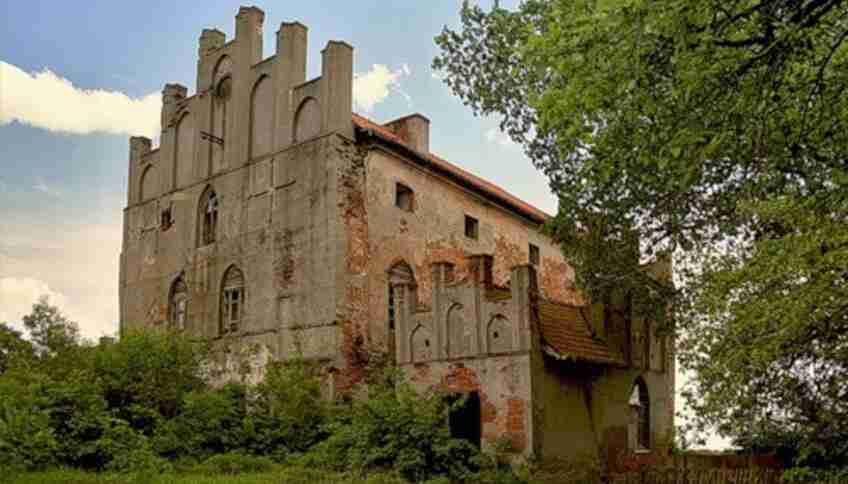
Georgenburg Castle was built in 1345, but throughout the entire 14th century it was subjected to numerous Lithuanian attacks, so it was heavily damaged. In 1390 it was rebuilt in stone, with its walls significantly reinforced, but this did not prevent the Lithuanians from conquering it again in 1403.
The castle changed hands a dozen times; at various times it was owned by the Prussians, Lithuanians, the Teutonic Order, the bishops of Samland, the Swedes, and even the Tatar-Mongols. The fortress was given its beautiful name by the Teutonic knights – Georgenburg was named in honor of the order's patron saint, Saint George.
In 1828 the castle was purchased by the Scottish Simpson family, who began breeding horses here. By crossing the small German Schweike horse with an English breed, Simpson developed a new breed of racehorses – the Trakehner, which made his stud farm famous throughout the world. Trakehner horses were considered incredibly valuable, and the stud farm became one of the largest in Europe.
After World War II, the stables came under the control of the USSR; at first several horse breeds were actively bred here, but in the 1990s the stables fell into decline, as did the castle itself. In the postwar period Georgenburg also served as an infectious disease hospital, but in the 1970s it was turned over for private housing. The state provided no financial support to the castle's residents, and time defeated the ancient walls and wings – the masonry began to crumble, and the building was almost destroyed.
In 2010 Georgenburg Castle was transferred to the Russian Orthodox Church, which has been carrying out a major restoration here at its own expense. The stables passed into private ownership and are now flourishing.