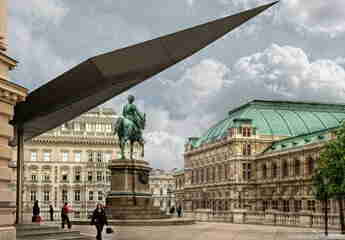


The most beautiful palace complex in the center of the Austrian capital has long been recognized as the city's architectural gem and the starting point for most tourist routes. To be in Vienna and not visit Hofburg is like coming to Paris and not seeing the Eiffel Tower, or being in Egypt and ignoring a trip to the Pyramids of Cheops.
Hofburg is so vast that it is practically impossible to see all of its attractions in one day. It includes 19 palaces built in different eras, as well as about 20 other architectural sites. In addition, the complex is surrounded by two luxurious parks, where strolling is a true pleasure. But it is worth noting that далеко not all of the buildings are open to visitors, because at the moment Hofburg is not just a museum and exhibition center, but also the acting residence of the President of Austria.
Historically, the rulers of the state always lived in Hofburg. According to preserved documents, the palace belonged to the royal family as early as the 13th century. And beginning in the 16th century, it became the permanent winter residence of the Habsburg dynasty. Virtually every emperor added something to Hofburg, buying up neighboring lands and erecting new buildings on them. That is how the palace complex came to consist mainly of courtyards that differ in style. It is no wonder historians joke that Hofburg can be used to study the history of architectural development in Austria. And not only architecture, by the way.
This residence is a reflection of the tastes and preferences of royalty. You can see and compare who liked which paintings, vases, figurines, jewelry, tableware, clothing, etc. For this, it is worth visiting the Imperial Apartments, the Sisi Museum, and the Habsburg Treasury. It contains not only the family relics of emperors that are traditional for all museums, but also completely unusual artifacts. For example, the Spear of Saint Maurice is one of the instruments with which Christ was tortured. It is considered the most likely original. In Christianity, it is also called the "Spear of Destiny."
Many important historical events took place within the walls of Hofburg; hundreds of famous people lived here and visited often. In particular, it was in the Imperial Chapel that court concerts were held under the direction of the outstanding musical figure Antonio Salieri. Today you can hear the incredibly beautiful boys' choir - “Wiener Sängerknaben”, which gives small concerts on Sundays.
Another spectacular event that is definitely worth attending is the performance of the snow-white Lipizzaners. These are pedigreed horses that were bred in the late 16th century in the village of Lipica. They are not only very beautiful and graceful, but also perfectly trainable. Therefore, each of their performances is something special!
It is very difficult to talk about all the attractions of Hofburg within the framework of a short story - each deserves, at the very least, a separate page. Therefore, when visiting this complex, be sure to use audio guides or the services of tour guides. Otherwise, you risk missing something truly important and historically valuable.