
Kohlmarkt

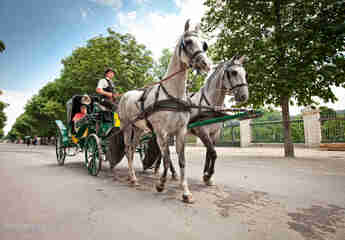
Flickr, j.ardin .... takes a break
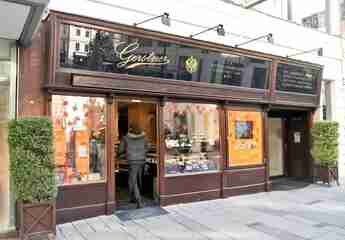
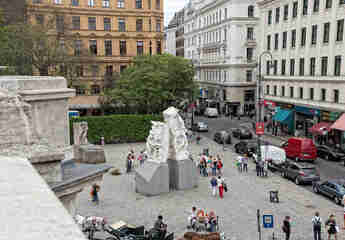
Kohlmarkt (German: Kohlmarkt — "coal market") is a shopping street in the center of Vienna. It connects Michaelerplatz with the Graben. It is considered the most expensive shopping street in the Austrian capital. Jewelry stores and boutiques of famous international fashion brands are located here. The history of Kohlmarkt begins back in the days when the Roman legionary camp of Vindobona stood on the site of Vienna; at the intersection of today's Graben, Kohlmarkt, and Naglergasse, there stood ancient Roman gates until 455. In the first half of the 14th century, charcoal was traded here. After the construction of the Hofburg, manufacturers of high-quality goods and luxury items settled on Kohlmarkt, which found itself in the immediate vicinity of the imperial residence. To this day, Vienna's famous Demel confectionery, once a supplier to the imperial court, is located at No. 14 Kohlmarkt.
Hofburg

Flickr, juergenberlin
Hofburg (German: Hofburg) is the winter residence of the Austrian Habsburgs and the main seat of the imperial court in Vienna. Altogether it has 2600 halls and rooms. Some of the premises are used as the official residence of the President of Austria. The medieval castle was probably built on this site long before the Habsburgs. Documents show that the Austrian rulers were already living in the Hofburg in 1279. The medieval structures around the Renaissance Swiss Courtyard include the 15th-century Gothic chapel and the imperial treasury, where the imperial regalia of the emperors of the Holy Roman Empire are now displayed. Practically each of the emperors of the Habsburg dynasty continued to expand and rebuild the capital residence. For this purpose, they bought neighboring buildings from their owners, demolished them, and then erected new wings of the palace complex on the cleared sites.
Austrian National Library

wordpress, viennaphoto
Austrian National Library (German: Österreichische Nationalbibliothek) is the largest library in Austria. It is located in the Hofburg Palace, Vienna. The Austrian National Library traces its origins to the medieval imperial library. Duke Albrecht III (1349—1395) began collecting books and also organized translations of many works from Latin into German. He kept all this in the Hofburg chapel. Emperor Frederick III (1415—1493) supplemented the collection by bringing some valuable books to the capital. After him, Emperor Maximilian I (1459—1519) made a major contribution to the library's development, becoming the owner of a dowry that included books from Burgundy, which he transported to the Hofburg. The emperor's second wife, Bianca Maria Sforza, brought books from Italy as part of her dowry. After Maximilian's death, the books were kept in Innsbruck.
Ringstrasse

Flickr, Million Seven
Ringstrasse (German: Ringstraße; literally "ring street") is a major street in Vienna encircling the central district, the Innere Stadt. Ringstrasse was laid out on the site of Vienna's old city walls, which were built in the 13th century and strengthened after the Turkish siege of 1529. The fortifications lost their military significance by the end of the 18th century, and the revolution of 1848 gave impetus to notable changes. In 1850, Vienna's suburbs were annexed to the city and became districts two through nine. As a result, the walls turned into an active obstacle to movement already within the city. In 1857, Emperor Franz Joseph I issued the famous decree "It is My Will" (Es ist Mein Wille), ordering the city walls to be dismantled and the moat filled in. In addition, the decree stipulated the size of the new Ringstrasse, as well as the placement and function of the buildings along it. The boulevard and the buildings were conceived as a demonstration of the greatness of the Habsburgs and the Austro-Hungarian Empire.
Museum Quarter

Flickr, ycas
Museum Quarter in Vienna (MuseumsQuartier; German: MuseumsQuartier, abbreviated MQ) is a large museum complex occupying an area of 60 000 m² in Neubau, the 7th district, not far from the city center. The main building of the museum complex was built as the court stables for the emperors of the Holy Roman Empire. In 1713, Emperor Charles VI commissioned Johann Bernhard Fischer von Erlach to build imperial stables on the Vienna Glacis by the outer fortress gate. Construction of the building was completed in 1725 by the architect's son, Joseph Emanuel Fischer von Erlach. After the First World War and the collapse of the Austro-Hungarian Empire, the court stables ceased to function, and most of the property was sold off. In 1921, an exhibition was held on the grounds of the former court stables for the first time, and in the following years the building was rebuilt and renamed the Exhibition Pavilion. Reconstruction and completion of the complex continued until the 1960s. In 1985, the Vienna Festival was held here for the first time.
Heldenplatz

Flickr, Lau Ren San
Heldenplatz, Heroes' Square (German: Heldenplatz), is a historic square in Vienna. The square became most famous after Adolf Hitler's speech on 15 March 1938, when from the balcony of the Neue Burg he proclaimed the Anschluss of Austria and the Third Reich. Heldenplatz is the outer palace square of the Hofburg residence. The square was built under Emperor Franz Joseph as part of the project for the colossal Imperial Forum (German: Kaiserforum), modeled on ancient Rome, which was never completed. The square was used for military parades. Heldenplatz is bounded by the Leopoldinian Wing and the Neue Hofburg, and on the Ringstrasse side by the Outer Castle Gate (Äußeres Burgtor), from whose old name (German: Heldentor — Heroes' Gate) the square got its name. There are no buildings in the northwestern part of the square, which gives it a magnificent view of the Parliament building, City Hall, and the Burgtheater.
Parliament Building

Flickr, Abariltur
The Austrian Parliament Building in Vienna (German: Hohes Haus, formerly Reichsratsgebäude) is the building in which the National Council and the Federal Council of the Austrian Parliament have met from 1918 to the present day. Before that, the Chamber of Deputies of the dual monarchy of Austria-Hungary was housed in the building. The Parliament Building is located on Ringstrasse, in Vienna's Innere Stadt district next to the Hofburg palace complex. It is open to tourists. The building was constructed in 1874—1883 in the Greek Revival style according to the design of architect Theophil von Hansen. Despite severe damage during the Second World War, most of the original interior was restored during the renovation of 1955—1956. The Parliament Building occupies an area of more than 13 500 m². It contains more than 100 rooms, the most important of which are the chambers of the National Council, the Federal Council, and the former imperial House of Representatives (Abgeordnetenhaus).
City Hall

Flickr, swampa
Vienna City Hall (German: Wiener Rathaus) is located on Friedrich Schmidt Square (German: Friedrich-Schmidt-Platz) in the 1st district (Innere Stadt). The building was constructed in 1872—1883 according to the design of architect Friedrich Schmidt. It houses the offices of the city's mayor and municipality. Sessions of the Landtag are also held in the City Hall. By the middle of the 19th century, numerous Vienna suburbs had become part of the city, and its area and population had increased significantly, and the Old City Hall building on Wipplingerstrasse (German: Wipplingerstraße) no longer met the city's needs. In 1868, a competition was announced for the construction of a new City Hall, which was won by the German architect Friedrich von Schmidt. Originally, the new City Hall was going to be built opposite the city park, but in the end a section of the Glacis in Josefstadt, used for parades, was allocated for it. For a long time there were disagreements between the city and the monarchy regarding this site.
Burgtheater

Flickr, Sempreingiro
Burgtheater (Burgtheater) is the court theater in Vienna's Hofburg. It was founded in 1741 by decree of Empress Maria Theresa. During the 18th and 19th centuries, it was one of the most prestigious theaters in the German-speaking world. The premieres of Mozart's operas The Abduction from the Seraglio (1782), The Marriage of Figaro (1786), and Così fan tutte (1790) were given here. In October 1888, the theater was moved to a new building on Ringstrasse. At the beginning of the 20th century, one of Europe's greatest actors, J. Kainz, performed at the theater. The classical repertoire was staged on the theater's main stage, while contemporary authors were presented mainly on the stage of its branch, the Akademietheater. After the theater building was destroyed by Allied bombing in 1945, the theater was housed in the former Ronacher variety theater. The building was restored in 1953—55. Thanks to the active work of Claus Peymann, who headed the theater from 1986 to 1999, the Burgtheater became one of Europe's leading theaters. It hosted the premieres of new plays by T.