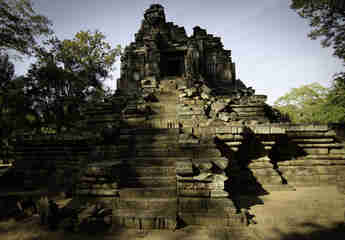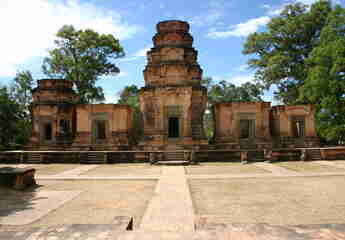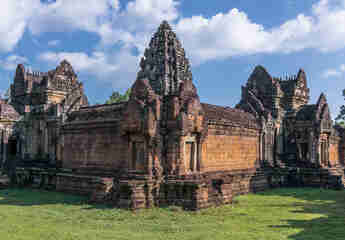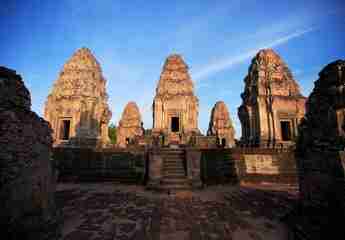
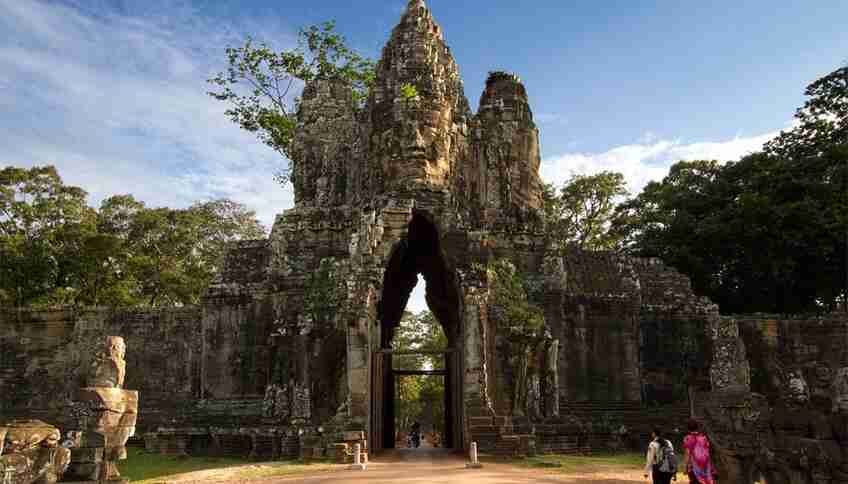
Angkor Thom is a temple city built in the late 12th – early 13th centuries. It served as the capital of the Khmer Empire for a long time and, as befits it, was well protected by a high wall and a moat.
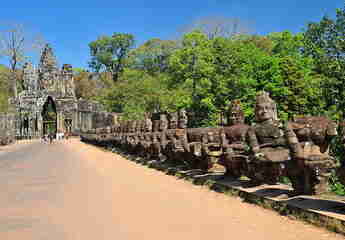
The city could be entered through gates in the fortress wall; there were five of them – one on the west, north, and south sides, and as many as two entrances on the east side: one – the Victory Gate – for departing to war, and the other for returning in case of defeat. The South Gate is the best preserved, which is why most tours of Angkor Thom take tourists through it.
The gate itself is very beautiful and majestic. Above the entrance rises a 23-meter tower with images of the four faces of the bodhisattva Avalokiteshvara, directed toward different points of the compass. Depending on the weather and the lighting, these faces seem to change their expression. Sometimes they appear welcoming and good-natured, and sometimes sad and even terrifying. Although Avalokiteshvara is translated from Tibetan as “compassionate gaze” and, according to all canons, embodies boundless love and compassion. By depicting the deity on the towers of their gates and temples, the Khmers thus emphasized that they were under the watchful eye of the great Avalokiteshvara.
As you pass through the gate, you can look up and see bats hiding in the stone vaults. It is a very impressive sight!