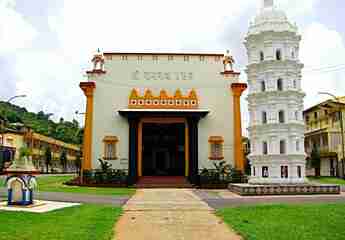
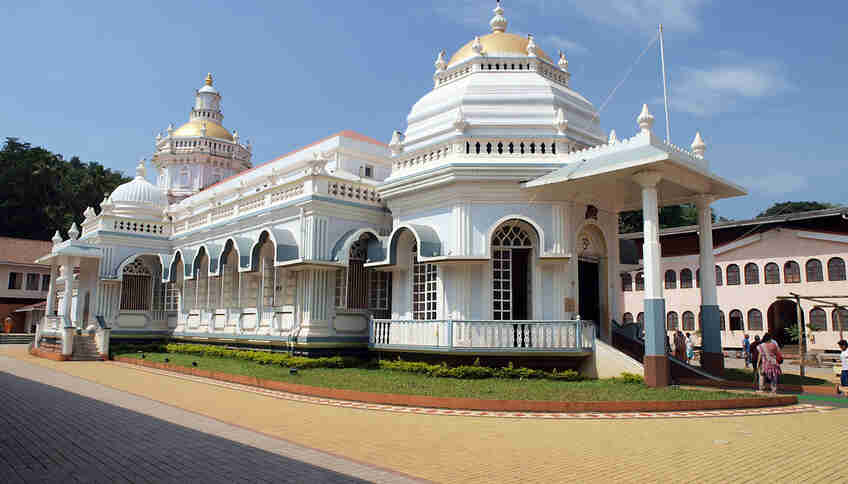
Built in honor of one of India's most revered gods, Shiva, the temple is one of the most majestic in the country, even though its size is small.
Photography is not allowed here, and shoes are not permitted. Show respect for another culture and religion, do not take pictures and bring a pair of socks with you.
At the entrance to the temple, garlands and other decorations made of orange flowers are sold, the purchase of which is regarded as offerings to the gods. You should not smell them or wear your purchase as an accessory: according to Indian tradition, offerings must be pure.
The eclectic style of the temple incorporates several architectural traditions that, at first glance, seem incompatible: Hindu, Christian, and Muslim. Inside, the temple is paved with marble, the walls are decorated with tiles, and a silver door leads to the altar area. The complex with its high towers and small shrines resembles a palace. A bright addition to the ensemble is the turret where oil lamps are kept.
The origin of the name is associated with a beautiful legend. After a quarrel with his wife Parvati, Shiva appeared to her in the form of a tiger, and she implored her husband: "Save me, god of the mountains!" ("Trahi Mam Girisha"). This expression later transformed into "Mangesh".