The temple with the hard-to-pronounce name was built in honor of the god Shiva, revered as the patron of the Kadamba dynasty. This god's name was minted on ancient coins next to the royal name.
It is believed that Shiva appears in this temple before the faithful in one of his many forms. The name of the sacred structure translates as "seventy million." According to an ancient legend, seven elders prayed here for 70 million years so that Shiva would hear them. In response, the god appeared before them and promised to remain in one of his reincarnations.
The first temple was built in the XII century by King Jayakeshi for his wife Kamaladevi, who worshipped Shiva. In the XIV century, the historic site was constantly attacked by Muslims and was eventually destroyed. However, at the very end of the century, when the balance of power shifted in favor of the Indian army, the temple was restored. The main shrine - Shiva's symbol ("linga") - was saved by hiding it in a rice field.
In the XVI century, during the active imposition of Christianity by the Portuguese, the temple was destroyed again, and the linga was lost. Many years later, it was found in a village, where it was used as a weight for a well. The shrine was moved to another temple. The linga received a new home in the XVII century, and the ruins of the old destroyed temple were dismantled and used for new construction.
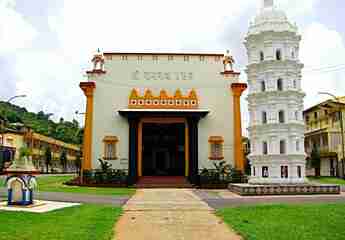
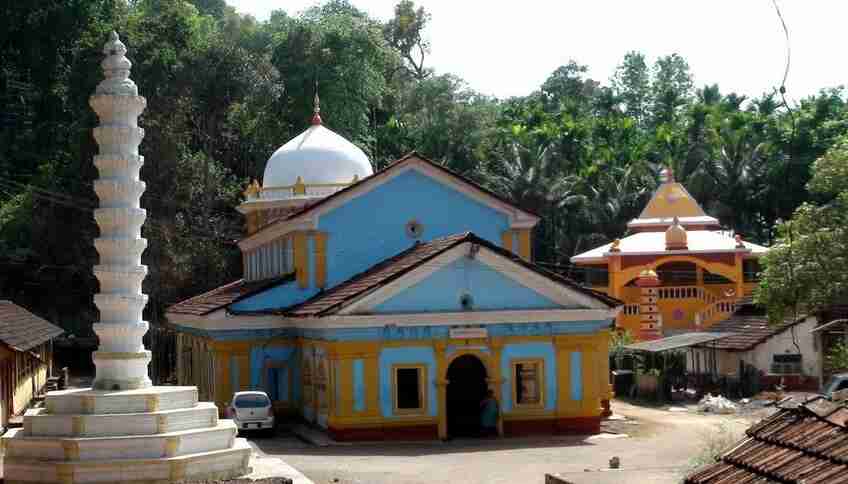
The new Saptakoteshwar Temple is built in the Goan style, and its walls are brightly painted. Nearby there is a pond where rituals are performed.