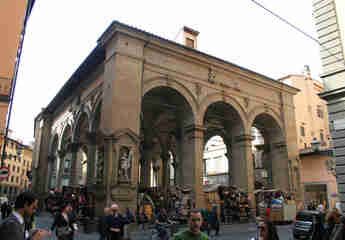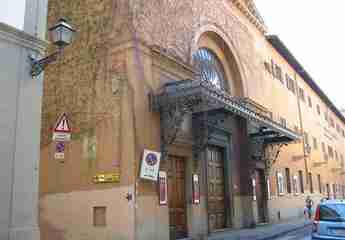
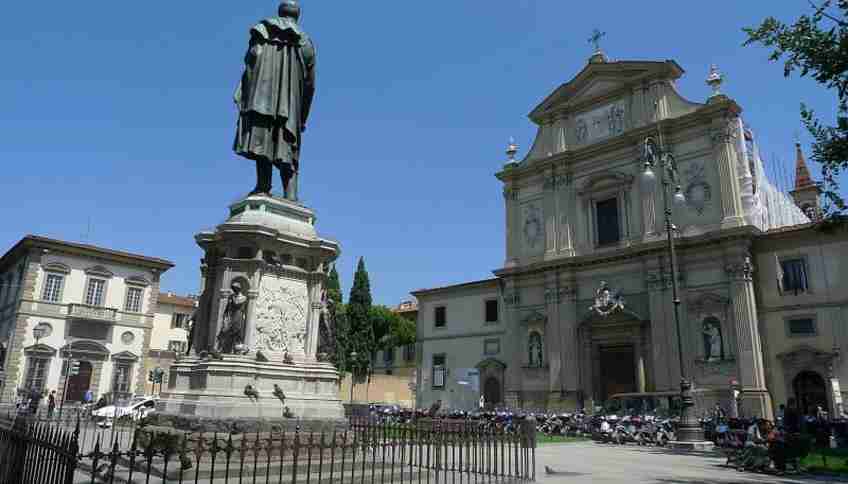
This square is named after the monastery of the same name, which was founded around the 13th century. Today it is an entire complex consisting of the Church of San Marco and a women's convent that houses the national museum.
In the 15th century, Cosimo de' Medici handed both the monastery and the church over to the Dominican monks, while also pointing out the need to reconstruct the buildings. He probably chose this way to show his respect for the church, and at the same time strengthen his own authority, because during the renovation the symbolism of the Medici dynasty appeared on many details of the facade and interior.
An interesting period in the life of the monastic complex and Florence as a whole began at the end of the 15th century with the appointment of the priest Girolamo Savonarola as prior. He personally strove, and urged everyone around him, to live more modestly, to renounce luxury and wealth, while helping the poor. Incidentally, it was he who secured the temporary expulsion of the Medici themselves from Florence. Savonarola later suffered for his own convictions, but nevertheless remained in the Florentines' memory for a long time.
Also located on Piazza San Marco is the Academy of Fine Arts, where you can see genuine masterpieces, including Michelangelo's famous David. And in the center of the square there is a monument to the Italian Risorgimento general Manfredo Fanti.