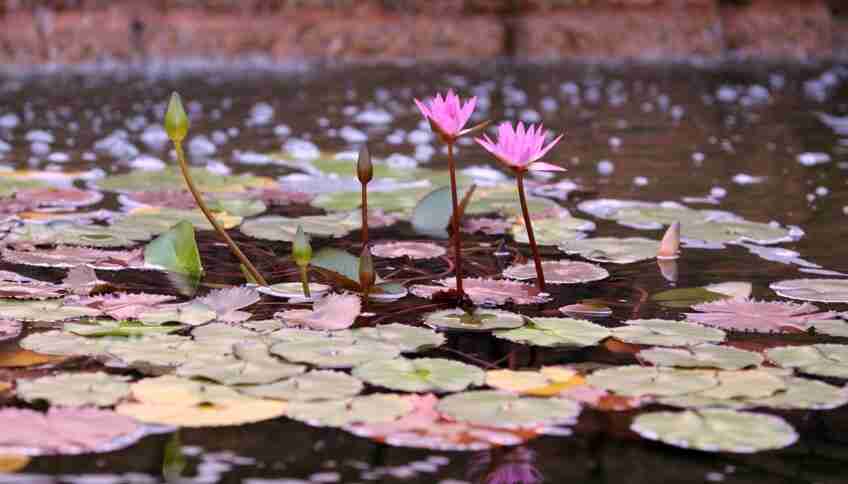
The huge 13,5-hectare park is home to a large sports complex, galleries, and a research center. It is also home to exotic flora and fauna: black swans, turtles, flamingos, and others. There is also a children's play area, fitness grounds, a flower garden, a maze garden, a sculpture alley, and a paid swimming pool on the grounds.

Flickr, Wayne Barkley
Hong Kong residents are very fond of this place; they come here to do gymnastics, read, or simply walk with their children. Interestingly, among themselves they traditionally call this park the "walled city".

Flickr, Wayne Barkley
On the Kowloon Peninsula, a fortified city began to take shape as early as the 15th century. In the 17th century, a signal tower was built and surrounded by a fortress, and another two hundred years later a real military fort arose here. During times of war, the importance of this garrison for Hong Kong as a whole increased significantly, but after World War II the area entered a period of lawlessness and chaos.

Flickr, John
In the 90s of the last century, government officials decided to resettle the people, demolish the houses, and create a park on the cleared site. Many artifacts were found on the site of the former fortress, and they tried to incorporate them into the park's design. Among the finds, in particular, were two granite tablets, one of which bears the inscription: "Walled City of Kowloon".
Read also: