Ba Dinh Square

Flickr, marfis75
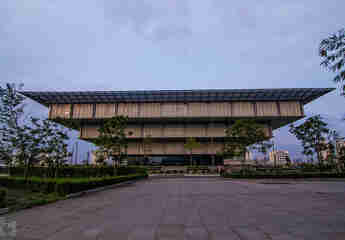
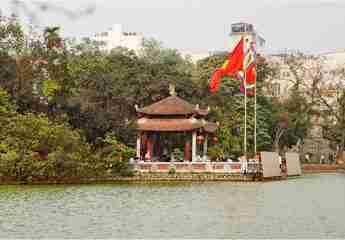
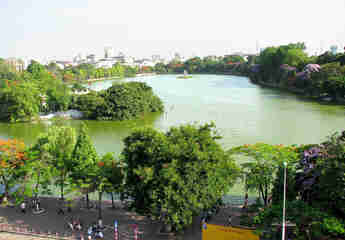
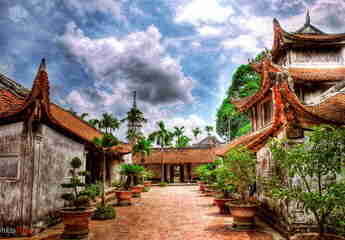
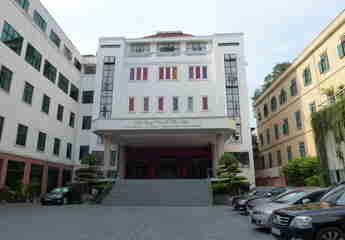
Ba Dinh Square (Vietnamese: Quảng Trường Ba Đình) is the central square of Hanoi, the capital of Vietnam. It is located in the center of Ba Dinh District.Ba Dinh Square is named after the anti-French Ba Dinh uprising that took place in Vietnam in 1886-1887 as part of the Cần Vương movement. On Ba Dinh Square, on September 2, 1945, President Ho Chi Minh proclaimed the independence of the Democratic Republic of Vietnam. Six years after Ho Chi Minh died in 1969, the granite Ho Chi Minh Mausoleum was built here, housing his embalmed body. The mausoleum is the main site of tourism and pilgrimage.Several other important buildings are also located on the square — the Presidential Palace, the Ministry of Foreign Affairs, the Ministry of Planning and Investment, as well as a site for the new National Assembly building, replacing the demolished Ba Dinh Hall (currently under construction).
Ho Chi Minh Mausoleum

Panoramio, Grafikol.com
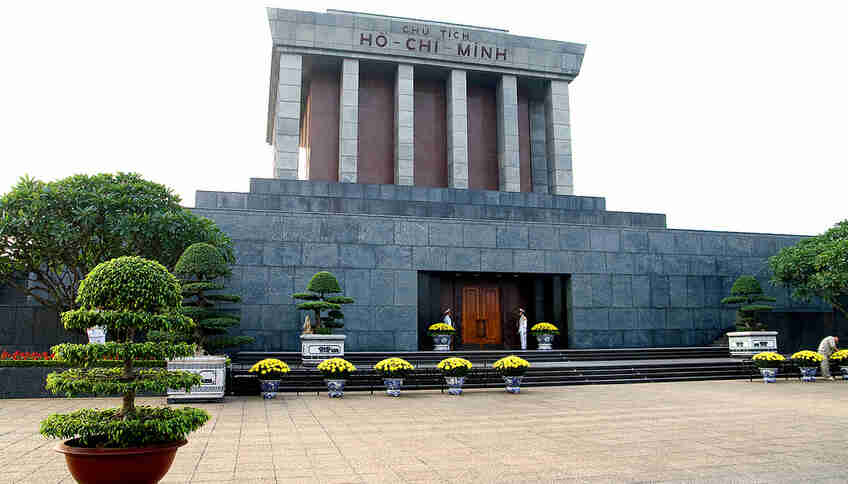
The Ho Chi Minh Mausoleum (Vietnamese: Lăng Chủ tịch Hồ Chí Minh) is the tomb of the first president of North Vietnam, Ho Chi Minh. This architectural memorial is located in Hanoi, Vietnam, on Ba Dinh Square, on the site where Ho Chi Minh proclaimed Vietnam's independence on September 2, 1945.The mausoleum is part of the architectural ensemble of President Ho Chi Minh's Mausoleum, which also includes Ho Chi Minh's stilt house and the Ho Chi Minh Museum. Also on the grounds of the ensemble is the thousand-year-old One Pillar Pagoda (Mot Cot Pagoda).[1]Ho Chi Minh died on September 2, 1969, and bequeathed that he be cremated and his ashes scattered over Vietnam, but his successor Le Duan made a different decision. Initially, Ho Chi Minh's embalmed body was kept in a secret place to protect it from American bombing during the Vietnam War, and after the US withdrew from the war in 1973, construction of the mausoleum began.
One Pillar Pagoda

Flickr, staffan.scherz
The One Pillar Pagoda (Vietnamese: Chùa Một Cột, chữ Nôm 𠬠榾, chua mot cot), formerly the Temple of Remote Salvation (Diên Hựu tự, 延祐寺, dien huu tu) and the Lotus Flower Tower (Liên Hoa Đài, 蓮花臺, lien hoa dai), is an ancient Buddhist shrine in Hanoi. The One Pillar Pagoda and the Perfume Pagoda are considered the most famous pagodas in Vietnam[1]. The temple is built of wood on a single stone pillar 1.25 meters in diameter; outwardly it resembles a lotus flower, a Buddhist symbol of purity.The pagoda was built by Emperor Ly Thai Tong, who ruled from 1028 to 1054. According to court chronicles, the emperor had no children and one day saw in a dream the bodhisattva Avalokiteshvara, who was sitting on a lotus flower and placed a newborn son into Ly Thai Tong's hands. After that, the emperor married a peasant woman who bore him a son. In gratitude, Ly Thai Tong built the pagoda in 1049[1] on the advice of the monk Thien Tue (Thiền Tuệ), who suggested that he erect a pillar in the middle of a lotus pond, based on the dream[2].
Ho Chi Minh Museum

Flickr, DerFussi
The Ho Chi Minh Museum (Vietnamese: Bảo tàng Hồ Chí Minh) is a museum in Hanoi dedicated to Vietnam's president Ho Chi Minh and Vietnam's revolutionary struggle against foreign powers. The museum is part of the Architectural Ensemble of President Ho Chi Minh's Mausoleum and is located in the western area of Hanoi's cultural and historical heritage, which also includes West Lake, the botanical gardens, the Ngoc Ha flower-growing village, Quan Thanh Temple, and Tran Quoc Pagoda.In 1970, a year after Ho Chi Minh's death, a committee was created to prepare for the construction of the Ho Chi Minh Museum. The Soviet government provided free assistance in the construction of the museum. The Soviet Union took on most of the preparatory work, including the designs and the formation of teams of specialists. The group of designers was led by Garold Isakovich, a famous architect who played an important role in the construction of the Ho Chi Minh Mausoleum, the Lenin Monument, and the Palace of Culture of Friendship of the Soviet and Vietnamese Peoples in Hanoi[1].
Ho Chi Minh's Stilt House

wikimedia.org
Ho Chi Minh's Stilt House is the stilt house where Ho Chi Minh, the president of Vietnam, lived. It is part of the Architectural Ensemble of President Ho Chi Minh's Mausoleum. It is located behind the Presidential Palace. The house is built of polished and lacquered wood. Previously, a one-story house stood on this site[1].As an advocate of equality, Ho Chi Minh wore brown cotton clothes and rubber sandals made from car tires, and lived in a worker's house behind the presidential palace. In 1958, he visited the former resistance headquarters in the northwest, where he saw the stilt houses in which he had spent the war years. Returning to Hanoi, he said that he would like to build the same kind of house near the presidential palace. The Party entrusted the design to architect Nguyen Van Ninh from the Department of Military Construction. Before construction began, the architect had to show his work to Ho Chi Minh.
Presidential Palace

Flickr, Conrad de Jesus
The Presidential Palace in Hanoi (Vietnamese: Phủ Chủ tịch) is the official residence of the president of Vietnam in Hanoi. The building was constructed at the beginning of the 20th century and originally served as the residence of the governor-general of French Indochina. Architect: Auguste Henri Vildieu (en). The palace is located north of the Ho Chi Minh Mausoleum and is part of the Architectural Ensemble of President Ho Chi Minh's Mausoleum. At present, the palace is the official residence of the president of Vietnam and is used for state receptions[1].The construction of the residence lasted six years - from 1900 to 1906. The construction was supervised by the French architect Auguste Henri Vildieu. The site for construction was confiscated from the previous owners, and there was also a thousand-year-old pagoda on the site, which was demolished despite the objections of the subjects.