Hang Gai, better known as Hanoi’s Silk Street, is still one of the Old Quarter’s most enjoyable streets for a stroll, especially if you want fabrics, gifts, or a feel for the neighborhood’s traditional trading life. Expect a livelier, more polished mix of boutiques and local businesses than in the past, but the street’s character is very much intact.
Updated for 2026: Hanoi’s Old Quarter remains busy, walkable, and best explored slowly. On Hang Gai, many shops now cater to both locals and visitors, so quality is usually better than rock-bottom bargains. It is still a good place to browse for silk, clothing, and small gifts, but compare a few stores before buying.
The history of this street goes back centuries, to the period when Hanoi’s craft guilds clustered by trade. That is how many of the Old Quarter’s best-known streets took shape: paper, fan, shoe, and silk streets, among many others.
Most of those old trade streets still exist today, and they remain one of the most interesting parts of the city to explore. You can still shop for everything from paper goods and fans to traditional clothing and silk, though these days the selection is often aimed as much at visitors as at working locals.
On Silk Street you will find private boutiques, fabric shops, and tailor-oriented stores. Bargaining is sometimes possible in smaller independent shops, but not everywhere, and prices vary widely depending on quality.
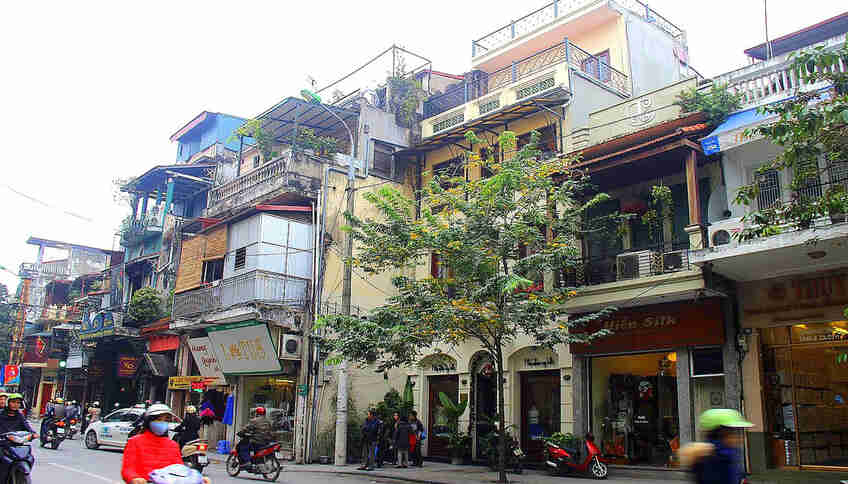
The streets of Hanoi's Old Town create an amusing optical illusion: from the outside it seems that you are entering a tiny shop only a few meters wide, but when you open the door, you discover that the shop is actually quite large, though absurdly stretched in length.
The explanation for this lies in the old “tube house” design that became common in Hanoi. Many buildings were built with very narrow facades and long interiors, creating shops and homes that seem tiny from the street but open up deep inside. Rooms and utility spaces were often arranged one behind another in a single line.
In addition, many of the older buildings in the area are low-rise, which gives the Old Quarter much of its distinctive look and human scale.