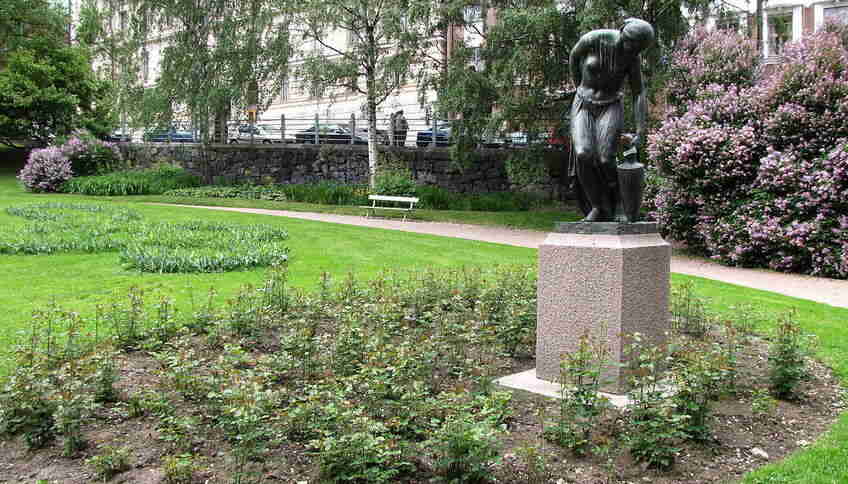
At the foot of the monumental Helsinki Uspenski Cathedral, in the blooming Katajanokkan puistikko, in the middle of a flower bed, stands a small bronze statue.
A semi-nude girl in ancient attire has bent down to lift her amphora with water. Her name is Vedenkantaja, which translated from Finnish means “water bearer.” The statue is executed in the best traditions of classical romanticism and follows the canons of ancient Greek and Roman sculptors. Ideal classical proportions, maximum naturalism and harmony of the human body, and the skillful rendering of the pose, which gives the statue dynamism and vitality - all this places Vedenkantaja among the masterpieces of the masters of antiquity and modernity.
The author of this work is Viktor Malmberg, a Finnish sculptor and lecturer at the University of Art, Design and Architecture in Helsinki. He created it in 1923, and in 1924 the municipal authorities of Helsinki bought the sculpture from him and installed it in its current location.
In the country, which had only just gained its independence at that time, there was an acute need to create places for citizens' leisure and to transform the appearance of the capital. In this connection, a large-scale campaign was launched to decorate the parks and streets of Helsinki, with preference given to sculptures and monuments that had no stylistic connection to the history of Finland or Russia. Ancient statues and bas-reliefs on buildings were meant to show the young country's aspiration to join the common cultural style of other European capitals.