
This park in the very center of London has royal status, which it received back in the 16th century. Its name, by contrast, comes from rural life. A “hide” was the name of a unit of land area sufficient to support the family of a free peasant.
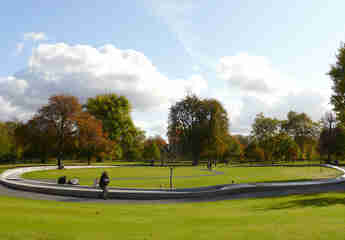
Amid the bustle of the huge metropolis, the park stretches across as many as 140 hectares. Formally, only the eastern part of this green expanse is called “Hyde Park,” while the western part is known as “Kensington Gardens”. However, there is no official boundary between them, and over time the name came to apply to both areas. Most of the park consists of shady ancient avenues of oaks, elms, and plane trees, as well as luxuriant green lawns.
Originally, this was the “Hyde” estate of Westminster Abbey, which King Henry VIII seized in 1536 and turned into hunting grounds. That is how the “royal” history of the park with its “peasant” name began. A century later, under King James I, it became London's largest urban parkland and opened its gates to visitors. Charles II, meanwhile, arranged the main avenue for the capital's aristocratic promenades. It became the road crossing the park called Rotten Row, along which the English strolled in carriages under the light of oil lamps.
In the first half of the 18th century, an artificial reservoir was created in Hyde Park. Because of its fanciful winding shape, the lake was named “The Serpentine” (from the English word for “snake-like”). Swans, wild ducks, and geese have made its waters their home. Relaxing in deck chairs around the Serpentine, visitors often cool off as well, worn out by the summer heat.
In addition, the park has an art gallery and museum of the same name. It is also home to the Wellington Arch, which appeared at the beginning of the 19th century, when Hyde Park hosted the parade celebrating Wellington's victory over Napoleon. Another outstanding architectural landmark - the Victorian-era Crystal Palace – has unfortunately not survived to the present day.
But Hyde Park's calling card has become the famous “oasis of freedom” - Speakers' Corner. It was set up back in the days of kings, now that's democracy! This cherished spot in the park has never been empty from 1872 to the present day. Every day from noon, anyone who wishes can speak from the improvised platforms.
“Pet Cemetery” is not only a famous horror film, but also another Hyde Park attraction. This unusual burial place was created by the Duke of Cambridge after the death of his wife's beloved pets. This unusual cemetery opens to visitors only once a year.
But for the most part, Hyde Park is a cheerful place. Here you can not only splash in the lake, but also go horseback riding, play bowling or tennis, roller-skate, or feed the many squirrels.