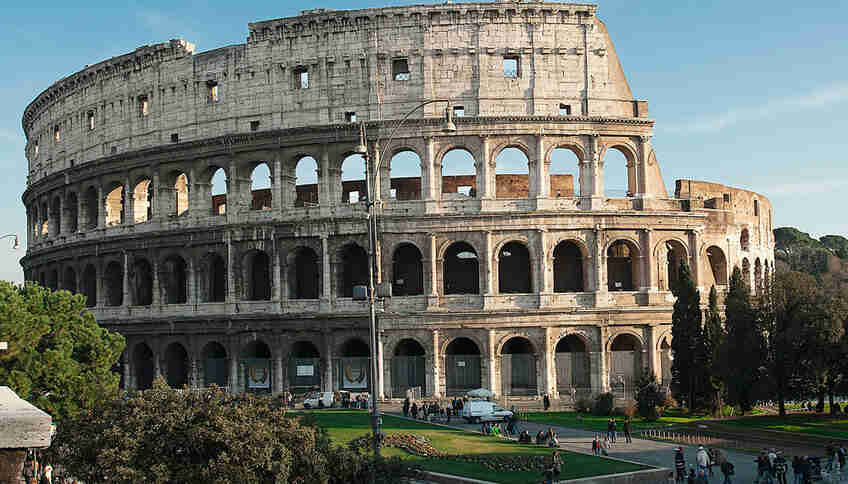

Rome's attractions are extremely numerous, but the main one is rightfully considered to be the Colosseum - the symbol of the city, built in the 1st century AD.
The huge amphitheater was intended for entertainment and spectacles. All the residents of Rome and visiting guests wanted to get into it. And although more than two thousand years have already passed, people still come to the Eternal City to see the Colosseum.
Its construction began in 72, after the civil war had ended, the Jewish uprising had been suppressed, the people were tired of endless military actions and demanded "bread and circuses." Emperor Vespasian, who ascended the throne after Nero, traveled through all the provinces to collect taxes and somehow replenish the treasury, emptied by the previous ruler. About 100,000 slaves were brought in for the construction of the Colosseum. They quarried travertine in the quarries of Tivoli, hauled it upward, and delivered it to Rome. It was very hard labor, so construction lasted 8 years.
We help you plan a trip to Rome - Travel planner and guide for iPhone or Android. Hundreds of attractions, ready-made walking routes, the ability to create your own routes, an offline map, and GPS. Everything you need for an interesting trip.
When the amphitheater was completed, hardly anyone would have dared to doubt the greatness of Rome anymore. The height of the Colosseum's walls reached 50 meters. The area of the oval-shaped structure measured from 156 to 188 meters in diameter. In ancient times the amphitheater held more than 50,000 spectators! They were seated in several tiers of seats, each of which was intended for people of a particular social class. Closest to the arena sat the emperors and Vestal Virgins, behind them the representatives of the city authorities, then the citizens of Rome, and in the last rows women and plebeians.
Gladiatorial fights, battles with ferocious animals, and "naval" battles (simulated combat on water) took place in the arena. This went on for more than 12 centuries. No one even ventures to calculate how many people died on the amphitheater stage during that time. But in the 14th century a powerful earthquake occurred, which badly damaged the Colosseum, especially its southern part. The performances ceased. The fallen pieces of stone were quickly carried away to construct other buildings. Some people even deliberately broke off blocks for building material. The authorities turned a blind eye to this. Only in the middle of the 18th century did Pope Benedict IV take the Colosseum under his protection. All the popes who followed him also protected the ancient structure from being "carried off" piece by piece.
Thank you! Every time you book hotels on Booking.com through our site, you help us describe one more place, create one more route, or develop one more city. Thank you for that!
banner booking
Now the Colosseum is also under protection; it has been recognized as one of the 7 New Wonders of the World. And for all visitors it has been, and for many years to come will remain, item No. 1 on the "must see in Rome" list.
Note: there are always huge lines of tourists at the Colosseum ticket offices, but you can avoid them - exactly the same tickets can be purchased at the ticket offices near the Roman Forum or the Palatine Hill.
Routes and guides to Rome:
- Guide to Rome
- What to See in Rome in One Day
- First Independent Route in Rome: Vatican and the Vatican Museums
- Second Independent Route in Rome: Castel Sant'Angelo - Piazza Navona - Pantheon - Trevi Fountain
- Third Independent Route in Rome: Colosseum — Roman Forums — Piazza Venezia — Trajan's Column — Imperial Forums
- Fourth Independent Route in Rome: Trastevere District
- Night Walk in Rome