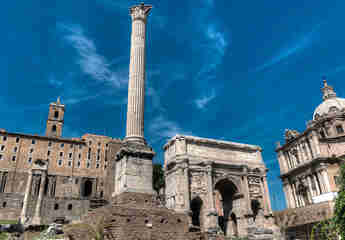
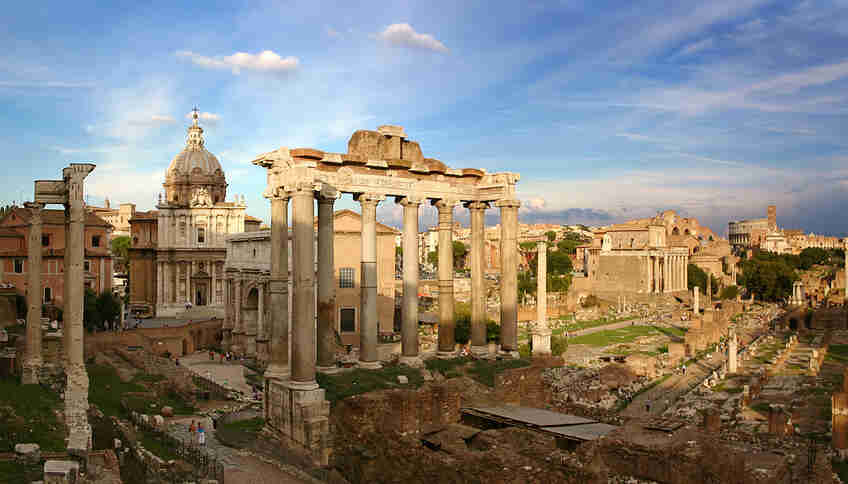

The list of Italy's most popular attractions includes not only Colosseum, St. Peter's Basilica, Trevi Fountain and Piazza Navona, but also, of course, the Roman Forum. This place was the center of all public life in ancient times. It was from here that the concept of a forum originated, which is now more associated with the internet, but still means discussing pressing issues by a large number of people.
On the very spot where only ruins remain today, there once stood a majestic square with its statues, columns, rostrums, basilicas, and other structures. At the Roman Forum, representatives of the authorities in purple togas gathered, laws were passed, the fates of other cities and even countries were decided, victors were honored, and the guilty were executed.
It is hard to believe in the former history of this place when looking at the remaining ruins. But you can, especially if you turn on the audio guide to Rome. With it, you will learn where the majestic basilicas once stood, where the luxurious temples were, and where ordinary people gathered in the evenings. The dull ruins will practically come alive before your eyes!
The Forum was located in a lowland between the hills. Many years before that, people lived on them, and they used the valley for burying the dead. It was a marshy area, unsuitable for living and cultivating the land. When Tarquinius Priscus ascended the throne, the construction of drainage ditches and sewers began. This led to the draining of the swamp on which the Forum was later built. On one side of the square stood merchants' shops, and on the other, public ceremonies, religious festivals, elections, and oratorical speeches took place.
Gradually, the Forum expanded. Aristocrats sought to settle closer to the center of public and political life, gradually moving from the hilltops down to their bases. Around the square, basilicas were built one after another. More and more statues depicting prominent political figures appeared in the Forum itself. Soon there were so many sculptures that they interfered with the movement of people. Then hearings had to be organized to decide which statues could remain and which had to be removed. After that, some of the sculptures were torn down. New ones appeared in their place only after the approval of the Senate and the people. Only truly worthy individuals could earn such an honor.
We help plan a trip to Rome. Download our free mobile application - Travel planner and guide for iPhone or Android. Hundreds of attractions, ready-made walking routes, the ability to create your own routes, an offline map, and GPS. Everything you need for an interesting trip.
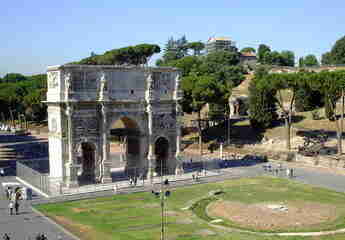
Now, at the site of the Roman Forum, only foundations, half-ruined walls, and columns remain from most of the buildings. It is quite difficult to imagine the full picture of past life from them. At the same time, visiting the Forum requires a ticket, so many travelers simply climb higher, to an open площадка, from where the ruins can be viewed completely free of charge. But in general, it is worth noting that the paid entrance includes an extensive program: for 12 euros you can visit not only the Roman Forum, but also the Colosseum and the Palatine Hill.
Thank you! Every time you book hotels on Booking.com through our site, you help us describe one more place, create one more route, or develop one more city. Thank you for that!
banner booking
Routes and guides for Rome:
- Guide to Rome
- What to see in Rome in one day
- First self-guided route in Rome: Vatican and the Vatican Museums
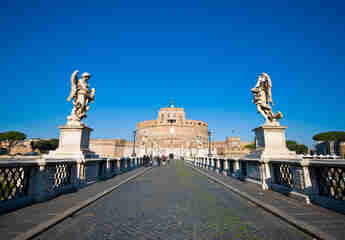
- Second self-guided route in Rome: Castel Sant'Angelo - Piazza Navona - Pantheon - Trevi Fountain
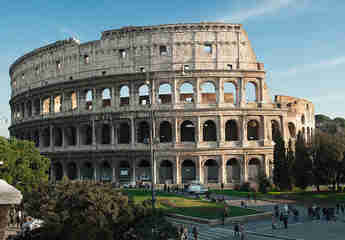
- Third self-guided route in Rome: Colosseum — Roman Forums — Piazza Venezia — Trajan's Column — Imperial Forums
- Fourth self-guided route in Rome: Trastevere district
- Night walk in Rome