
A Trip to Vienna
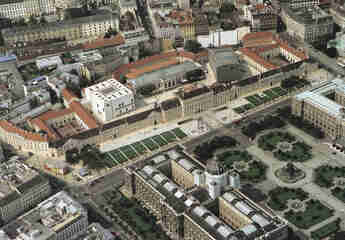
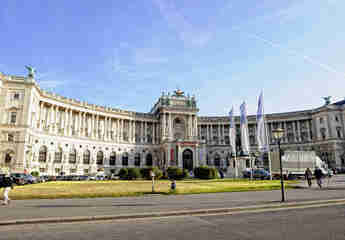
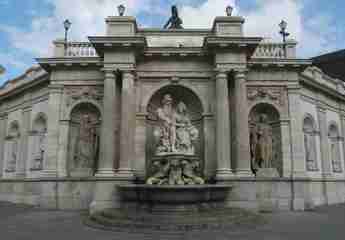
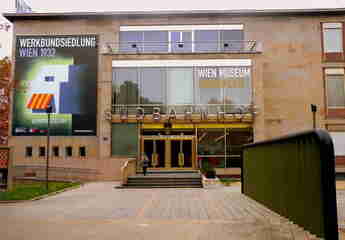
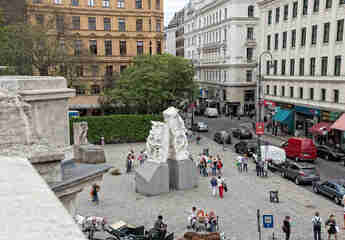
Vienna is a city of magnificent palaces and wide boulevards, the capital of the Austro-Hungarian Empire, a melting pot of Europe. Having mixed dozens of national traditions, this city took the best from each of them. Buildings of amazing beauty from all styles and eras, stunning museums – both art and science. Heuriger taverns serving young wine and home-cooked meals, cozy coffee houses with exquisite desserts and exotic oriental markets, spacious parks and narrow central streets – a trip to Vienna easily combines these seemingly incompatible pleasures!

Among the city's residents there have always been many outstanding personalities: at different times the greatest composers Mozart, Beethoven, Schubert, Brahms, Haydn, Strauss worked here. The famous psychoanalysts Sigmund Freud, Alfred Adler and Viktor Frankl, physicist Erwin Schrödinger, writer Stefan Zweig, modernist artists led by Gustav Klimt and many, many others also worked here... This is hardly a simple coincidence. Some believe that inspiration mixed with creative energy floats in the air of Vienna. Come and see for yourself!
How to Get to Vienna?
The most efficient and fastest way to reach Vienna from Russia or Ukraine is by air. From Moscow, there are direct flights operated by Aeroflot, Transaero, and Austrian Airlines; from St. Petersburg, planes fly to Vienna with Aeroflot and Austrian Airlines. Travel time from Moscow or St. Petersburg is no more than three hours. As for Kyiv: a direct flight with Ukraine International Airlines or Austrian Airlines will get you to Vienna in an hour and a half to two hours.
There are also connecting flight options that allow you to save a bit on airfare. Consider flights with airBaltic, Finnair, Belavia, Lufthansa, etc.

To buy airline tickets at competitive prices, the Ever.Travel team regularly uses the Aviasales service. The convenient navigation of this site and a wide selection of different flight options make it quick and easy to find a suitable flight and immediately book your tickets. For tips on how to buy cheap tickets, read the Ever.Travel advice section.
Where to Stay in Vienna?
Vienna is essentially a vast open-air museum, where many attractions are listed as UNESCO World Heritage sites. Nearly every street or district, especially in the center, has its own unique history. Even the suburbs, like Baden or Grinzing, are wonderful places for excursions that can easily fill several days.
However, it's best to stay in Vienna's central districts – that way you'll be roughly equidistant from the capital's attractions and its surroundings. Many walking routes pass through the city center, and what's further away is still easily accessible, as Vienna has an excellent public transport system.

Map of Vienna's districts
Inner City (Innere Stadt, No. 1)
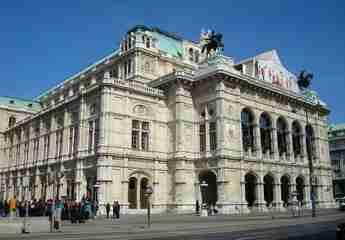
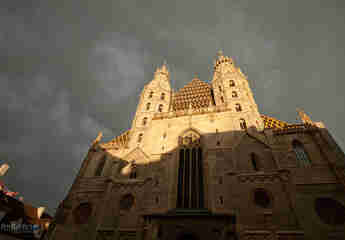
The very heart of Vienna, its historic center – this is District No. 1, also called the Inner City. Room rates at local hotels start from 120 euros per night. The high cost of accommodation is compensated by stunning views and numerous restaurants, cafés, shops, and, of course, attractions. You'll be within walking distance of St. Stephen's Cathedral, the imperial Hofburg residence, the famous Vienna Opera, and the MuseumsQuartier.

Opened in 1876, Hotel Sacher Wien features valuable antiques, elegant furniture, and a renowned art collection.
Leopoldstadt (No. 2)
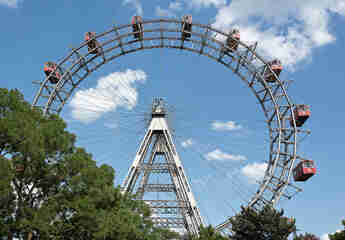
This large Vienna district forms an island surrounded by the waters of the Danube Canal and the Danube itself. Leopoldstadt is primarily notable for the Prater park, where you'll find one of the city's symbols – the Ferris Wheel, one of the oldest in the world: it was built in the late 19th century and still operates today! Also worth visiting are the Strauss House Museum and Augarten Palace. Accommodation costs in Leopoldstadt are slightly lower than in the Inner City, while you'll still be living practically in the heart of the capital.

The elegant Hotel Stefanie was opened over 400 years ago and is Vienna's oldest hotel.
Mariahilf (No. 6)
West of Vienna's historic center lies the Mariahilf district. This is a favorite spot for European shopaholics: Mariahilfer Strasse is known as the city's main shopping street. Here you'll find an incredible number of shops of all kinds, from small souvenir stalls to huge shopping centers. If you want to combine fascinating excursions with good shopping, this is the place for you. Accommodation prices in Mariahilf start from a modest 50 euros per room.

The Hotel 1060 Vienna is located just a 3-minute walk from Vienna's largest shopping street, Mariahilferstrasse.
Vienna's various districts have a huge number of hotels, hostels, and apartments. To compare them not only by location but also by price, range of services, and tourist reviews, it's convenient to use Booking.com. With various filters among thousands of accommodation options, you'll definitely be able to find something you like. For tips on how to use Booking.com most effectively, read our review.
Visa to Austria
Typically, an Austrian visa is issued within 5 days and is valid for six months, during which you can stay abroad for up to 90 days. Keep in mind that Austria is part of the Schengen Agreement, so after your trip to Vienna, you can also travel to, for example, Paris, Rome, or Berlin.
Information on visa fees and the list of required documents changes periodically, so we recommend checking the latest information on the Austrian Visa Center website. Ukrainian citizens should check the Visa Center page corresponding to their country.

If you don't have the time or desire to deal with filling out forms and paying consular fees, use the VisaToHome service. Its specialists will handle all the hassle, and you won't even have to leave home! A courier will collect your documents and, after some time, deliver your passport with the coveted visa. Incredibly easy, modern, and reliable! Personally tested!
How to Get from Vienna Airport to the City
Vienna-Schwechat Airport (Flughafen Wien-Schwechat) is located 16 km east of the capital. You can easily reach the city center by public transport:

Tickets for both types of transport are sold at the tourist information center in the airport and at ticket vending machines.
Imagine the moment when you're standing confused at Vienna-Schwechat Airport with friends, suitcases, or children, not knowing where to turn – whether to catch a taxi or rush to the bus. In such situations, KiwiTaxi is a great help! This service provides pre-booked airport-to-city transfers. You simply indicate your arrival time, and on-site you're met, placed in a taxi, and taken straight to your hotel. The cost of this journey won't be a surprise – you'll know it in advance. Thus, your journey filled with comfort and positivity will begin right from the airport!
Car Rental in Vienna
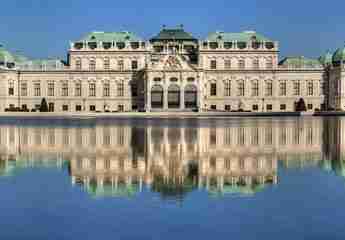
However, a car in Vienna won't just be useful for getting from the airport. We're sure you'll want to visit the imperial Schönbrunn residence, the Belvedere palace complex, or perhaps even make trips to Bratislava, Budapest, or Prague, which are not far from the Austrian capital. You can rent a car in Vienna using RentalCars.com. It's a reliable and proven resource where, among hundreds of offers from several agencies, you can choose what perfectly suits your budget or car model preference.
Vienna Public Transport
Vienna has an excellent public transport system. The metro (U-Bahn) consists of 5 lines. All platforms are equipped with electronic displays showing passenger information, which, in addition to the route's final destination, also displays waiting time. The metro operates on weekdays from 5:00 to 0:00, and on Fridays and Saturdays – around the clock. The rapid transit railway network (S-Bahn) doesn't have many stations in the center, but conveniently connects Vienna with the suburbs.
There are also 28 tram routes and 90 bus routes running throughout the city, including "City Busse", specially designed for narrow central streets. Night buses marked with the letter "N" operate from 0:30 to 5:00.

Vienna metro map in higher resolution and on the official website
A unified ticket is valid for all types of transport, which can be purchased at metro stations from multilingual machines, ticket offices, and most tobacco kiosks. Single-journey ticket price: 2.6 euros from a machine, 2.5 – when bought from the driver. After validation, it's valid until reaching your destination and allows multiple transfers.
There are also travel passes for 24 hours (price – 8 euros), 48 hours (14.1 euros), and 72 hours (17.1 euros). Children under 6 travel free, children under 15 get a 50% discount on tickets and free travel on Sundays, holidays, and during school vacations.
Vienna Card Tourist Pass

Vienna Card – this is a 72-hour travel pass for all types of transport, plus discounts at museums, shops, and restaurants. Card price – 29 euros. The package includes a city map and a booklet listing all available discounts.
Tours in Vienna
You'll make your stay in Vienna even more comfortable and interesting by using the Ever.Travel trip planner. With the interactive attractions map, you can mark places you'd like to visit, distributing them across several days of your Vienna trip. Your personalized guidebook easily syncs with the free mobile app Ever.Travel. Sounds like magic? It's modern technology! More about how it works, read in our review.

Additionally, we have suggestions for those who prefer not to plan everything themselves. Use ready-made routes for walking tours around Vienna:

When you're in Vienna, time flies unnoticed, yet you want to see as much as possible! But just looking isn't enough – every attraction hides a unique story, and often more than one. If you want to discover all of Vienna's secrets, you should find a good guide, and Excursiopedia can help with that. On this site, you'll find the most original and interesting tours, for example:
Mobile Service and Internet in Austria
Austrian mobile operators – T-mobile, A1, Drei (3), Yess – offer virtually identical rates. For 10-15 euros, you can buy a SIM card with prepaid 1-1.5 GB of internet traffic, 1000 minutes of calls, and 1000 SMS. Free Wi-Fi in Vienna is mainly found in cafés and restaurants; networks are often password-protected, so you'll need to ask for access.
Shopping in Vienna
Shops in Vienna are open Monday to Friday from 9:00 to 18:30, on Saturdays until 17:00 or 18:00, and some shopping centers operate Monday to Friday until 20:00 or 21:00. On weekends and public holidays, shops are only open at major train stations, the airport, and museum shops.
The main shopping street – Mariahilfer Strasse – runs from the Old Town to the West Station. Hundreds of fashionable clothing, shoe, and accessory stores are located here. In the adjacent streets of the 6th and 7th districts, as well as around Naschmarkt, you'll find less famous but more interesting and original shops. Kohlmarkt ("Coal Market") – the most expensive district, where jewelry salons and premium brand boutiques are concentrated.

A unique feature of Vienna is the opportunity to shop in real palaces. Aristocratic families once built luxurious Baroque residences for themselves, but after World War II were forced to sell them. Today, these mansions house ministries, museums, and shopping centers. There are especially many of them in the city center.
You can get a wealth of impressions by visiting Viennese food markets – Naschmarkt, Karmelitermarkt, Rochusmarkt, Brunnenmarkt, where you can buy anything – from vegetables and fruits to exotic sweets and rare delicacies from around the world.
Viennese Cuisine
Viennese (specifically Viennese, not Austrian) cuisine combines the culinary traditions of many peoples of the Habsburg Empire, from Bohemia to the Balkans. The tone here is set by simple peasant food – hearty, delicious, and inexpensive.
For the first course, soup is usually served: beef broth with various fillings – semolina dumplings, liver dumplings, fried pieces of dough. One of the most popular types – frittatensuppe or flädlesuppe – is garnished with sliced pancakes.

Then a meat dish is served, such as the famous Wiener Schnitzel (a huge piece of meat breaded in breadcrumbs and fried in oil), Tafelspitz with apple horseradish (boiled beef rump with spices), various roast beef dishes – Zwiebelrostbraten (with onions) or Vanillerostbraten (with garlic). Traditional dishes also include Viennese breaded chicken (Backhendl), veal lung stew (Beuschel), and goulash.
Vienna is famous for its desserts. You must try the chocolate Sacher cake (Sachertorte) – one of the most popular cakes in the world, as well as the delicate apple strudel, the fluffy egg pancake Kaiserschmarrn, or apricot dumplings Marillenknödel. Don't forget about Viennese coffee – even at an ordinary café, you'll be offered dozens of delicious varieties to choose from.
History of Vienna
Thanks to good conditions for agriculture and livestock farming, people settled along the Danube as early as the 6th millennium BC. The first city on the site of present-day Vienna appeared in the middle of the 1st century AD, when ancient Roman troops built a military fortification here. By the end of the 5th century, the Romans voluntarily left this territory, but their place was immediately taken by Celtic, Avar, and Slavic tribes living nearby.
In the 9th century, the Frankish Carolingian dynasty built a small castle and the Church of St. Rupert on the site of the Roman camp, which has survived to this day, but the settlement itself remained a remote province. By the mid-12th century, the city became the residence of the Austrian Dukes of Babenberg. Vienna's real rise began in 1278 when the Habsburg dynasty established itself here.

In 1529, Vienna was unsuccessfully besieged by the Turks. Despite their twenty-fold numerical superiority, they couldn't take the city and were forced to halt their rapid conquest of Europe.
From the 16th century, Vienna became the capital of the multinational Austrian Habsburg state. It was here, closer to the imperial residence, that court bureaucracy and aristocracy gathered. In the 18th century, manufacturing industry developed significantly, supplying wealthy nobles with fabrics and luxury goods. By the 19th century, the city became a European center of culture, music, and fine arts. The University of Vienna and the Academy of Sciences became world-renowned.

At the beginning of the 20th century, Vienna, with a population of over 2 million people, was one of the most significant European capitals; however, Austria-Hungary's defeat in World War I put an end to its might. Political strife and massive inflation brought the city to decline. During World War II, Vienna also suffered – both from bombings and economic crisis.
In the 1970s and 1980s, the situation stabilized: production was restored, the city center underwent significant reconstruction, and new construction began. Today, Vienna is Austria's economic, industrial, and cultural center with great significance on the world stage. It houses the headquarters of OPEC and OSCE, and one of three UN headquarters.
Important to Know:

Annual events, holidays, and non-working days:
– January 1 – New Year's Day
– January 6 – Epiphany
– May 1 – Labour Day
– August 15 – Assumption of Mary
– October 26 – Austrian National Day
– November 1 – All Saints' Day
– November 15 – St. Leopold's Day, patron saint of Austria
– December 8 – Feast of the Immaculate Conception
– December 25 – Christmas Day
– December 26 – St. Stephen's Day
Holidays with variable dates:
– March-April – Good Friday, Easter, and Easter Monday
– Ascension Day (39 days after Easter)
– Whit Monday (50 days after Easter)
– Corpus Christi (60 days after Easter)

Now that you've familiarized yourself with this overview, it's time to take action! Read about how easy it is to plan a trip to Vienna on the Ever.Travel website, create a personalized guidebook on the interactive city map, sync it with the free mobile app, and head to Vienna fully prepared!
This overview features photos by Lola Pidluskaya, Shutterstock, Booking.com, Flickr: MSN007, blaulichtfotograf, j.ardin, cool_capitals.
See Also: