About Salzburg
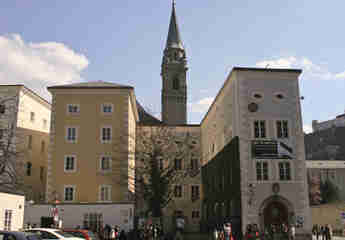
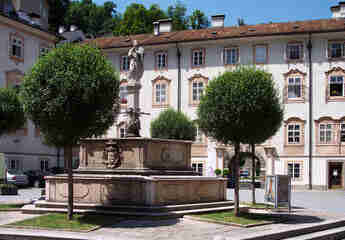
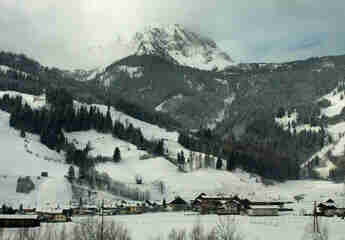
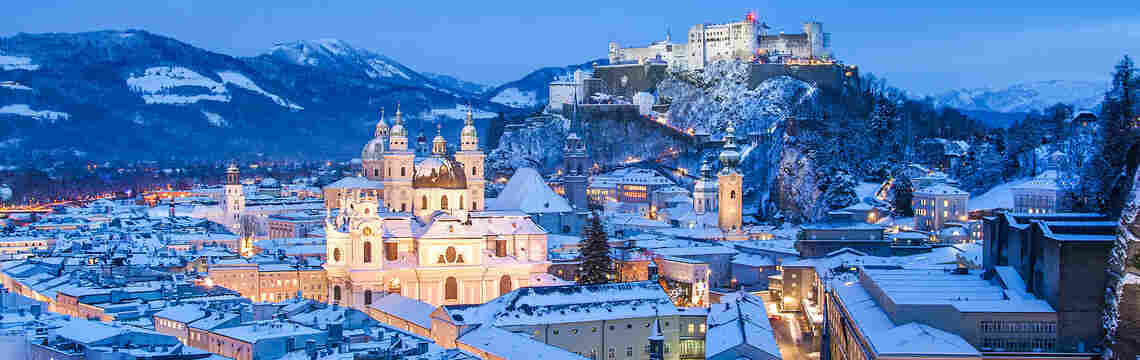
Austria's fourth-largest city sits practically on the German border, at the northern foot of the Alps. Ringed by ski resorts – no wonder one in three residents works in tourism – Salzburg is fascinating in its own right: its historic centre is considered one of the finest Baroque architectural ensembles in the world. The atmosphere is truly distinctive – numerous monasteries and churches preserve a patriarchal character, while three universities, or rather their students, keep the city young and energetic.
A Brief History
In 700 AD, two monasteries were founded on the site of modern Salzburg – the Benedictine Abbey of St. Peter and the Nonnberg Abbey. A town soon grew up around them; by 739 it had become a bishop's seat and a missionary centre in the Alps. The numerous salt deposits nearby brought steady income and prosperity to local residents, and also gave the city its name – Salzburg, literally "salt fortress." Beer was brewed here too, and gold, silver, zinc, and copper were mined.
By the early 9th century the local bishops had elevated their rank to archbishops, and in 1278 the archbishopric gained the status of a sovereign principality. In the 14th century Salzburg achieved full independence from Bavaria and answered directly to the king. The city's golden age came at the end of the 16th and the beginning of the 17th century, when the splendid Baroque buildings that form the magnificent Old Town ensemble were built. In 1622 the first university was founded; in 1628 the great cathedral was completed, becoming one of the main bastions of Catholicism in German-speaking lands during the Reformation.
The rule of the prince-archbishops lasted until the early 19th century, when Napoleon first besieged the city and then retreated without a fight after being deceived by a clever ruse from the townspeople. Under the 1805 peace treaty, Salzburg passed to Austria, was ceded to Bavaria a few years later, and then returned to Austria. It was here, in 1867, that Emperor Franz Joseph met Napoleon III.
In 1938, following the Anschluss, Salzburg was occupied by the German army; in 1945 US forces liberated the city and made it the centre of their occupation zone. Industry developed rapidly after the war. Today Salzburg is a major industrial city, home to the headquarters of several high-tech companies and IT firms. Yet it is far better known as a tourist and skiing destination – the city welcomes around 7 million visitors a year.
Good to Know:
– 1 January – New Year's Day
– 6 January – Epiphany
– 1 May – Labour Day
– 15 August – Assumption of the Virgin Mary
– 26 October – Austrian National Day
– 1 November – All Saints' Day
– 15 November – St. Leopold's Day, patron saint of Austria
– 8 December – Immaculate Conception
– 25 December – Christmas Day
– 26 December – St. Stephen's Day
Moveable public holidays:
– March–April – Good Friday, Easter and Easter Monday
– Ascension Day (39 days after Easter)
– Whit Monday (50 days after Easter)
– Corpus Christi (60 days after Easter)
Planning Your Own Trip to Salzburg
Getting from Salzburg Airport to the City
Salzburg Mozart Airport lies just 5 km from the city centre and is the country's second busiest. Buses connect the airport to nearby resort towns and Salzburg itself: route 10 reaches the main station in 15 minutes, route 2 in 20 minutes, and route 27 in 40 minutes. Tickets can be bought from the driver for €2.70.
Several taxi and shuttle-bus services at the airport also offer transfers to the city and nearby resort complexes. Fares range from €30 to €70 depending on destination.
City Transport in Salzburg
More than 20 bus and trolleybus routes run through the city centre, along with four S-Bahn suburban rail lines. Single-journey tickets (€2.70) and 24-hour passes (€6) are available from the driver. Buying in advance – at a tobacconist, for example – is cheaper: a strip of 5 tickets costs €9 (€1.80 per journey), a 24-hour pass €3.70, and a weekly pass €15.
The Salzburg Card
The Salzburg Card is a combined pass for all forms of transport, including the cable car and funicular to Hohensalzburg Fortress. It also provides free entry to the city's museums and significant discounts on concerts, performances and guided tours. Prices vary by season. From 1 May to 31 October, a 24-hour card costs €27, a 48-hour card €36 and a 72-hour card €42; in the remaining months the prices are €24, €32 and €37 respectively.
Mobile & Internet in Austria
Austrian mobile operators – T-Mobile, A1, Drei (3) and Yess – offer broadly similar rates. For €10–15 you can buy a SIM card with 1–1.5 GB of prepaid data, 1,000 minutes of calls and 1,000 texts. Free Wi-Fi exists but is far from universal.
Shopping in Salzburg
Getreidegasse and Judengasse in the historic centre are lined with shops – from world-famous brands and upscale boutiques to small workshops run by local craftspeople. Most open Monday to Friday 10:00–18:00, Saturday until 17:00, and are closed on Sundays.
Salzburg is also home to the modern Europark megamall, one of the largest and most popular in Austria. Its vast floor space houses more than 130 shops at various price points, along with several excellent restaurants.
Local Cuisine
Austrian cuisine is simple, hearty and very tasty. One highlight is the wide variety of soups with fillings – meat broth served with dumplings, bread dumplings or thin strips of pancake. Meat dishes reign supreme: roast beef, schnitzels with apple horseradish and other sauces, goulash and various stews.
Austrian desserts are celebrated worldwide – strudel (a roll of buttery pastry filled with apple, berries or curd cheese), Striezel or Stollen (a rectangular cake with an apple or poppy-seed filling), and of course Kaiserschmarrn, the emperor's omelette made from a sweet pancake batter. The batter is poured into a pan, lightly fried, then torn into small pieces with a fork or spatula and cooked until crispy. The dessert is served dusted with icing sugar, accompanied by vanilla sauce or plum jam.
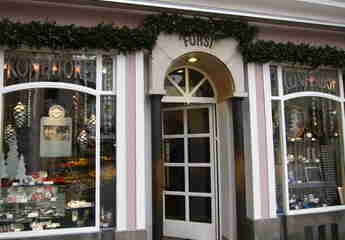
Salzburg's signature treat – Mozart chocolate balls with a marzipan filling – makes an excellent souvenir.