
A Trip to Munich
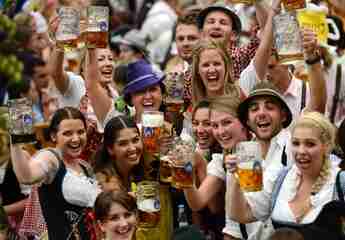
Bavaria's capital has a motto: 'Munich loves you.' And the feeling is mutual. Beyond the city's famous beer traditions, there is no shortage of places worth seeing. A trip to Munich for Oktoberfest is far from the only reason to buy a plane ticket.

In the district aptly known as the Kunstareal ('Art Quarter') you'll find superb art museums; on an island in the Isar river stands a fascinating science museum with interactive exhibits; in the English Garden there are scenic landscapes and beer gardens. Munich – which has played a significant role in world history – is today Germany's third-largest city: cosy, beautiful, welcoming, and rich in sights.
Getting to Munich
The most convenient way to reach the Bavarian capital is by air. Direct flights from Moscow are operated by S7 Airlines, Aeroflot, Lufthansa, and Air Berlin, with a journey time of 3–3.5 hours. From St Petersburg, Aeroflot and Lufthansa fly non-stop in about 3 hours. From Kyiv, the fastest options are Ukrainian International Airlines and Lufthansa, with a flight time of 2–2.5 hours.
If you're looking to save money, consider flights with layovers – for example with Austrian Airlines, airBaltic, or LOT. Prices will be lower, but the journey takes considerably longer.

Comparing prices across airlines and booking agencies is easiest on Aviasales. You can choose your preferred dates and departure times, specify direct or connecting flights, and most importantly find the cheapest tickets to Munich. We always use this aggregator when searching for flights – it's fast, reliable, and charges no extra booking fees.
Where to Stay in Munich
Officially the Bavarian capital is divided into 25 districts. In this overview, however, we'll give you practical advice based on the most visitor-friendly locations rather than strict administrative boundaries.

Altstadt (Old Town)
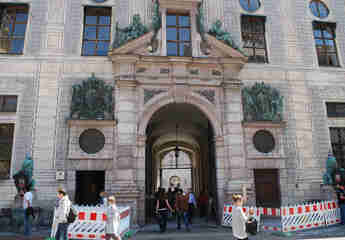
As you might expect, this is Munich's innermost core. Here you'll find the most famous sights: the Frauenkirche, Marienplatz, the Old and New Town Halls, and the Munich Residenz. Hotels right around Marienplatz tend to be pricey – naturally. Yet around Karlsplatz (better known as Stachus) you can find more affordable accommodation within a 10-minute walk of Marienplatz.

The elegantly decorated rooms of the City Hotel Excelsior feature classic Bavarian motifs. The Geisel Vinotek restaurant, serving local and Italian cuisine, has the vaulted ceilings typical of Munich's famous beer halls.
Maxvorstadt (Central Station area)
The neighbourhood adjoining Munich's main railway station is packed with hotels and guesthouses to suit every budget. Locals have long nicknamed it the 'Turkish quarter': there are many migrants here, with plenty of establishments catering to their tastes – fast-food joints and hookah bars. It's not on every street corner. If that sort of lively atmosphere doesn't bother you, you're most welcome. The Old Town is also close – a 15–20 minute walk.

The Sofitel Munich Bayerpost occupies a historic 19th-century building in an avant-garde style. The hotel is a 10-minute walk from Karlsplatz and the Theresienwiese, venue for Munich's Oktoberfest beer festival.
Of course you can look at hotels in other parts of Munich – but if you'd rather not spend money on public transport or time on long commutes, it's worth focusing your search on these two areas. The easiest way to find a place that won't disappoint is Booking.com. Reviews from previous guests usually cover not just the room itself but also the hotel's location, so you'll know whether to expect Turkish music under your window or a beautiful view of Munich's historic centre.
German Visa
To visit Munich you will need a Schengen visa. Unlike the 'generous' Italians or Spaniards, who often grant entry for six months to two years, the Germans are more exacting: they may issue a visa solely for the exact dates of travel, though they can extend this to several months. The list of required documents and the consular fee change periodically, so we recommend checking the latest requirements on the German Visa Centre website before your trip.

The German consulate approaches visa applications as it does everything else – with extraordinary precision. Any errors or missing documents will almost certainly result in a refusal. To avoid this and keep your trip on track, consider using a visa assistance service: specialists will simplify the process – you won't even need to leave home – and will thoroughly check all your paperwork, reducing the risk of cancellation to near zero.
Getting from Munich Airport to the City
From Franz Josef Strauß Munich Airport (Flughafen München Franz Josef Strauß) the city centre is 35–40 minutes away. Lufthansa buses depart every 20 minutes from 06:25 to 22:25. A one-way ticket costs €10.50; a return is €17.
S-Bahn trains run every 10 minutes via the S1 (western route) and S8 (eastern route). A single ticket costs €11.70; a partner ticket for 2–5 people is €24.30. These tickets are also valid for all city transport for one day.
The most comfortable option is a pre-booked taxi. Rather than searching for one at the airport, reserve it in advance – for example on the KiwiTaxi website. You'll know the fare upfront and be guaranteed a meet-and-greet with luggage assistance all the way to your hotel. Prices start from €60–74.
Car Hire in Munich
Munich is one of those cities where renting a car is a must! From here it's easy to reach Innsbruck, Salzburg, Prague, or Vienna. A hire car gives you absolute freedom of movement that buses and trains simply can't match. If you're travelling in a group, renting a car in Munich may even work out cheaper than buying multiple transit tickets.
The best place to search for a hire car is Rentalcars.com. It compares offers from several rental agencies, letting you choose the most attractive and cost-effective option.
Munich's Public Transport
Munich's well-developed public transport network consists of S-Bahn suburban trains radiating out from the centre, six U-Bahn metro lines, buses, and trams.
The city and suburbs are divided into 4 fare zones. The cost of a journey depends on how many zones you cross. Most tourists stay within Zone 1 – the basis for all ticket prices quoted below.

At ticket offices and vending machines you can buy several types of ticket, all valid across every mode of transport. A short-trip ticket covers 1–4 stops (with transfers), is valid for 1 hour, and costs €1.50. A standard single costs €2.60, is valid for 3 hours, and has no limit on stops.
A day pass is valid from validation until 6 am the following day and costs €6.70; a three-day pass is €15.80. Groups of two to five travelling together benefit from the Partner Day Ticket, valid for 2–5 people simultaneously: €10.80 for one day, €24.60 for three days. Interestingly, two children under 14 count as one adult, so a single ticket can cover up to 10 children.
The Munich City Tour Card
The Munich City Tour Card is an all-transport pass that also gives discounts at 60 museums and tourist attractions in the city and surroundings. One day: €12.90; three days: €21.90; partner tickets (up to 5 people): €36.90 and €57.90 respectively.
Be sure to read our article on Oktoberfest in Munich and find out where to find the best beer in the city!

Tours of Munich
We've shared a wealth of useful information, but haven't yet touched on the most important part – Munich's actual sights. That's what our interactive map is for! Mark the places you'd like to visit and spread them across your travel days. Then download the free Ever.Travel mobile app and log in with your site account. Your plans will sync between the web and your phone – giving you a personalised, multimedia, and above all free Munich guide that fits in your pocket.

Not a fan of planning? Use our ready-made walking routes:

If you'd like to explore Munich not just through an app but through the stories of people who know and love the city, visit Excursiopedia. There you'll find dozens of professional English-speaking guides who will be delighted to show you around. These are not the usual 'look left, look right' tours but fascinating excursions to places that are hard to reach independently. For example:
Mobile Connectivity and Internet in Germany
Munich has a free public Wi-Fi network called M-WLAN, available at major tourist spots. Most cafes, restaurants, and shopping centres also offer Wi-Fi. Local SIM cards from O2, Vodafone, T-Mobile, and BASE can be purchased for €10–15.
Shopping in Munich
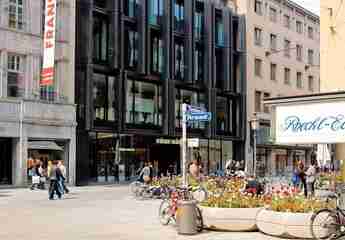
The highest concentration of shops is on the pedestrian streets in central Munich, between Marienplatz, Karlsplatz, and Odeonsplatz. Kaufingerstrasse and Neuhauser Strasse, leading towards the Central Station, are lined with affordable high-street brands. Luxury boutiques occupy Maximilianstrasse and Theatinerstrasse. Sendlingerstrasse is the place for gifts, traditional souvenirs, and Bavarian delicacies.

Most shops open Monday–Friday 09:00–10:00 to 20:00, Saturday until 16:00, and are closed on Sundays. Sales in Munich take place at the end of each season – in January, April, July–August, and November.
Bavarian Cuisine
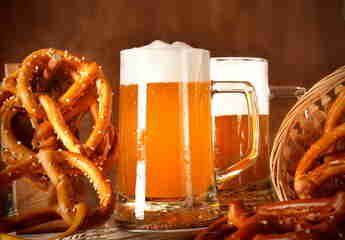
Bavaria and its capital Munich are famed above all for their beer. The perfect accompaniment is a range of sausages and the classic bar snack – Brezel (a pretzel sprinkled with coarse salt).

The food here is simple and hearty: pork knuckle (Schweinehaxe), roast pork with spices and dark beer sauce (Schweinebraten), whole roast suckling pig (Spanferkel), served with braised sauerkraut, boiled potatoes, potato salad, or Knödel dumplings.
The History of Munich
Munich received its city charter and defensive walls only in 1175, although the first monastic settlements appeared in the area as early as the 8th century. In 1240 the Wittelsbach dynasty took control of the city and went on to rule Bavaria until the 20th century. Under their reign Munich grew and prospered, becoming the capital of the Kingdom of Bavaria in 1806.
In 1810, to celebrate the wedding of Crown Prince Ludwig, a grand festival was held – the event that gave birth to the annual Oktoberfest beer festival. As king, Ludwig I devoted enormous energy to culture and the arts: it is to him that Munich owes the famous Pinakothek and Glyptothek museums.

During the First World War the city suffered relatively little, but the post-war period brought turbulence: the flight of the king, the proclamation and violent suppression of the Bavarian Soviet Republic, and integration into the Weimar Republic. In 1920 the NSDAP was founded in Munich, and Adolf Hitler soon took its leadership. In 1923 his supporters made a failed attempt to seize power in the Beer Hall Putsch, for which Hitler was sentenced to five years in prison.
By the mid-1930s Munich had become the capital of Nazism. In 1933 the first concentration camp – Dachau – was established near the city. The Munich Agreement of 1938, which partitioned Czechoslovakia, was the first step towards the Second World War. During the war the city was subjected to repeated bombing raids and 60% destroyed, with the historic centre almost entirely obliterated. The population halved; a quarter of residents perished.
By 1957 Munich had nearly fully recovered and even crossed the one-million-inhabitants mark. In 1972 it hosted the XX Summer Olympic Games. Preparations brought a wave of striking modern architecture, the construction of the metro, and the renovation of the city centre.

Good to Know:

Annual events, public holidays, and non-working days:
– 1 January – New Year's Day
– 6 January – Epiphany
– February – Carnival
– Good Friday, Easter, and Easter Monday
– 1 May – Labour Day
– 40 days after Easter – Ascension Day
– 50 days after Easter – Whit Sunday
– 60 days after Easter – Corpus Christi
– 3 October – German Unity Day
– September–October – Oktoberfest
– 1 November – All Saints' Day
– 25–26 December – Christmas

We could go on about the Bavarian capital for a while longer – but isn't it time to take action? ;) Browse the attractions map, plan your Munich trip, and sync it with the Ever.Travel mobile app. Something unclear? Check the tutorial – everything is explained in detail. If you still have questions, write to us at hello@evertravel.me – we reply to every message!
Photos used in this article: Booking.com, a-nette, Rainer Zenz, Tobias Theiler Photography, werner boehm *, Werner Kunz, sebastian.guettler, Alexander´s photographs ©, Oscar von Bonsdorff.
See also: