
A Trip to Jerusalem
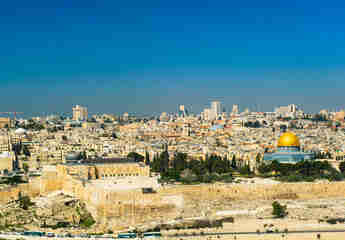
Known since the 19th–18th centuries BCE, Jerusalem was shown at the very center of the world on ancient maps. Over the millennia it has sparked endless disputes and wars: Greeks and Persians, Romans and Byzantines, Assyrians and Jews, Crusaders, Mamluks and Arabs all fought for it. The city was conquered dozens of times and destroyed more than once, yet it kept rising from the ashes. It is impossible to come here and not reflect on the eternal cycle of life and death, the struggle between good and evil, and the deeper meaning of our existence.
Thousands of believers from around the world come to this city sacred to Christians, Jews, and Muslims, yet it should not be seen as a place of purely religious pilgrimage. Jerusalem is not a museum, but a living city. Here, centuries-old buildings stand beside striking modern architecture, strict religious rules coexist with a secular lifestyle, and traditional dress meets contemporary fashion. This unique city keeps pace with the times, while never letting you forget its millennia-old history.
A Little History
Jerusalem's history is so rich in events that it can only be sketched here in the broadest outline. According to archaeologists, the first settlements on the Temple Mount appeared in the 5th–4th millennia BCE. The earliest documentary mentions of the city date to the 20th–19th centuries BCE. In the Old Testament, Jerusalem is first mentioned as the capital of the Jebusites – a pre-Jewish people of Judea who lived here in the 3rd and 2nd millennia BCE.
Around 1000 BCE, King David captured Jerusalem and brought there Judaism's greatest relic – the Ark of the Covenant. David's son, King Solomon, built the magnificent Temple of Jerusalem here in 957–950 BCE.
In 586 BCE, the Babylonian king Nebuchadnezzar completely destroyed Jerusalem, burned Solomon's Temple, and led the city's inhabitants into captivity. In 538 BCE, the Persian king Cyrus the Great allowed them to return to Judea and rebuild the Temple of Jerusalem.
In 332 BCE, the city was captured by Alexander the Great. The Jews managed to drive out the Greek conquerors during the Maccabean Revolt of 167–163 BCE, but 100 years later the city fell under Roman rule. King Herod was appointed ruler. He restored the aging Temple, built houses, roads, and aqueducts, yet history remembers him mainly as a cruel tyrant. Soon after his death, power in the city passed directly into the hands of Roman governors, one of them the famous Pontius Pilate, under whom Jesus Christ was crucified.
In 70 CE, in response to the Jewish revolt against Roman rule, the Romans virtually razed Jerusalem to the ground and destroyed the Second Temple. Later, the city, renamed Aelia Capitolina, became a center of Christianity. In 324, Constantine – the first Christian Byzantine emperor – built the Church of the Holy Sepulchre here.
In 614, the city was captured by the Persians, who destroyed its Christian shrines, and was later won back by the Byzantine Empire.
In 638, Jerusalem passed under Arab rule and became known as Al-Quds ("The Holy"). The Al-Aqsa Mosque was built on the site of Solomon's Temple, destroyed twice before. In 1095, a Crusade set out from Europe to free the Holy Sepulchre, and for the next 100 years Jerusalem remained Christian.
In 1187, the Crusaders were replaced by the forces of the Arab commander Saladin. Over the following centuries, power in the city shifted from time to time between Arab armies, Crusaders, Khwarazmians, and Mamluks. From 1517 to 1917, the holy city was under Ottoman rule. During World War I, Britain broke through into the Middle East and established its administration here.
Unable to reconcile Arabs and Jews, Britain appealed to the United Nations. In 1947, the UN decided to divide Palestine into Arab and Jewish parts, while placing the city itself under UN supervision.
When the Arab states rejected the partition plan, war broke out after the withdrawal of British troops. Jerusalem became the capital of the State of Israel, founded in 1948, but Jerusalem's Old City and eastern part remained in Jordanian hands. In 1967, after the Six-Day War with the surrounding Arab states, Israel gained control over the entire city.
Good to know:
At the state level, Israel officially observes only Jewish religious and national holidays. According to the Jewish calendar, the year begins in September–October, and the months roughly follow the lunar cycle, so holiday dates shift within a certain range from year to year.
– January – Tu BiShvat (the day when the trees awaken from winter dormancy)
– February–March – Purim (the merriest holiday in the Jewish calendar, celebrated with costume parties)
– March–April – Passover
– April–May – Independence Day (the country's main secular holiday), Yom HaShoah (Holocaust Remembrance Day), and Yom HaZikaron (Memorial Day for fallen soldiers).
– May–June – Jerusalem Day, Shavuot ("Pentecost" – the holiday of receiving the Torah)
– July – Tisha B'Av, mourning for the destroyed Temples
– September–October – Rosh Hashanah (New Year), Yom Kippur (Day of Atonement), Sukkot (Feast of Tabernacles), and Simchat Torah (Rejoicing of the Torah)
– November–December – Hanukkah (the Festival of Lights, celebrating light's triumph over darkness)
Independent trip to Jerusalem
How to get from Tel Aviv airport to Jerusalem
Ben Gurion International Airport lies 14 km southeast of Tel Aviv. The easiest way to reach Jerusalem, available 24 hours a day, 7 days a week, is by "monit sherut" shared taxis. Their stand is located not far from the terminal exit. Once all the seats are filled, the minibus sets off, and the driver drops passengers at the addresses they need in Jerusalem. The ride costs about 60 shekels and takes around an hour. For the return trip, a monit sherut should be booked 12–24 hours in advance, and the driver will pick you up from your hotel.
You can also use public transport and travel:
Keep in mind that public transport stops fairly early, and from Friday evening to Saturday evening it does not run at all.
At any hour of the day or night, you can take a taxi: the drive to Jerusalem takes 30–40 minutes and costs around 200–300 shekels. Just be sure to agree on the fare in advance or ask the driver to turn on the meter.
Jerusalem public transport
The main form of public transport in Jerusalem is the bus. The extensive route network operated by "Egged" covers the whole city and even extends beyond it. A single ride costs 6–8 shekels, and discounts are available when you buy several tickets or a pass, for example for the day. The light rail, introduced in Jerusalem a few years ago, has a single line running across the city. A one-way ticket costs 6.9 shekels. The "Rav-Kav" electronic transit card is used everywhere; you can buy one for 5 shekels from the driver or at a ticket office, then load your purchased fares onto it.
Do not forget that from Friday evening to Saturday evening, public transport does not run. You can still get around the city by taxi, but you should agree on the price before getting into the car.
Mobile connection and Internet in Jerusalem
Finding free wi-fi in Jerusalem is easy: access points are available in most cafes, restaurants, shopping centers, and public areas. For mobile service, travelers can use prepaid SIM cards from local operators. For example, Orange offers a BigTalk card for 60 shekels, 53 of which are credited to your balance. You can also add 20 GB of data for 149 shekels, an SMS package, or other options. Tokman cards from Cellcom work in a similar way.
Shopping in Jerusalem
A local specialty is cosmetics made with Dead Sea salts. Jerusalem also offers a good selection of jewelry, leather and fur goods, textiles, and tableware. Shopping centers and outlets carry clothing and shoes from well-known European and Israeli brands. There are also specialized Jewish, Muslim, and Christian shops.
Usual shop hours are 9:00 to 20:00, while large shopping centers stay open until 22:00–23:00. On Friday afternoon, stores close until Saturday evening. Muslim shops are closed on Fridays, and Christian ones on Sundays.
Local cuisine
Jewish religious dietary laws forbid pork and seafood; fish is allowed, but only if it has scales. Dairy and meat dishes must be prepared and served separately, so you will not come across meat in cream sauce or a ham-and-cheese sandwich. In general, Israeli cuisine blends Eastern and European traditions.
An absolute staple here is pita – a flatbread slit open in the middle and filled with almost anything. Pita is eaten with hummus – a chickpea and tahini paste seasoned with spices and olive oil. Served in pita, for example, is "meorav yerushalmi" – Jerusalem mixed grill, made from at least four kinds of chicken meat with onions and spices. Another local signature dish is falafel – deep-fried chickpea patties, also served in pita with vegetables. And of course there is shawarma, usually accompanied by vegetable salad, hummus, and fries.
Jewish home cooking deserves a special mention too – forshmak made with meat or fish, gefilte fish, potato pancakes called latkes, along with assorted cheeses, vegetable salads, and hearty hot dishes made from rice and lentils.
In Israel, it is customary to leave a 10–15% tip in cafes and restaurants. To avoid any doubt, receipts often explicitly note that "service is not included." Guides and hotel staff also expect a small gratuity.
Read also: