
About Helsinki
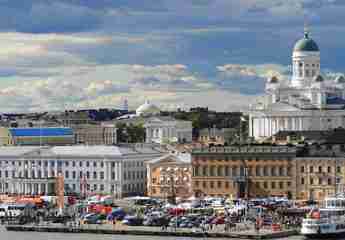
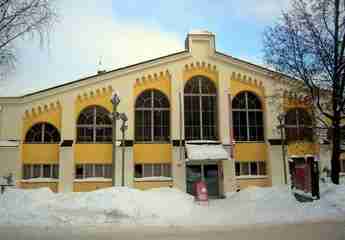
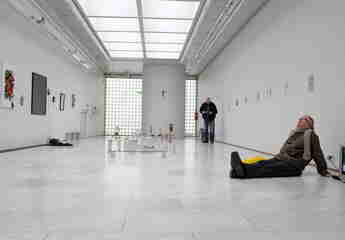
In 2012, The New York Times ranked Helsinki second on its list of cities worth visiting. What makes the Finnish capital so special? Striking architecture, art and science museums, a zoo, a sea aquarium and amusement park, historic landmarks and fine examples of modern design, parks and bike lanes, islands and seaside beaches – in Helsinki, everyone can find something that suits their mood and taste.
A Little History
Helsinki was founded in 1550 by the Swedish king Gustav Vasa. His idea of building a port that could rival Tallinn did not quite work out: the harbor was too shallow, and trade struggled. Only after the city was moved in the mid-17th century to the area around today’s Market Square did things begin to improve. Even so, until the middle of the 18th century Helsinki remained a small wooden town where plague outbreaks were frequent.
In 1748, work began on the Suomenlinna fortress on the approaches to the city, intended to protect Sweden from Russian naval attacks. The huge construction project brought in both money and new residents. Stone houses rose up, wealthy merchants appeared, but Helsinki still could not compete with Turku, then Finland’s leading city.
From 1809 to 1917, Finland was part of the Russian Empire, and Helsinki gained capital status, a rebuilt center in monumental Empire style – strikingly reminiscent of central Saint Petersburg – and a clear urban plan. After several railway lines were built in the 1860s and 1870s, industry began to develop rapidly.
After Finland gained independence, Helsinki became the country’s capital and expanded greatly in both area and population. New residential districts and distinctive public buildings kept appearing. In 1952 the city hosted the 15th Summer Olympic Games, and the stadium built for them remains one of Helsinki’s key landmarks to this day. Today, Helsinki is considered one of the world’s safest and most livable – and also one of its most expensive – cities.
Good to Know
– January 1 – New Year’s Day
– January 6 – Epiphany
– Good Friday, Easter, and Easter Monday
– May 1 – Vappu, the spring festival
– The 40th day after Easter – Ascension Day
– The 50th day after Easter – Trinity Sunday (Pentecost)
– Late June – Midsummer (Juhannus)
– The first Sunday of November – All Saints’ Day
– December 6 – Independence Day
– December 25 – Christmas
– December 26 – St. Stephen’s Day
Independent Travel to Helsinki
How to Get from Helsinki Airport to the City
Buses No. 615 run from Helsinki-Vantaa Airport (Helsinki-Vantaan lentoasema) to the city center. They operate from 5:00 to 22:50, with departures every 8–15 minutes during the day and up to every 45 minutes in the evening and early morning. Travel time is 30–40 minutes, and the fare is 5 euros for a daytime regional ticket and 8 euros for a night ticket.
Finnair City Bus shuttles leave every 20 minutes from 5:45 to 01:00. Travel time is 30–40 minutes, and a ticket costs 6.7 euros.
Public Transport in Helsinki
The Helsinki metro is the fastest way to get around: you can cross the whole city in roughly half an hour. Buses and trams move more slowly, but that does not make them any less popular. You can also reach the islands by ferry from Kaivopuisto.
A single ticket for all forms of transport is valid for 60 minutes and costs 2.8 euros when bought from the driver, or 2.2 euros when bought from a ticket machine or by SMS (Finnish phone numbers only). A 120-minute ticket costs 3.8 euros. There are also travel passes for anywhere from 1 to 7 days, priced from 9 to 36 euros.
The Helsinki Card Tourist Pass
The Helsinki Card mobile gives you free travel on all public transport, free admission to the city’s most popular museums, and discounted entry to the zoo, amusement park, and other interesting places. The package also includes discounts in shops, cafes, and restaurants. The card costs 44 euros for 24 hours, 52 euros for 48 hours, and 59 euros for 72 hours – with children paying half price.
Mobile Service and Internet in Finland
In Helsinki’s tourist areas, there is a free network called “NextMesh Wi-Fi”, although each session is limited to 30 minutes. Wi-Fi is also available on some buses and trams – you can spot them by the “WLAN” stickers on the windows and doors – and, of course, in many cafes, restaurants, and shopping centers.
For 5–10 euros, you can buy a SIM card from a local mobile operator. Good prepaid options for travelers include Tele Finland Helppo, DNA, Sonera Easy, Saunalahti Prepaid, and GoMobile, all sold in the many “R-kioski” convenience stores. Depending on your needs, you can add different options and service packages.
Shopping in Helsinki
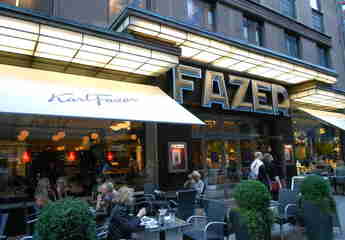
Helsinki is a very convenient city for shopping: the main retail spots are clustered quite compactly, mostly along Aleksanterinkatu, or Aleksi as locals call it. Here you’ll find shops for popular European and Finnish brands, from budget-friendly to upscale, as well as large shopping centers such as Aleksi 13, Kluuvi, and Kämp Gallery.
On Mannerheim Avenue, which crosses this street, you’ll find the department stores Stockmann, Forum, and Sokos, where you can buy everything – from clothes and shoes to groceries and home goods. The North and South Esplanades (Eteläesplanadi and Pohjoisesplanadi) are lined with Finnish brands that may be less known in Russia but are popular with locals. Interesting design and specialty shops are open along Korkeavuorenkatu, Fredrikinkatu, and Bulevardi.
Helsinki shop opening hours are both simple and a little confusing. On the one hand, most stores are open for 11 hours on weekdays; on the other, they may open as early as 7:00 or as late as 10:00, closing accordingly at 18:00 or 21:00. On Saturdays they usually open for 8 hours and tend to close between 15:00 and 18:00. On Sundays, large shopping centers are open from noon to 18:00, while smaller shops decide for themselves whether to open at all and, if so, at what time. So the best way to check is by looking at the hours posted at the entrance. Sales happen twice a year: from late December to early January, and from late June to early July.
Local Cuisine
Finnish cuisine is rich in fish dishes, usually served with potatoes on the side – especially mashed potatoes with thick cream. Distinctive local dishes include stewed potatoes with herring (kalalaatikko), cabbage porridge with milk, pearl barley, rutabaga, peas, and carrots (kaalivelli), and creamy kalakeitto fish soup with potatoes and onions.
The best-known meat dish is Karelian stew baked in a pot – traditionally made with three kinds of meat: lamb, pork, and beef. Another Finnish specialty is bear, elk, and reindeer meat, prepared according to traditional recipes.