Jaffa Gate

TravelMe, Alina Kovalevich
Updated for 2026: Jerusalem is always rewarding on foot, but access and opening hours can shift quickly. Dress modestly, carry water, and leave extra time for security checks, crowds, and entry lines.
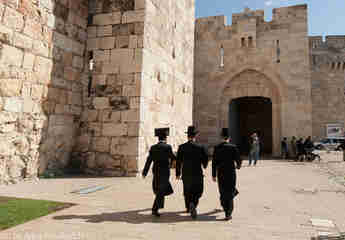
Jaffa Gate is the main western entrance to Jerusalem's Old City and the usual gateway to the Christian and Armenian Quarters. Built in 1538 on Suleiman the Magnificent's orders, it stands at the historic junction of the road to Jaffa and the southern route toward Bethlehem and Hebron. In 1898, part of the wall beside the gate was opened up so Kaiser Wilhelm II could enter the city by carriage.
One of the easiest ways to get your bearings is with the audio guide to Jerusalem in the Ever.Travel app. It helps you follow the route, notice the key stops, and explore at your own pace in a simple mobile format.
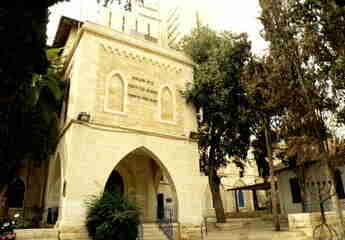
Church of John the Baptist

Flickr, Derek N Winterburn
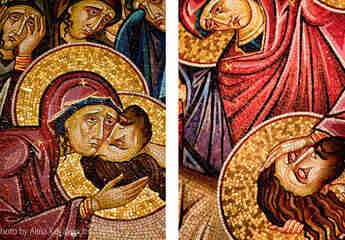
John the Baptist is revered as the prophet who prepared the way for Jesus: he preached repentance in the wilderness and baptized people in the Jordan. Christian tradition holds that he also baptized Jesus there. His titles, "Baptist" and "Forerunner," reflect those two roles, and his life ended in execution amid the court intrigues of Herod Antipas.
Church of the Holy Sepulchre

Flickr, Derek N Winterburn
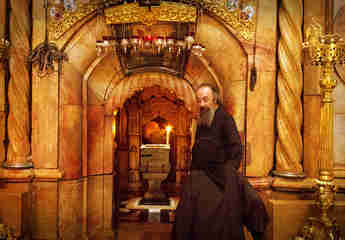
Known to Christians as the place of the Crucifixion, burial, and Resurrection, the Church of the Holy Sepulchre is one of the holiest sites in Christianity. The Holy Fire ceremony is held here each year, and the building is shared by several Christian communities under the long-standing Status Quo arrangement. Devotion to this site goes back to the earliest centuries of Christianity; when Hadrian rebuilt Jerusalem as Aelia Capitolina in the 2nd century, a pagan shrine was established over the area long associated with Christ's tomb.
Bell Tower of the Church of the Redeemer

Flickr, Jorge Lascar
The climb up the spiral staircase is short, and the payoff is excellent: one of the best rooftop views in the Old City, with the Holy Sepulchre and the Temple Mount spread out before you. If you enjoy city panoramas or photography, this stop is hard to beat.
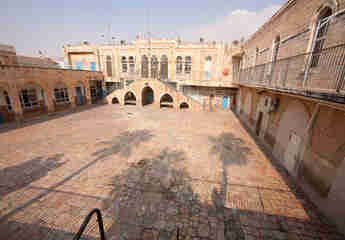
Alexander Compound

Panoramio, Marta Tkach and Yuri Ka…
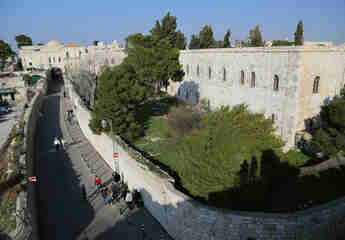
The Alexander Compound is a Russian Orthodox complex in the Old City, just steps from the Church of the Holy Sepulchre. Built around important archaeological finds, it includes the Church of St. Alexander Nevsky, excavations, a small museum, and traditional sites associated with Christ's final path to Golgotha.
Church of Alexander Nevsky

blogspot.com, briansnativitytrail
The Church of St. Alexander Nevsky stands within the Alexander Compound and was conceived as a memorial linked to Emperor Alexander III and the Imperial Orthodox Palestine Society. Archaeological work on the site uncovered ancient remains, including a stone threshold traditionally associated with the Judgment Gate, and the complex was built to protect and display them.
Needle's Eye

blogspot.com, texasdevils
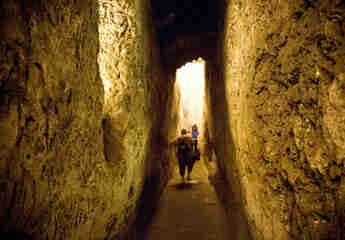
At the compound you can see a narrow ancient opening often called the "Needle's Eye." Guides sometimes connect it with the Gospel saying about a camel passing through the eye of a needle, though that interpretation is better treated as later tradition than firm history. Either way, the passage gives a vivid sense of how tight Jerusalem's older gateways could be.
Threshold of the Judgment Gate

sobory.ru, Serzh
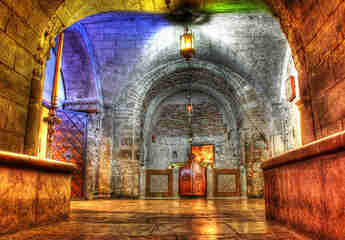
The Threshold of the Judgment Gate is one of the best-known shrines in the Alexander Compound. Tradition identifies it as part of an ancient gate Jesus passed through on the way to crucifixion. The remains were uncovered during 19th-century excavations after the Russian site in the Old City was acquired, and they became one of the foundations of the complex you see today.