Latvian Art Museum

skyscrapercity.com
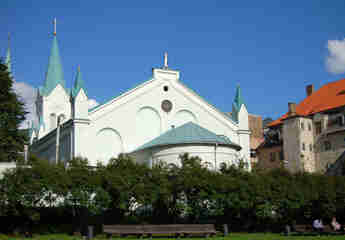
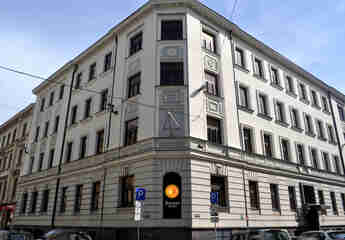
The Latvian National Museum of Art (Latvian: Latvijas Nacionālais mākslas muzejs) is one of the oldest museums in Riga, founded in 1869.Before 1869, works of art worthy of museum preservation could be seen in the exhibitions of the Himsel Museum in the premises of the Anatomical Theatre and in the city Art Cabinet, located above the eastern wing of the former Dome Monastery.[1]In 1869, thanks to the efforts of a commission led by Riga City Council member August Heinrich Hollander, the Riga City Art Gallery was opened in the building of the city secondary school.In 1872, the art gallery merged with the Riga German Society for the Promotion of the Arts. A joint exhibition was created and housed in the Riga Polytechnicum building. In 1879, both collections moved to the mansion of Riga City Council member Ludwig Wilhelm Kerkovius.
Esplanade Park

Panaramio, Alex lal
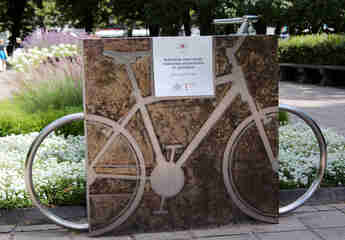
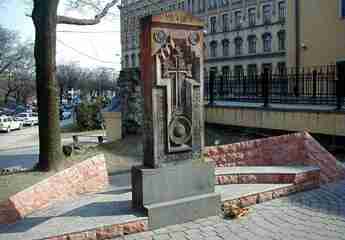
Esplanade Park is a park located in the center of Riga between Elizabetes Street, Krisjana Valdemara Street, Brivibas Boulevard, and Kalpaka Boulevard.The place where the modern park is located has traditionally been distinguished by sandy, hilly terrain. The sandy hillocks that surrounded the city and the Riga River, which flowed along the fortress wall by Kuznechnaya Street, determined many place names: the Great Sandy Road, the Sandy Bastion (now Bastejkalns Hill stands there), and the Sandy (later Powder) Tower. In particular, it is worth noting Kubbe Hill, important to the history of Riga, whose name goes back to the name of the Liv leader Kaupo, who once agreed to cooperate with the German conquerors and adopted the Christian faith according to the Catholic rite.
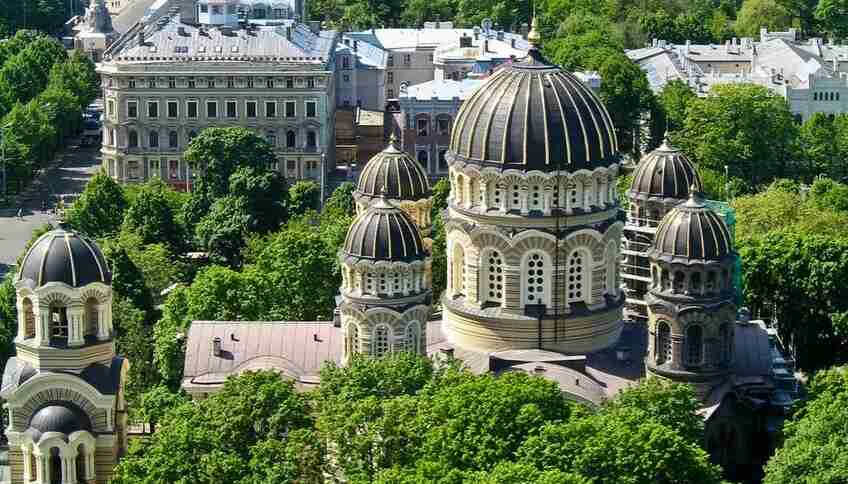
Cathedral of the Nativity of Christ

picasaweb, Werner Gijsels
The Cathedral of the Nativity of Christ in Riga (Rīgas Kristus Piedzimšanas pareizticīgo katedrāle) is the cathedral church of the Latvian Orthodox Church (ROC) not far from the Freedom Monument (Brivibas Street, 23).As early as the end of the 18th century, the question arose of the need to build a new Orthodox church, but after lengthy discussions the project was never realized. Subsequently, the discussions returned to this pressing issue more than once. In particular, in 1836, when the independence of the Riga diocese was proclaimed in the Riga Orthodox Church of the Apostles Peter and Paul, and also in 1850, when that same church was declared a cathedral. However, it was only by the early 70s that it was truly decided to begin implementing this long-standing plan.

vieglicelot.lv, ZintisS
Galerija Riga is the newest shopping center in the Latvian capital. On the seven floors of this megamall, more than 100 shops and boutiques of global clothing and accessories brands are represented. The first floor is occupied by a grocery supermarket, floors two through five offer a huge selection of clothes, shoes, lingerie, jewelry, and goods for children. The sixth floor houses stores for home and interior goods, book departments, and beauty salons. You can have a snack and drink coffee while taking a break from shopping in the huge food court on the seventh floor.
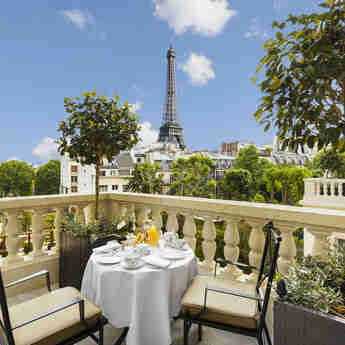
Funny enough, shopping is by no means the main reason why Galerija Riga is included in almost all modern tourist routes. Most guests of the capital come here for the chance to go up to the eighth floor of this grand shopping center, because that is where the largest observation deck in the Baltics is located, home to the elegant restaurant «Terrace Riga». It serves European cuisine and sushi, and 4 bars offer alcoholic drinks and cocktails for every taste.
But the most interesting thing about visiting this restaurant is the enchanting view from the observation deck - a circular panorama of old Riga. The magical romantic Jugendstil architecture, the soaring spires of old buildings, tiled roofs drowned in lush greenery, shining domes of churches… You will never be able to forget this fairy-tale view!
Cinema «Riga»

livejournal.com, raneta
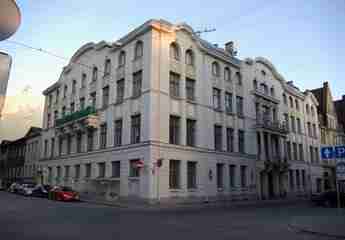
Riga is the oldest cinema in the city of Riga.In 1923, the cinema «Splendid Palace» opened. It became the first cinema in the Baltic countries to begin showing sound films. The building that houses the cinema is an architectural monument of national importance. The building's facade and interior decoration are styled in Rococo forms. In 1969, the cinema «Spartak» was built. Today it is the Small Hall of the cinema «Riga». In 1998, the «Spartak» hall was rebuilt. Since 1994, the cinema «Riga» has been part of the European cinema association «Europa Cinemas», and since 2007 of the art-house cinema association «Art Cinema».
Vermane Park

Flickr, Vadiroma
Vermane Park (Greater Vermane Park) is the oldest park in the city of Riga. It was founded in 1813 by order of the Governor-General of Livonia and city governor of Riga, Marquis Filip Osipovich Paulucci, with the financial support of the widow of the entrepreneur Verman, Anna Gertrude Verman.The Verman family arrived in Courland from Germany during the time of the ducal Kettler dynasty, in the 17th century. At that time, two Verman brothers settled in the region. The Verman brothers' father did not obey the order of the bishop of the region, for which he was sentenced by the episcopal court to exile on the island of Saaremaa, which at that time bore the name Ezel. His two sons escaped any punishment and settled in Riga, the capital of Livonia, which in the second half of the seventeenth century was one of the largest Swedish outposts in the Baltic region. A descendant of the Verman family, Christian, one of the first entrepreneurs of the Baltic region, married the young Anna Gertrude Ebel, noted for her very attractive appearance.
Museum of Nature

kidsreview.ru
The Latvian Museum of Nature (Latvian: Latvijas Dabas muzejs) is one of the oldest museums in Latvia and is the country's largest collection of geological, paleontological, zoological, botanical, and anthropological items.It was founded in 1845 as a structural unit of the Riga Society of Naturalists (Der Naturforscherverein zu Riga). Initially, the museum's collection consisted of items donated by members of the society. In 1860, that part of the collection of the famous Riga collector Dr. Himsel that corresponded to the interests of natural science (mineral samples, a wood collection, armadillo shells, a small collection of horns and bones) was added to the museum. Since 1895, the Museum of Nature became the natural science department of the Dome Museum.A major contribution to the establishment of the museum was made by the presidents of the Riga Society of Naturalists G. Shveder and K. R. Kupfer, as well as the naturalist B. Himmertal and physician A.
Riga Circus

Flickr, Maryade
Riga Circus (Latvian: Rīgas Cirks) - a circus building in the city of Riga. One of the oldest circus buildings in Europe. It is an architectural monument of national importance in Latvia[1]. Located at 4 Merkele Street. Built in 1888 by architect Jan Friedrich Baumanis. The first director and one of the founders and investors was entrepreneur Albert Salamonsky. The first performance was given on 29 December 1888. The structures of the circus building's vaults, as well as the supports of the auditorium, are made of railway rails. The stalls seat 580, the amphitheater 450. The diameter of the ring is almost 12 meters. The working height of the dome is 11 meters. The circus has a spectators' foyer, cloakrooms, a training hall, rooms for animals, an elephant house for 6 elephants and two stalls for 30 horses, as well as dressing rooms, an electrical workshop, rooms for the sound operator, costume designer, service staff and administration.