Blue Mosque

pichost.me
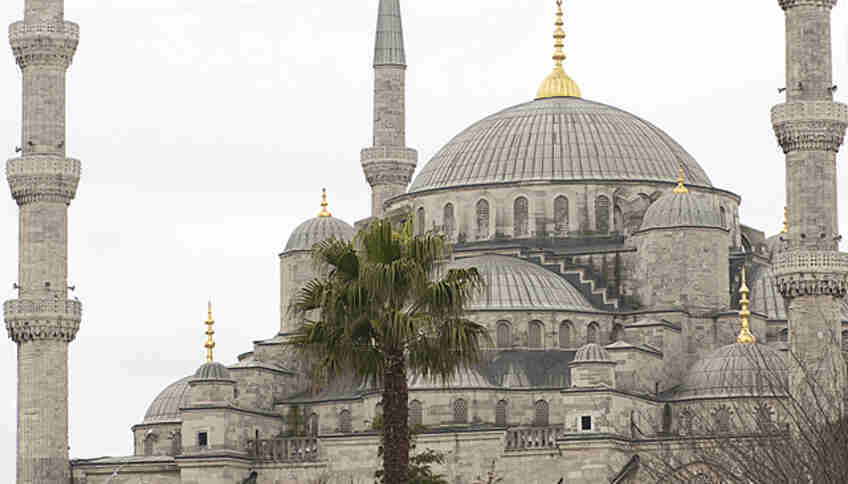
The Blue Mosque, or Sultanahmet Mosque (Turkish: Sultanahmet Camii), is a mosque in Istanbul. It has six minarets: four, as usual, on the sides, and two slightly less tall ones at the outer corners. It is considered an outstanding example of Islamic and world architecture. The mosque stands on the shore of the Sea of Marmara in the historic center of Istanbul, in the Sultanahmet district opposite the Hagia Sophia Museum. The mosque is one of the symbols of the city. At the beginning of Ahmed's reign, the Ottoman Empire was simultaneously fighting two wars, with Austria and Iran. On 11 November 1606, the Peace of Zsitvatorok was signed with Austria, under which the Ottomans renounced their demand for annual tribute from Austria and recognized the imperial title of the Habsburgs. This defeat and other events led to Turkey's authority being undermined, and Sultan Ahmed I decided to build a mosque and thus appease Allah. In addition, for forty years the Turkish sultans had not built a single new mosque.
Here is a fairly brief overview of the city's three main attractions. You will learn much more by downloading the Istanbul audio guide in the Ever.Travel mobile app.

riogrande74.ru
The Cathedral of Holy Wisdom of God, Saint Sophia of Constantinople, Hagia Sophia, is a former patriarchal Orthodox cathedral, later a mosque, and now a museum; a world-famous monument of Byzantine architecture and a symbol of Byzantium's "golden age." The monument's official name today is the Hagia Sophia Museum (Turkish: Ayasofya Müzesi).
During the Byzantine Empire, the cathedral stood in the center of Constantinople next to the imperial palace. It is now located in the historic center of Istanbul, in the Sultanahmet district. After the Ottomans captured the city, Hagia Sophia was converted into a mosque, and in 1935 it was given museum status. In 1985, Hagia Sophia, together with other monuments of the historic center of Istanbul, was included in the UNESCO World Heritage List.
Topkapi Palace

Flickr, topol6
Topkapi (Turkish: Topkapı) was the main palace of the Ottoman Empire until the middle of the 19th century. The name Topkapi, translated from Turkish, means "cannon gate" (Turkish: top - cannon, kapı - gate, door). In Russian-language publications, the spelling Topkapi is also used. It is also known as the Seraglio (French: Serail, from the Persian Serai — "big house, palace," which passed into Turkish as saray). The palace is located on Sarayburnu Cape, where the Bosphorus and the Golden Horn flow into the Sea of Marmara, in the historic center of Istanbul. The palace covers more than 700 thousand sq. m. and is surrounded by a wall 1400 m long.
In 1453, after the Turks conquered Constantinople, the Ottoman Sultan Mehmed the Conqueror initially settled in a palace built for him in the area of today's Beyazid Square in Istanbul. Nothing has survived of that palace, but the harem of the old palace was located in Topkapi from the very beginning. This old harem is now known as the "Tiled Pavilion".