Riga Zoo

zoochat.com, Ciololo
Riga Zoo (Latvian: Rīgas zoodārzs) is the city zoo of Riga in the Mežaparks neighbourhood west of Lake Kisezers. The first step toward creating a zoo in Riga was the founding in 1908 of the Riga Zoological Garden Society, but only four years later, on 14 October 1912, did the zoo open to visitors[1]. During the First World War the zoo was evacuated to Königsberg, but in 1932—1933 it was opened again. In 1933, the director of Riga Zoo became Laimonis Gailitis, an entomologist from Latvia's Forest Department. During the Second World War the park and the animals were practically unharmed, but access for visitors was closed[2]. In Soviet times Riga Zoo developed, and in 1987 it counted 2150 animals of 405 species. After the collapse of the USSR, in independent Latvia the zoo came under the ownership of Riga. The financial difficulties that followed forced the zoo to part with some animals, in particular the elephants.[3].
Kisezers

Flickr, Ievinya
Kisezers (Latvian: Ķīšezers; Russian: Kishozero) is a lake in the north-eastern part of Riga. The largest of Riga's lakes, on its western shore lies Mežaparks (a place for recreation and cultural leisure for city residents, with Riga Zoo and a golf club on its territory), on the northern shore — Jaunciems, and on the south-eastern shore — Ozolkalni. The lake's area is 17,4 km², its length 8,4 km, width up to 3,6 km, depth up to 4,2 m, average 3 m. By area it is the largest lake in Riga. The rivers Jugla and Langa flow into the lake. Through the Milgravis channel Kisezers is connected to the Daugava basin. Salt water enters the lake through the channel. The bottom is sandy, with a layer of silt in the centre above, in Jaunciems Bay — cellulose that came from paper mill waste, and in the area of CHP-1 — a layer of ash. The shoreline is indented with bays, there is a lot of vegetation, and in the east there is a protected natural site — the Liepusala Oak. There are three islands, the largest of which is Snikeru. Fish found here include roach and perch, with smaller numbers of pike and eel.
Latvian Ethnographic Museum

Flickr, long.fanger
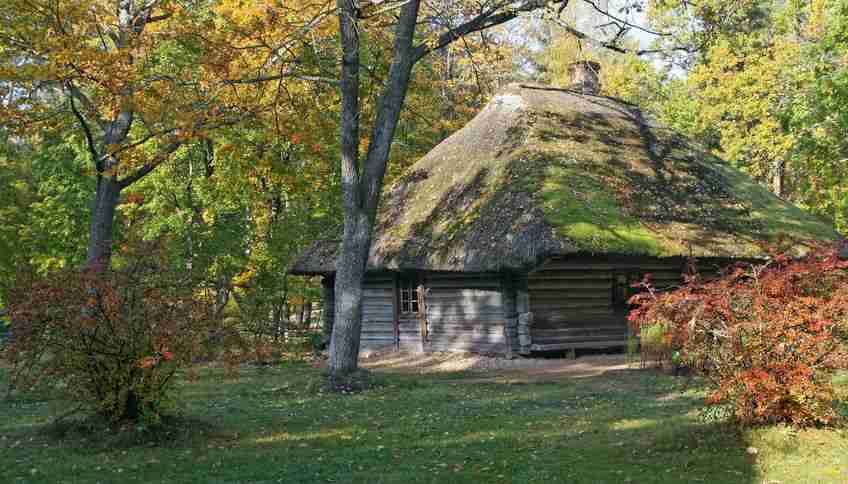
The Latvian Ethnographic Museum is one of the largest open-air museums in Europe. The museum was established in 1924 and opened to visitors in 1932. The museum is located in a picturesque spot on the shore of Lake Jugla, away from city buildings, practically on the border of Riga. On an area of 84 ha there are 118 residential, utility, and public wooden buildings built in the 17th — 20th centuries in different historical regions of Latvia.
Riga Motor Museum

livejournal.com, leejongwon
Riga Motor Museum (Latvian: Rīgas motormuzejs) is an automobile museum in Riga whose exhibits include more than 230 cars, motorcycles, and mopeds from the late XIX to the late XX century. The motor museum displays sports and military vehicles, Latvian-made cars, limousines, and cars from the 30s (including Molotov's car and Brezhnev's limousine)[1]. The history of the museum goes back to Latvia's Antique Automobile Club (KAA), founded on 21 July 1972 in the USSR at the initiative of several activists. KAA presented itself as a public organisation engaged in the restoration of antique cars and motorcycles. KAA's goals were to popularise the history of automobiles and motor vehicles, unite enthusiasts and collectors of antique vehicles, and acquire and restore retro cars to proper condition.

Panaramio, Kari Pulkkinen
There is an unusual place in Riga: a huge two-storey wooden log building, and beside it a beautiful windmill beckoning from afar like a lighthouse. This is not a museum of antiquities, as it may seem at first glance, but a thoroughly modern structure — the LIDO recreation and entertainment centre, located on Krasta Street.
Opened in 1999, LIDO immediately became extremely popular with both locals and tourists, and for Riga it is now a kind of calling card — an attraction that every visitor should see.
A unique entertainment complex spreads across an area of five hectares. There is an amusement park, a bistro, restaurants, a beer hall, and a confectionery. Interestingly, the entire structure is made of wood, which adds a special exotic charm and appeal.
In the bistro and restaurants you can have a quick and tasty bite to eat; there are also entertainers here who do not let visitors get bored for a minute. A very large choice of food and drinks, mainly dishes of national cuisine, and everything is inexpensive and tasty. It is also important that service in many venues is organised on a buffet principle. Rest assured — you will not leave hungry.
For beer lovers there is a "beer cellar", where you can try an excellent local hoppy drink or buy beer to take away. While parents are busy, children can stay in the playroom under the supervision of carers.
It is especially great at LIDO during the New Year holidays: ice sculptures, cheerful events, luxurious illumination, decorations. Everything is like a fairy tale, yet completely real and accessible.