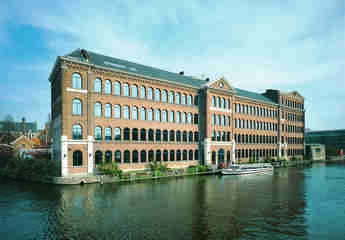
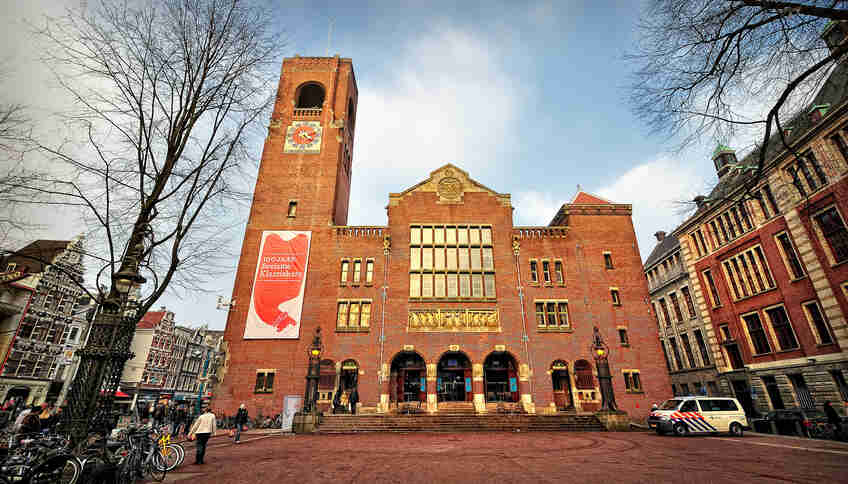
Berlage Exchange is the most significant architectural landmark in the Netherlands of the nineteenth century. This long red-brick building is easy to find if you walk from the central railway station.
Construction of the exchange, designed by the architect Hendrik Petrus Berlage, lasted for five years — from 1898 to 1903.
It was intended that the building would stand by the Amstel River — on reclaimed land where merchant ships docked. For many years, the freight, grain, stock, currency, and commodity exchanges coexisted in this building. The heroes of the Dutch capital also found a home here — at three different corners of the Berlage Exchange stand the famous seventeenth-century conqueror and admiral Jan Pieterszoon Coen, Amsterdam's founder, the knight Gijsbrecht van Aemstel, and the jurist Hugo Grotius.
In addition, the building delights visitors with Jan Toorop's mosaic paintings in the exchange vestibule and a museum opened on the centenary of the laying of the first stone of the Berlage Exchange.