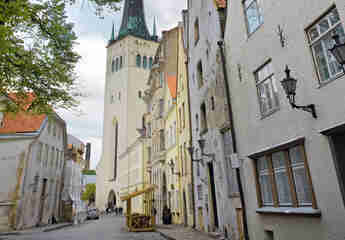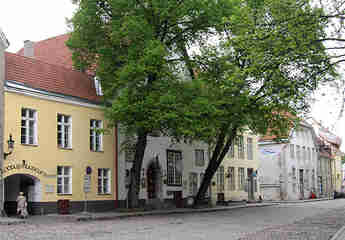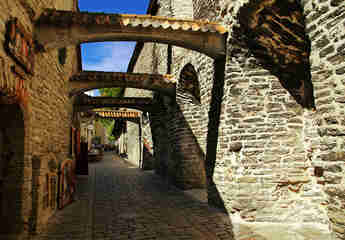
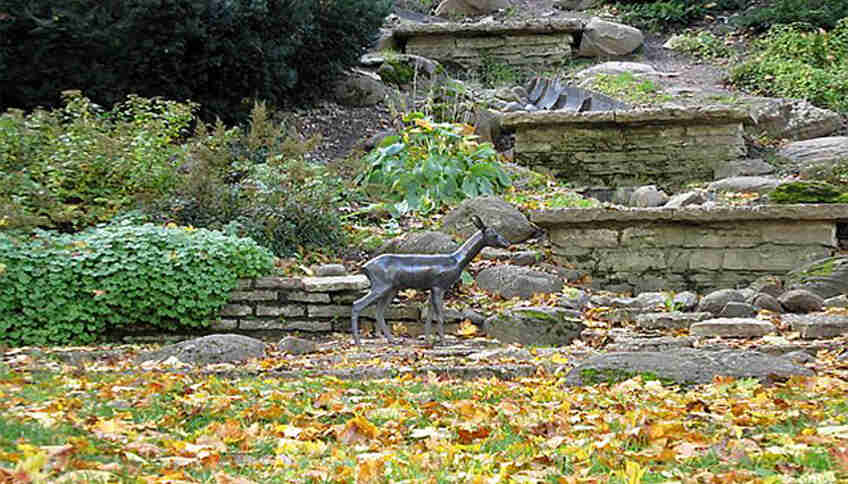
You will find this small sculpture in Tallinn's Old Town, at the intersection of Lai and Nunne streets. Not far from here begins the climb from the Lower Town to the Upper Town, and the monument's location հենց on this spot is no coincidence.
When the crusaders came to these lands at the beginning of the 13th century, their leader, King Valdemar II, settled in the fortress built on the hill where Vyshgorod now stands. At that time, far from the entire hill had been built up; on one of its slopes there was the most ordinary forest. This was exactly where Valdemar II liked to go hunting.
And then one day, the king saw a beautiful roe deer among the trees and ordered his retinue to catch it alive so that it could be placed in his personal zoo. However, the animal did not want to submit to captivity, and when it was driven to the edge of the hill, it leaped down off the cliff. “Reh fall!” was all Valdemar II exclaimed, which translated from Low German means “the roe deer fell.” But the Estonians wandering nearby did not know the foreigners' language and thought that “reh fall” must be the name of this place. Later, the name transformed into “Reval” – Tallinn's former name. However, the sculpture of the roe deer, installed at the foot of the Upper Town, still reminds us of the origins of the original name of the Estonian capital.