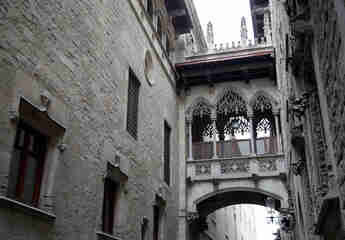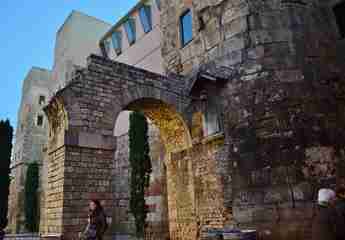
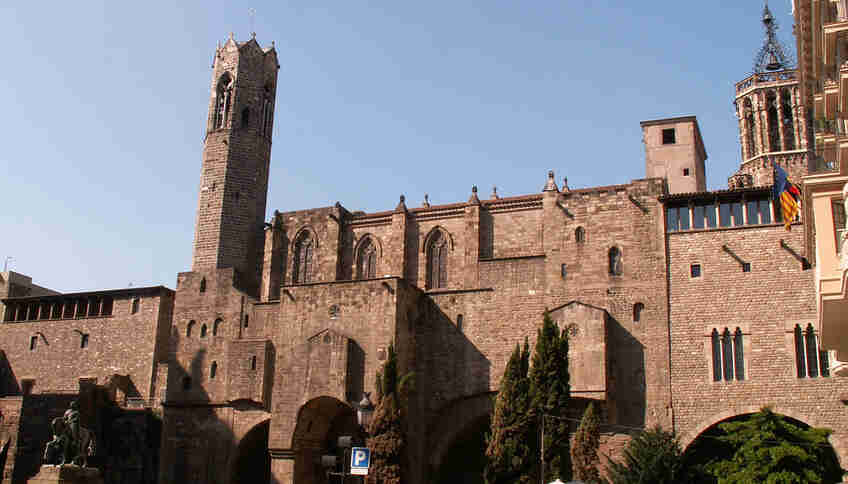
This ancient historical monument is located on Barcelona's Royal Square. The palace was built in the 11th century by decree of King Pedro the Ceremonious. The monarch received this nickname because he always tried to follow etiquette, although he was famous for his hypocrisy. One way or another, the palace turned out very beautiful and majestic. There is not even a hint of the Renaissance in its architecture. It was built exclusively in the Gothic, Romanesque, and Visigothic styles.
In 1039, the same Pedro the Ceremonious ordered the construction of the Throne Hall (Tinell) in the palace, where sessions of the Holy Inquisition were later held. A curious fact: the tribunal of the Inquisition claimed that perjury during the sessions could lead to the collapse of the Tinell. Of course, no one wanted that, so everyone - both the condemned and the judges - tried to speak only the truth.
In addition, it is believed that it was in this hall, but already in the 15th century, that Christopher Columbus, having arrived to report to the Spanish monarchs who had financed his journeys, spoke of his discovery of America.
For several centuries this palace served as a comital residence, but later became the permanent abode of the kings. During this time it turned into a true palace complex: the Tower of King Marti, which served as a guard fortification, and the Chapel of Saint Agatha, which became a fine example of elegant Gothic architecture.