Updated for 2026: Notre-Dame is firmly back on Paris itineraries, but visitor access to the towers can still shift as restoration and crowd management continue. Check the latest entry details before you go, especially if seeing the famous stone creatures up close is part of the plan.
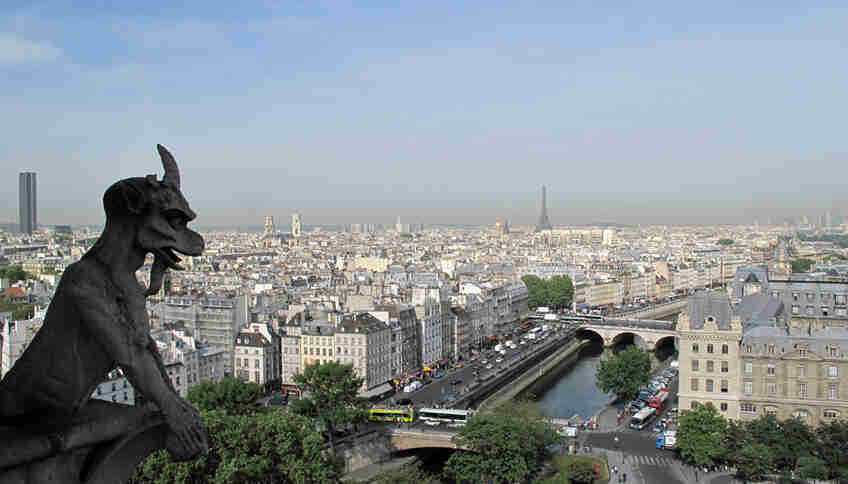
One of the classic photos from Notre-Dame's observation deck pairs the Paris skyline with the head of a fantastical stone beast. Almost everyone stops for that shot. But ask the average visitor how a chimera differs from a gargoyle, and most will hesitate. Here is the short version.
Chimeras are decorative imaginary creatures, usually made up of borrowed animal features - wings, horns, claws, twisted faces, and anything else that looks dramatic or unsettling. In Gothic imagery, they hint at chaos, temptation, and the darker side of human nature.
Gargoyles are different: they have a practical job. The word is tied to the idea of a throat or gullet, and these carved creatures work as waterspouts, carrying rainwater away from the cathedral's roof and stone walls rather than serving as decoration alone.
Another famous symbol of Notre-Dame is the great Emmanuel bell. It weighs about 13 tons and is the cathedral's largest and best-known bell. It rings only on special occasions, while the smaller bells are used for regular services.