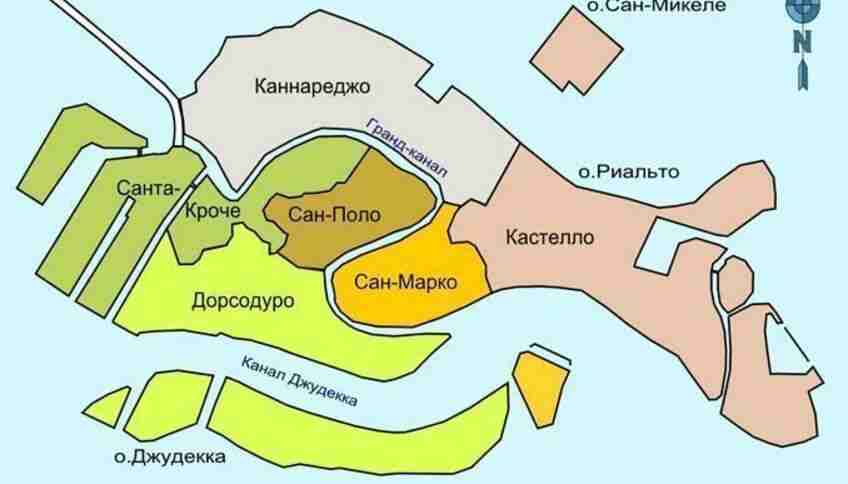
Venice's historic center is divided into six sestieri, and each one gives the city a different feel:
Updated for 2026: Venice is as rewarding as ever, but the best-known areas stay busy most of the year. Book major sights ahead, start early when you can, and leave time to wander beyond the busiest routes.
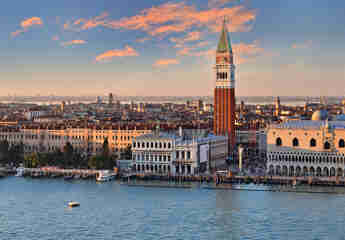
San Marco is the heart of Venice and the district with the city's most famous landmarks: St. Mark's Basilica and Piazza San Marco, the Doge's Palace, the Marciana Library, the Campanile, the Old and New Procuratie, the Clock Tower, Palazzo Dandolo, Teatro La Fenice, and plenty of other historic Venetian palaces.
Dorsoduro lies south of San Marco and is one of the best areas for art and grand views. Come here for the Basilica di Santa Maria della Salute, the Gallerie dell'Accademia, and the Peggy Guggenheim Collection.
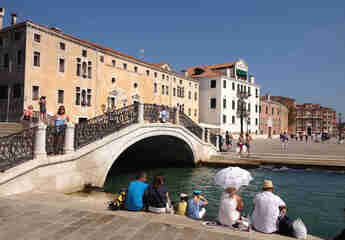
Castello is the largest and easternmost district in historic Venice. A walk along the Riva degli Schiavoni leads toward the Arsenale, the church of San Pietro di Castello, and the Basilica dei Santi Giovanni e Paolo.
San Polo sits west of San Marco and packs a lot into a compact area. This is where you'll find the Rialto Bridge, along with some of Venice's liveliest streets and market corners.
Santa Croce may feel a little less theatrical than the postcard center, but it is still well worth seeing. Highlights include Fondaco dei Turchi and Ca' Pesaro, home to the Natural History Museum and the International Gallery of Modern Art.
Cannaregio is the northernmost and most densely populated district of historic Venice. It often feels more local than the busiest parts of the city, and it is home to Santa Lucia railway station, the Jewish Ghetto, and the church of Madonna dell'Orto.