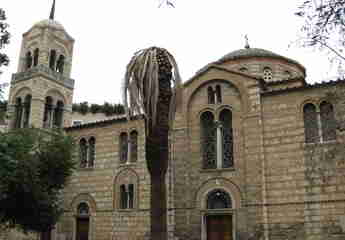

Roman Agora is an architectural complex in the center of Athens, between the Acropolis and Monastiraki, encompassing buildings from different eras. Functionally, the agora was a center of the city's public, economic, political, and cultural life, a place for meetings and gatherings.
The oldest part — the market square, surrounded around the perimeter by shops and storage spaces, was built at the beginning of the 1st century, during the period of Roman rule, with donations from Julius Caesar and his entourage.
In 15 BC, a public library and a huge concert hall with 1000 seats appeared here — a gift to the townspeople from the imperial family. Nearby were the Tholos (the building of the Athenian government) and the Royal Stoa (the residence of the chief judge), as well as several temples and altars.
Only parts of the colonnade of the inner courtyard, the portico (covered gallery) dedicated to Athena the Leader, and the Tower of the Winds — the oldest weather station — have survived from the ancient buildings to this day. Also part of the complex is the Fethiye Mosque, built in 1458 on the ruins of an early Christian basilica — a valuable architectural monument and one of the few tangible pieces of evidence of the Turkish era in Greece.