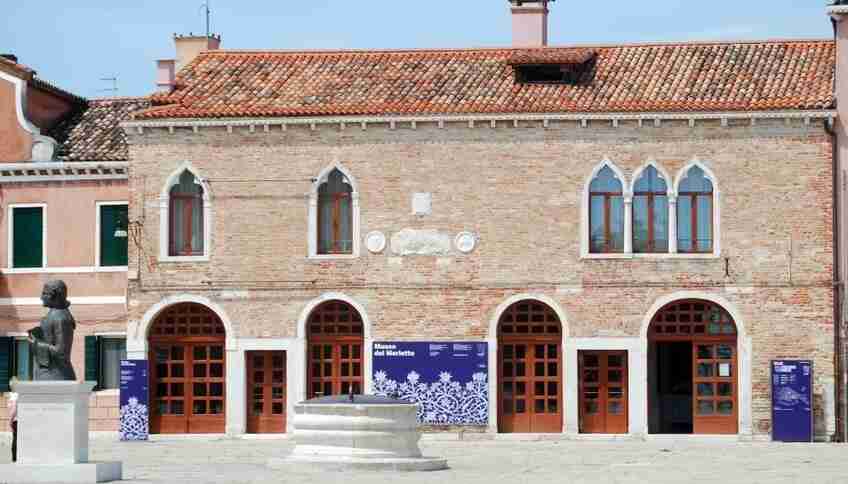
Venetian lace has been famous all over the world for many centuries. There is a legend that in the 15th century its amazing pattern was first woven by a fisherman's wife. It is believed that it exactly repeated the whimsical shapes of a seaweed given to her by her husband.
Since then, it has been customary to believe that genuine Venetian lace is distinguished by the openwork loops, which are made with a needle on special paper attached to a cushion, and not with bobbins or a crochet hook, as is usually done.
What is interesting is that the authorities of Venice always protected the craftswomen and made sure that the secret of the needleworkers was not learned in other countries. That is why the lacemakers were settled on the small island of Burano, which at that time had not yet even been part of the city. The craftswomen could pass on their experience only to young Italian women, and special schools were established on the island to train them.
In one of them, the Venetian Lace Museum was opened in 1981. It now occupies four floors: the first three display rare examples of lace from different periods, and the fourth presents the tools the craftswomen used. In addition, in this museum you can see collars, tablecloths, parasols, household items, as well as church vestments decorated with lace made of gold and silver threads. The beauty is incredible!