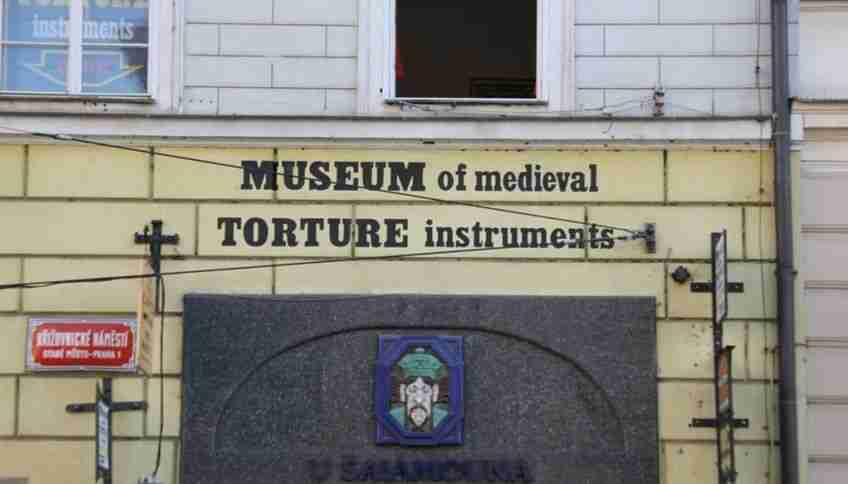
In the 21st century, the concept of “torture” or the “Inquisition” sounds like a misunderstanding of the past. However, to understand why these horrors were commonplace in the Middle Ages, we advise you to visit the Prague Museum of Torture, in several rooms of which 60 exhibits of various inquisitors’ devices are gathered: from “innocent” axes and saws to the Spanish “boots” and skull crushers, refined in their cruelty.
We will not venture to say whether it was to heighten the atmosphere or by pure chance, but the museum halls are located in a basement. In essence, the instruments of torture themselves do not look threatening, but the illustrations hanging next to them and the texts describing the practical use of the instruments dispel this myth. Despite the fact that the images are devoid of blood, severed legs, or a crushed skull, human imagination does its work.
We sincerely advise especially impressionable people not to read the next paragraph. In it we will tell you exactly which instruments of torture are presented in this museum. For example, the “rack” is a bed-like device where a person lying on it with bound hands has their legs stretched until the joints are torn apart. “Punishment by wall” consisted of a person being bricked up in a wall, after which they died of dehydration. The “stake” is a well-known torture method that has practically become a common noun in the Russian language.
In conclusion, we would like to note that one should not think that the Czechs were such bloodthirsty fiends — the exposition of the Museum of Torture was based on the experience of inquisitorial practice throughout Europe during the Middle Ages.