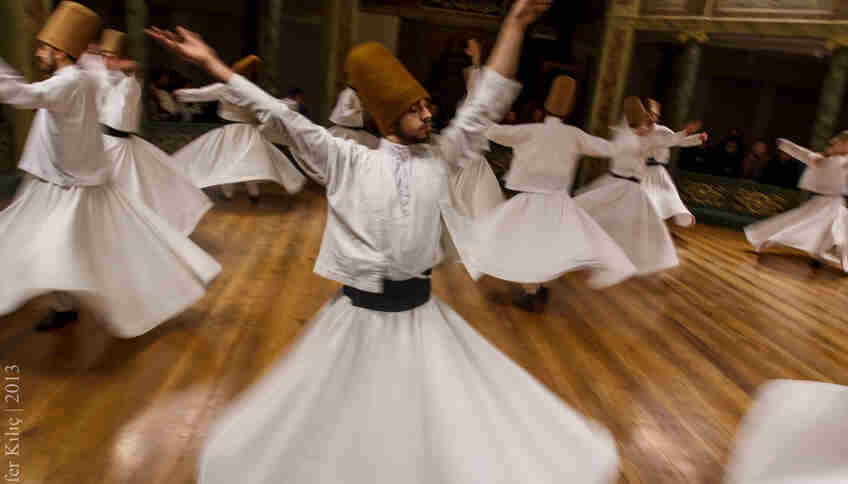
Even if you have never been to Istanbul, most likely you have seen at least once in your life in books or on the internet men spinning in dance in white flowing robes and tall hats. These are dervishes - Muslim monks with a unique way of life and rituals, which are in many ways connected with the name of the outstanding Persian poet Mawlana Rumi.
Mevlevi is a movement in Sufism (one of the branches of Islam), founded in the 13th century by Mawlana Rumi. The Mevlevi order is known to the general public primarily for the practice of unusual ritual dances whose goal is union with God. Rumi believed that thanks to such a mystical flight the spirit is freed from the weight of the flesh, which leads a person to enlightenment and great joy.
The building of the first dervish lodge in Istanbul was erected in 1491. This wooden structure burned down at the end of the 18th century, after which a new one was created, which has survived to this day.
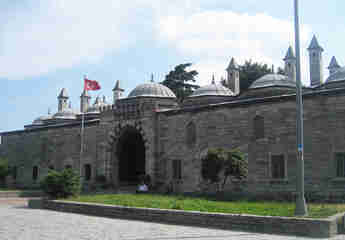
The lodge has the typical appearance of a Muslim educational institution. After the founding of the Turkish Republic, in 1925, by order of Ataturk, an opponent of Sufism, the Mevlevi lodge was closed. Half a century later, after restoration, the Museum of Classical Turkish Poetry was opened here. The exhibition featured musical instruments, manuscripts, and ritual objects belonging to the Mevlevi brotherhood. In 2011, the museum was renovated, after which the exhibition became more informative.
Every Sunday, toward evening, performances with ritual dances are held here for visitors.