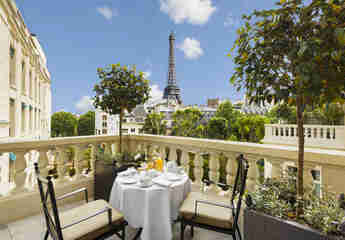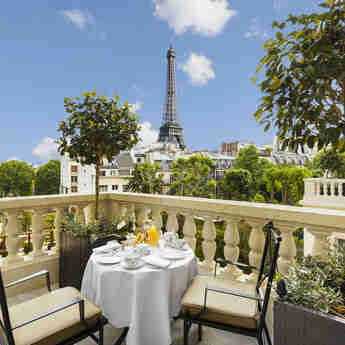
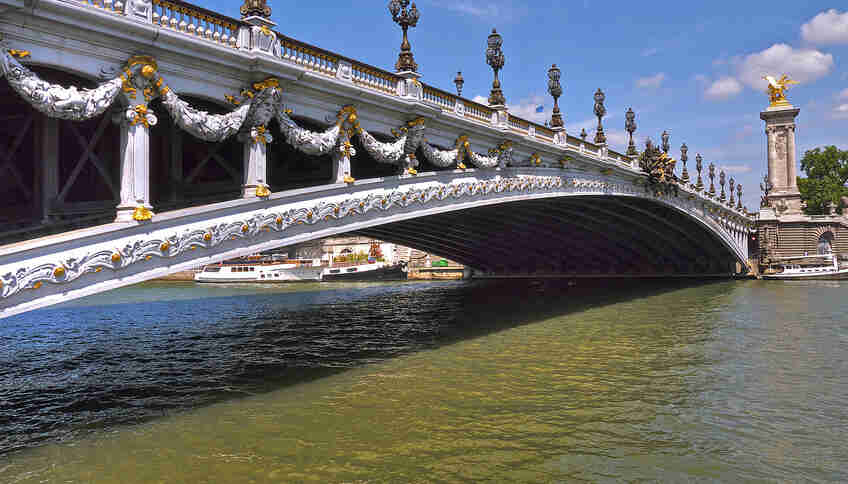
Alexander III Bridge lets you cross the Seine between the Champs-Elysees and Les Invalides, while offering stunning panoramas of Paris along the way. From here, many iconic landmarks of the French capital are clearly visible: palaces, museums, parks, and the Eiffel Tower.
The bridge itself, with its luxurious decor, also deserves the attention of those who came to Paris to explore beauty and antiquities. This bridge is a symbol of the alliance between France and Russia; Paris received it as a gift from the Russian Emperor Nicholas II in 1896. The emperor personally laid the first stone of the bridge to commemorate the friendship between the states, and the bridge was named in honor of his father, Alexander III.
The architectural style of the bridge belongs to the rather rare but very refined Beaux-Arts movement, which translates as "fine art." The bridge's ornate white-and-gold balustrade, pompous lanterns, and sculptural reliefs are only a backdrop for its true adornments - charming statues.
On one side, the bridge is guarded by the Nymph of the Seine with the coat of arms of Paris, and on the other - the Nymph of the Neva with the coat of arms of Saint Petersburg. Besides the nymphs, angels, pegasi, and other mythical characters inhabit the bridge.
On each side of Alexander III Bridge stands a pair of 20-meter columns topped with statues personifying Science, Art, Commerce, and Industry. The bases of the columns are decorated with relief scenes depicting the four most brilliant eras in the history of France - the Middle Ages, the Renaissance, the age of Louis XIV, and modern times.