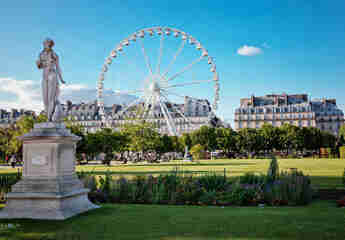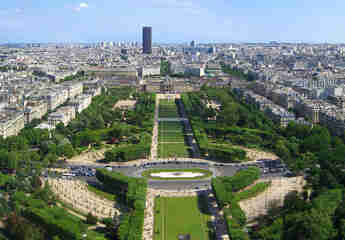

Place de la Concorde is known not only for its beauty, but also for its dramatic history. Originally named in honor of King Louis XV, on whose orders it was laid out, it appeared between the Champs-Elysees and the Tuileries Gardens in 1755. At each corner of the octagonal square, statues were installed symbolizing the largest cities of France, and in the center rose an equestrian monument to the king.
During the French Revolution, the place of the monarch's statue was taken by a huge guillotine. Here, surrounded by a jubilant crowd, King Louis XVI was executed, and then his wife, Marie Antoinette, as well as all the enemies of the new Republic - more than 1000 people in total. In those years the square bore the name of Revolution, and only after the bloody terror subsided did the square receive its current name - Concorde, in honor of the reconciliation of all the estates of France.
Today, Place de la Concorde is considered almost the most beautiful square in Paris. Its central adornment is the Luxor Obelisk, an artifact from the Temple of Amun-Ra. The column, 23 meters high and weighing 230 tons, is carved from pink granite and covered with hieroglyphs glorifying the pharaohs; it is about 3600 years old. The obelisk was gifted to France by the viceroy of Egypt in 1829 and is the oldest monument in the capital.