Everyone knows that there is the Arc de Triomphe in Paris, but not everyone knows that there are several of them. The second most famous after the one that stands on Place de l'Étoile is the arch on Place du Carrousel. In addition, there are two more similar structures from the time of Louis XIV and the La Défense arch.
The arch on Place du Carrousel is the “sister” of the main Arc de Triomphe. They had one purpose: to glorify Napoleon’s victories, and they began to be built at the same time, in 1806. The Carrousel Arch, however, was erected in just three years, whereas the construction of the ceremonial gates on Place de l'Étoile dragged on for thirty years.
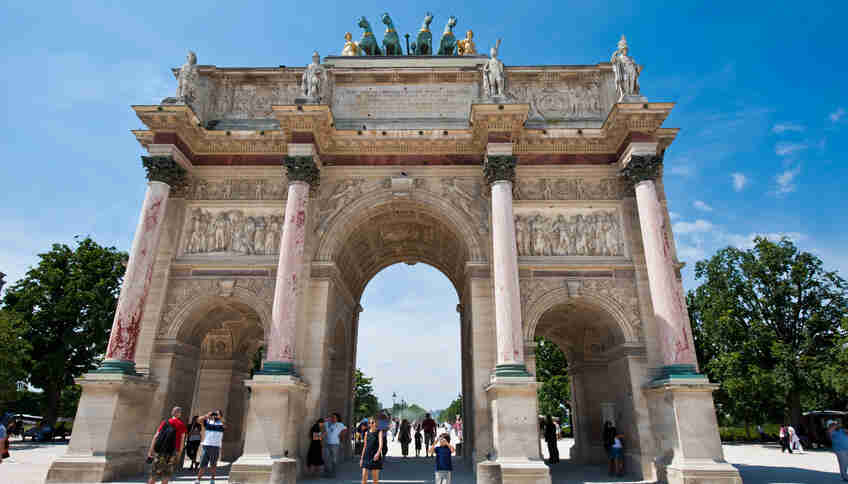
The three-arched gateway is made in the Empire style and richly decorated with bas-reliefs and Corinthian columns. The sculptural scenes are devoted to the Battle of Austerlitz, the fall of Ulm, the Congress of Tilsit, and Napoleon’s triumphal procession through Vienna and Munich.
The quadriga crowning the arch is a copy of a unique relic of the ancient world. The bronze horses of the 4th century BC once adorned Nero’s arch in Rome, and then passed from one great ruler to another: Emperor Constantine brought them to Constantinople, and later they were taken by the Doge of Venice. Since 1204 they adorned St. Mark’s Basilica, from where Napoleon took them in 1797 for his new arch.
The quadriga remained in Paris until 1815, when it was returned to Venice, and a copy was made for the French arch. On either side of the team of four horses stand the goddesses of Victory, and the chariot is driven by the goddess of Peace.
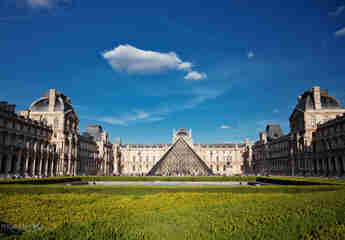
The arch on Place du Carrousel is located immediately behind the Louvre and is part of the famous “Historical Axis of Paris.”