In the first half of the 16th century, a red-brick wall more than two and a half kilometers long was built around Moscow's Kitay-Gorod. The purpose of constructing such a large-scale fortification was defense against raids by the Crimean Tatars.
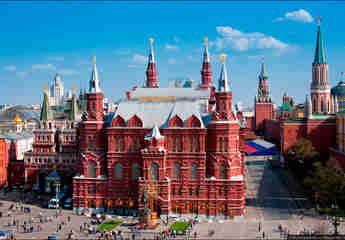
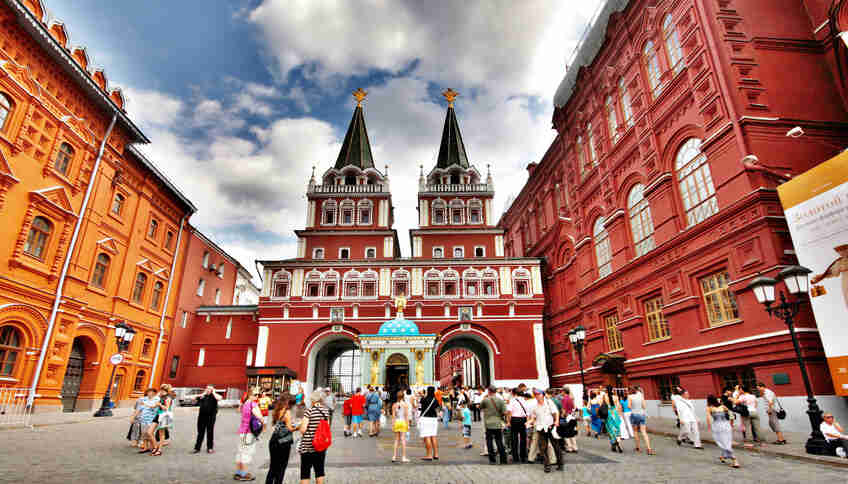
To this day, the two-arched Voskresenskiye Vorota passage gates of the Kitay-Gorod wall have survived, and they can be seen between the Historical Museum and the State Duma.
The gates installed in 1535 had different names: at first they were Kuretnye, then Neglimenskie, and later Lvinye (because of Ivan the Terrible's menagerie located nearby). In 1680, a chamber with two octagonal tent-roofed twin towers was built above the passage.
After an icon of the Resurrection of Christ was placed on the tower in 1689, the following name came into common use - Voskresenskiye Vorota. In 1781, the gates became Iverskie after the Iverskaya Chapel, first wooden and later stone, was added to them.
From 1929 to 1931, both the chapel and the gates were demolished, but in the mid-1990s they were restored in their classical form.