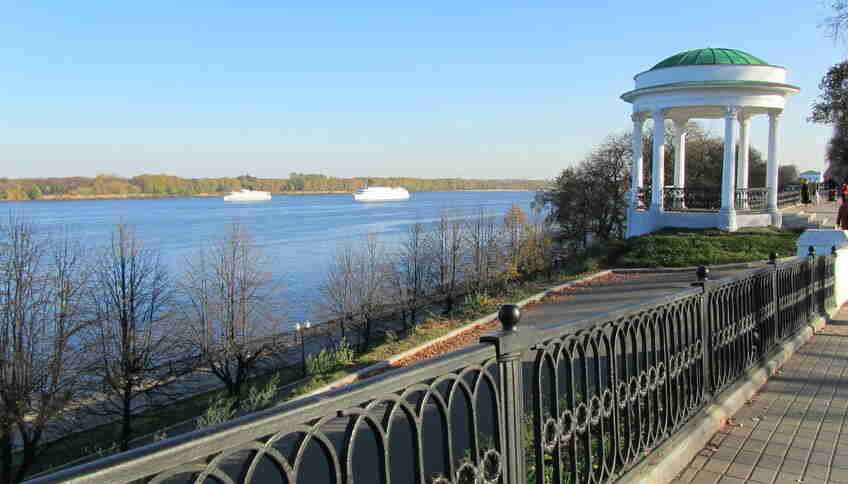
Perhaps this is the most beautiful and well-maintained embankment you can find in cities along the Volga!
The first attempts to protect the Yaroslavl bank from constant erosion began back in the middle of the XVIII century, when monks collected stones and used them to line the shore. However, at that time they managed to cover only a small section along the bishop's residence.
Large-scale reinforcement and beautification took place at the beginning of the XIX century, when Emperor Alexander I arrived in the city on an official visit. Seeing the deplorable condition of the bank, he ordered the necessary funds to be allocated. After that, the slopes were leveled, and rubble stone and moss were laid. An incredible number of vessels and barges had to be mobilized: all merchant ships arriving in Yaroslavl were required to bring 4 cubic meters of rubble stone with them free of charge.
Under Nicholas I, the wooden fences were replaced with cast-iron railings, linden alleys were planted, pedestrian descents to the water were arranged, and round gazebos were built. One of these gazebos has survived to this day. It is now a kind of symbol of the Volga Embankment, and no memorable photo is complete without it.
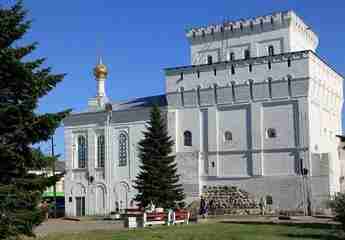
A pleasant walk along the Volga bank can be combined with a visit to several museums located there: the Museum of the History of the City, the State Art Museum and the private museum "Music and Time".